Wednesday, 23 October 2019

Kevätreissu Berliiniin IX: DDR-museo ~~~ Spring trip to Berlin IX: DDR Museum

Viimeinen Berliinin -kohde, tällä kertaa uudempaa historiaa ja jopa vähän nostalgiaa DDR-museon muodossa! Ihan ensialkuun vinkki tuleville kävijöille - lipun saa ostettua verkosta ennakkoon, itse ei näin tehty ja jouduttiin odottelemaan lähes kolme varttia jokivartta myötäilevässä jonossa. Päivä oli tosin nätti ja lämmin, mutta kyllähän se kökötys tuskastutti -varsinkin kun toiset painavat sujuvasti ennakkolippunsa kanssa ohi.

Olikohan erityisen vilkas päivä kyseessä vierailumme aikaan, mutta saatiin ilmeisen autenttinen jonotuskokemus heti alkuun ja museossakin osin. Jonotuksesta ja ruuhkasta huolimatta museo itsessään oli erinomaisen positiivinen kokemus, siellä oli hyvin käytännönläheinen ote asiaansa.

Last destination on our Berlin trip -newer history this time, and even some nostalgia when we dropped by at DDR museum. First and foremost for anyone dropping by -one can purchase a ticket beforehand from the museum's website, we didn't so we stood in queue for about 45 mins. It was a nice day and all (and scenery was pretty too!), but watching folks stroll by with their pre-purchased tickets was slightly frustrating. So do purchase a ticket beforehand!

They say that queuing was an essential part of DDR, so we apparetly got an authentic experience! In spite of that the museum was an extremely positive experience, and it had a very practical approach.


Museo käsitteli DDR-läistä elämää melkein kaikilta mahdollisilta aspekteilta. Esillä olivat valtion synty ja kehitys, politiikka ja kylmän sodan värittämät suhteet ulkomaailmaan mutta yhtä lailla kotielämä, harrastukset ja jopa ihmissuhteet DDR:n aikaan.

On display there was almost every aspect of life of and in DDR -how Germany was divided after the WWII and what came of that, politics and cold war and foreign relations but equally daily life, homes and hobbies, even human relationships in the time of DDR.


Trabantin tuulilasiin oli viritetty tienäkymä vaihtuvin maisemin. ~~~ Trabant windshield had a moving road scenery.
Päiväkoti DDR:n tyyliin. Päivähoito mahdollisti naisten osallistumisen työelämään useammin kuin Länsi-Saksassa. ~~~ Daycare DDR style. Daycare made it possible for DDR women to work outside home more often than in Western Germany.
Museo oli hyvinkin ottanut agendakseen sen, että vierailijoille pitää olla paljon katsottavaa ja kokeiltavaa. Lähes kaikkea sai räpeltää ja testailla, kodin esineistöstä kokonaiseen Trabant-autoon.

The museum totally had the agenda that there has to be a lot for the visitors to see and try. Almost everything could be touched and tested, from "personal properties" in homes to a whole Trabant car.

Kylmän sodan aikana kaikkeen piti varautua. ~~~ During the Cold war one had to be prepared for everything.
Niukkuus pakotti omatoimisuuteen -autojen ja muiden moottorikäyttöisten menopelien korjaaminen oli suorastaan kansallisharrastus. ~~~ Lack of goods forced people to be self-acting -repairing card and motorbikes was almost a national hobby.
DDR:n oma kameratuotanto oli ilmeisen aktiivista, ja valokuvaus oli suosittua. ~~~ DDR produced a lot of cameras, and photography was popular.
Eikä museossa unohdettu valvonta- ja rangaistusjärjestelmääkään. Yhteen huoneeseen oli sijoitettu STASIn vankilahuone, toisessa pääsi testaamaan puhelunkuunteluvälineistöä.

The darker sider were not forgotten either -surveillance systems and secret police were both  featured. One room was furnished as a STASI prison room, on another room one could test telephone tapping devices.


DDR:n alkuaikoja vaivasi vakava asuntopula. Tätä lähdettiin korjaamaan, ja myöhemmin DDR oli erityisen kuuluisa asuntotuotannostaan, muutamassa kymmenessä vuodessa rakennettiin lähes kaksi miljoonaa asuntoa. Yhteen osaan museota olikin sisustettu "keskivertoperheen" asunto uudessa lähiössä. Huoneistosta löytyi  keittiö, olohuone, makuuhuone ja lastenhuone. Olohuoneen telkkarista tuli jopa ohjelmaa jota saattoi halutessaan istahtaa jopa sohvalle katsomaan. Tämän kaiken viihteellisen ohella tarjottiin joka huonetilan ja lähes joka esineen yhdeydessä faktaa niihin liittyen.

In the early days of DDR there was a serious lack of homes. The officials took this problem seriously, and later DDR was famous for its building works -in a few decades almost two million homes were built. Therefore in one part of a museum there was an "average family home" in a new suburb. The home had a kitchen, living room, bedroom and a room for kids. Living room TV even had a broadcast, apparently a soap opera of sorts on, and should one have felt like it, one could've sat down and watch it. Along with all this entertainment the home was full of information, almost every item in the house had some facts attached to it.

Lastenhuoneessa oli kerrossänky. ~~~ Kids room had a bunk bed.
Lastenohjelmien sankari Nukkumatti. Jatkaa seikkailujaan kauan DDR:n kaatumisen jälkeenkin. ~~~ Hero of DDR children's TV shows, Sandman, goes on long after DDR stopped doing so.
Olohuoneen kirjahyllyn viinakaappi ja tiukkaa dataa Itä-Saksan alkoholinkäytöstä. ~~~ Liqueur shelf in living room bookshelf, and some data on alcohol consumption in DDR.

Museon kotisivut
Museum home page


Monday, 30 September 2019

Koiran panta Gokstadin tyyliin ~~~ Dog collar Gokstad style


Inspiroituneena kevättalven keskiaikaisten seurakoirien varusteista kertovasta postauksesta piti alkaa vääntämään asianmukaista asustusta myös meidän häntää heiluttavalle perheenjäsenelle! Koiran mukaanottamisen mahdollistavat tapahtumat ovat meillä päin yleensä muinais- tai viikinkitapahtumia, joten vaikutti tarkoituksenmukaisemmalta ottaa ensimmäinen projekti sieltä suunnasta. Vaikka tosin vakavasti on harkinnassa myös keskiaikaisen tyylisen pannan teko, mutta siitä joskus myöhemmin...

Viikinkiajaltakin on useampia arkeologisia lähteitä koiranpannoista, tosin lähinnä niiden metalliosista nahkaosien maaduttua pois. Kuvalähteet viikinkiajalta tai edes ihan sen välittömästä läheisyydestä puuttuvat ilmeisesti kokonaan. Norjalaisesta Gokstadin laivasta on jäänteitä useammastakin koiran pannasta, joten sieltä oli helppo lähteä hakemaan suuntaa ja esikuvaa.

Inspired by the post I made on early spring concerning the medieval companion dog collars and leashes I decided to start making period-appropriate gear for our little furry family member too! Events that are dog-friendly tend to be viking- or iron age-themed around here, so grabbing a project idea from that time period seemed like a reasonable thing to do. Although I've been thinking of making a collar in the medieval style too, but that's for another post later...

There are some archaeological finds of dog collars from the viking age, although they mostly consist of metal parts when the leather has long since rotted away... Pictorial sources of dog collars seem to be nonexistent from the viking age or its immediate surroundings. In the Norwegian Gokstad ship there are remains of several dog collars, so that's the direction I went for when looking for source and inspiration.
Gokstadin  laiva ~~~Gokstad ship
Oslon viikinkilaivamuseossa esillä oleva Gokstadin laiva oli peitetty kumpuun hautalaivana noin vuonna 900 ja se kaivettiin esille vuonna 1880. Laivan mukana haudattu vainaja oli 40-50-vuotias, hieman yli 180 cm pitkä mies, joka oli kohdannut loppunsa ilmeisesti taistelussa. Vainajan mukaan hautaan oli annettu runsaat ja kalliit lahjat, jotka koostuivat niin pelitarvikkeista, huonekaluista, kulkuvälineistä (reki ja soutuveneitä), keittiötarvikkeista kuin elämistäkin. Tuonpuoleiseen lähti peräti 12 hevosta, useita lintuja -ja myös 8 koiraa.

Nowadays on display on the Oslo Viking ship museum, the Gokstad ship was originally buried in a mound as a burial ship in approximately the year 900. It was discovered and excavated in 1880. The man buried in the ship was about 40-50 years of age and slightly more than 180 cm tall, apparently he had died in a battle. The deceased was given grave goods that were expensive and numerous, consisting of -among other things- games, furniture, transport devices (sleigh and rowing boats), kitchen and cooking items, and animals. Altogether 12 horses, several birds and 8 dogs went to the grave with the Gokstad man. 

Gokstadin laiva Oslon viikinkilaivamuseossa ~~~ Gokstad ship in Oslo viking ship museum. Kuva/photo Wikipedia
 
 
Alkuperäinen pannanosa ~~~ The original collar part
Alkuperäinen pronssinen pannanosa oli saanut museonumerokseen C10430. Erityisen ihmeellisen suuresta varustuksesta ei ole ollut kyse, soikean lenkin pituudeksi annetaan 7,2 cm (leveys 2,2 cm) ja päiden mitoiksi 3,4 * 2,1 cm. Näin ollen oman pikkukoiran mitoille tästä pystyi soveltamaan varsin suoraan! Alkuperäinen oli tekstin mukaan löydetty koiran luurangon vierestä, mutta museon tekstistä ei käy ilmi minkä kokoinen koira oli kyseessä. Pannan tiedot UNIMUS -tietokannassa  

Oman versioni metalliosat (tekijänä Koruseppä Kipene) eroavat hiukan alkuperäisestä, lähinnä sillä että ne ovat ihan vähäsen kaareutuvat (pieneen kaulaan sopivammat) ja niittien määrä on tasainen. Kuvasta päätellen kun alkuperäisessä on kummassakin puolessa eri määrä niitinkoloja...

The original bronze dog collar part was given the museum number C10430. It doesn't seem to be an especially large item, the oval ring is said to be 7,2 cm long and 2,2 cm wide, the ends being 3,4 * 2,1 cm in size. Therefore not much adjusting was needed when making a reproduction, very fitting for a little doggy! In the Gokstad grave these collar remains were foung next to the bones of a dog, but the museum did not specify what size of a dog it was. Details at UNIMUS database.

My version (metal parts by Koruseppä Kipene) has some minor alterations from the original. Mainly that the ends are very slightly curved (fits better for a small neck) and the number of rivets is even in both ends. In the original there seems to be three rivet holes in other end, six in the other... 

Alkuperäinen esikuva ~~~ Original collar part
Oman version metalliosat, tekijänä ihana Koruseppä Kipene. ~~~~ Metal parts of my version, made by the lovely Koruseppä Kipene
Toiset pannanosat Gokstadista, materiaali näissä rautaa. Museonumero C10431. ~~~ Another set of collar fittings from Gokstad, these ones in iron. Museum number C10431.

Nahkaosat ~~~~ Leather parts
Alkuperäisessä Gokstadin pannassa ei ilmeisesti ollut nahkaa jäljellä, joten sen osalta ei pystynyt tukeutumaan alkuperäislähteisiin. Nykyisin myytävä nahka on väriltään aivan liian vaaleaa verrattuna perinteisillä menetelmillä puunkuoriparkittuun nahkaan ja värjäämätön vaalean punarusehtava ei edes olisi näkynyt vaaleanruskean karvan alta, joten ajatus oli saada vähän väriä nahan pintaan. Myöhemmissä keskiaikaisissa lähteissä punainen on varsin yleinen pannan väri, joten päätin soveltaa siitä. Hieman etelämpää Englannissa tunnetaan kuitenkin esim. värjättyjä punaisia kirjankansia ajanjakson läheltä (esim. muutenkin kovin nätti p. Cuthbertin evankeliumikirja), joten ehkä ratkaisu ei ollut täysin tuulesta temmattu.

Lähdin liikkeelle keittelemällä tuhdin krappiliemen. Testasin ensialkuun nahalle villalangoille ihan sopivaa kylmävärjäystä, mutta sillä metodilla väriä ei saatu nahkaan juuri ollenkaan, viikon liotuksen jälkeenkään ero värjäämättömään nahkaan ei ollut juuri erityisen kummoinen -aavistuksenomainen sävyero josta siitäkin osa taisi olla toiveajattelua. Toinen tekniikka siis käyttöön, keitin lientä vähän kasaan ja sitten pensselin kanssa lisäilin sitä nahkaan. Kerros kerrokselta ja kuivuminen välillä, jossain vaiheessa vaikutti että väri ei edelleenkään tartu ollenkaan mutta lopulta kerroksia tuli varmaan parikymmentä ja väristä mukavan tumman punaruskea. Prosessin tämäkin osa tosin kesti muutaman viikon kaikkineen, kun nahan piti kuivua aina kerroksien välillä. Lopulta väri syveni kun nahan rasvasi (mutta sen jälkeen ei enää värikerroksia saa lisättyä!). En koristellut nahkaa sen kummemmin, jonkinlainen punsselikuviointi tai painokuviointi olisi ehkä voinut olla vaihtoehto, mutta viikinkiaikaisia vastaavalla tavalla kuvioituja esineitä ei ihan ihmeellisen paljoa ole löytynyt (jonkin verran toki mutta rajallisesti) niin jätin värin nyt ainoaksi koristeeksi.

In the original Gokstad collars there were apparently no leather remains, so I had no original sources to back me up on this. The leather that is being sold today is way too light in colour when compared to the result of traditional methods of tanning (for example tree bark) and light reddish brown would've been next to invisible in a light brown neck, so some colour was needed. Later medieval sources are fairly clearly in favour of red collars, so that's what I went for, too. Slightly more southwards, in England, some red leather book covers are known from slightly before the viking age (for example the really cute St. Cuthbert Gospels), so perhaps this choice has some evidence to support it?

I started by boiling a nice pot of madder. First I tested a method I had successfully used for woolen yarn, cold dye, but it did not stick to the leather at all. After one week in a madder bath the result in colour was barely visible, or maybe even that was wishful thinking. So another methods were needed, I boiled the liquid some more and continued with painting the leather using a brush. Progress was s-l-o-w since the leather needed to dry between each layer of madder but after some twenty-odd layers the result was nice reddish brown! This part of the process took approx. two weeks. The colour was further deepened when I greased the leather (after that no more colour layers could be added). I decided not to decorate the leather more than that, maybe stamping or modelling would've been options but the finds of those are not that numerous (definitely not saying there weren't any!) so I decided to leave the colour as the only decoration in this case.

Verrokkina värjäämättömään nahkaan ~~~ Dyed and undyed leathers side by side
Pannan käyttö ~~~~ Using the collar
Ratkaisematta hiukan on miten mahdollinen hihna on pannassa ollut kiinni. Pannan perusperiaate kun on kuitenkin aika selvästi tuttu puolikuristavasta pannasta, metallilenkin ollessa vaakasuuntaan panta on helppo ujuttaa pään yli, kun taas koiran liikkuessa innokkaasti eteenpäin lenkki lonksahtaa pystyasentoon (no, tätä ei meillä juurikaan tapahdu..) ja panta on tiukempi. Myöhempien keskiaikaisten kuvien (ja löytöjen) perusteella hihna olisi pannassa kiinteästi, mutta erityistä kiinteää hihnanpitovälinettä tai -osaa tähän kokonaoisuuteen ei näy kuuluvan. Olen siten paremman puutteessa sitaissut lautanauhan kiinni lenkkiin, mutta tämä ei tunnu erityisen todennäköiseltä ratkaisulta... Jotain testattavaa siis riittää jatkoakin ajatellen!

I have yet to decipher how a leash would've been attached to the collar. The basic working principle of the collar is clear -when the oval loop is placed horizontally the collar is easy to put on a dog, and when the dog is enthusiastically moving forward (this doesn't happen too often in our household) the loop automatically moves to a vertical position thus makign the collar a bit tighter. Later medieval illustrations (and some finds too) suggest that the leash would've been fixed to the collar, but in this case there is no real place where the leash could be fixed. For the lack of a better alternative I've used a tablet woven band tied to the metal loop, but it somehow feels wrong. Something to test for the future too!


Lähteet ~~~ sources :
Oslo University, Museum of cultural history: Gokstad grave


Wednesday, 25 September 2019

Kevätreissu Berliiniin VIII: Spandaun linnoitus ~~~ Spring trip to Berlin VIII: Spandau citadel

Lähiseutumatkailua Spandaun suuntaan! Metrolla pääsi kivasti perille, muutaman minuutin päähän, ja matka oli muutenkin varsin nopeanlainen (lähellä olisi ollut myös Spandaun vanhakaupunki, kuvien perusteella varsin nätti sekin). Reissuun inpiroi lähtemään se, että paikalla ilmoitettiin olevan keskiaikatapahtuma, ja uteloittihan se sen verran, että piti tarkistaa paikallinen meno. Lopulta kieltämättä linnoituksella itsellään oli suurempi anti...

Quick visit to nearby Spandau! Subway station wasn't that far from the citadel, only a few minutes walk (and the train ride was a quick one too). For anyone stopping by, Spandau old town would've been nearby as well and it looks really nice based on the photos of it! What inspired us to drop by in the citadel was that they had a medieval event that weekend, and of course we were curious to see what the local events look like. Well, eventually the citadel itself had more to offer...

Spandaun linnoitus nykymuodossaan ajoittuu lähinnä 1500-lukuun, mutta linnoituksen alueella on ollut aiempaakin toimintaa -jopa linnoitustoimintaa, torni (tällä hetkellä muuten Berliinin vanhin pystyssä oleva rakennus) ajoittuu 1200-luvulle. Alueen kaivauksista, joita esiteltiin myös linnoituksessa, päätellen linnoituksen alue on ollut varustettu puolustusvarustuksin jo 1050-luvusta lähtien, paikalla on silloin ollut slaavilaisasutusta.

The Spandau citadel in its current state dates mostly to the 16th century, but the area has been inhabited and fortified long before that. The tower of the citadel dates to the 13th century, and it's the oldest building still standing in Berlin area. Archaeological excavations have been made in the citadel, and they have yielded remains of slavic fortifications dating from the 1050s on.

Kuten linnoituksella kuuluu, Spandaussakin oli komea vallihauta, jonka yli kulkeva silta johti pääportille.

As it is proper for a citadel, Spandau too had a nice moat. A bridge led to the main gate.
Kuva/ photo M. Pulla

Markkinat oli varsin nopeasti katsastettu, enemmän perhetapahtuman tyylinen. Ihan viihdyttävää musiikkia olisi ollut tarjolla, mutta myyntitarjonta ei oikein elävöittäjään osunut. No, tulipahan nähtyä.

The medieval market was quickly inspected, it was more like a family event. There was some quite entertaining music and quite a few vendor tents with stuff for sale, but not that much that would've been of interest for a living history nut. Well, at least I can say I've visited.
Kuva/ photo M. Pulla

Linnoituksen muuta antia sitten, alue kun oli varsin suuri. Linnoituksen arkeologiaa 1000-luvulta renessanssiin esiteltiin vallihautaa myötäilevässä sivurakennuksessa, esillä oli rakennusjäänteitä ja esinelöytöjä.

As for all the other stuff that the citadel had to show, archaeology of the citadel area from the 11th century to renaissance, was on display on a building right next to the moat. Both building remains and smaller items were exhibited.
Kuva/ photo M. Pulla
Kuva/ Photo M. Pulla
Värttinän kehriä, 1200-1400-l. ~~~ spindle whorls, 13th-15th cent.


Linnoituksen ravintola oli varsin tunnelmallinen tapaus, varsin sievä kaakeliuunikin paikalla oli.

Restaurant looked nice and cozy, and it had a really fancy tile stove.


1200-luvulta peräisin olevalla tornilla (nimeltään Julius Turm) on korkeutta komeat 34 metriä. Ihan ylös asti pääsi kiipeämään, näkymät sieltä olivat varsin messevät.

The 13th century tower is called Julius Turm, and it has the height of whopping 34 meters. One was free to climb the stairs all the way up, and the climbing was well rewarded with a very nice view.


Kuva/ Photo M. Pulla
Varsin tukeva ovi! ~~~ A quite durable door indeed! Kuva/ Photo M. Pulla

Linnoituksen neljässä nurkassa oli bastioni jokaisessa, niistä tarjoutui varsin mukavat näkymät ja kivoja kuvausmahdollisuuksiakin.

On all the four corners of the citadel there were bastions, nice scenery -and good opportunities for photos.

Kuva M. Pulla
Kuva M. Pulla


Spandaun linnoitus Visit Berlin -sivulla
Spandau citadel in Visit Berlin


Thursday, 12 September 2019

Herjolfsnes 38 krappivärjättynä ~~~ Madder dyed Herjolfsnes 38


Herjolfsnes 38 
Herjolfsnes 38 -mekko (tunnettu myös museonumerolla D10580) on, kuten arvata saattaa, Grönlannin skandinaaviasutuksen piiristä löytyneistä vaatteista ja sen kaava on varmasti yksi eniten keskiaikaisten vaatteiden tekoon käytetyistä. Herjolfsnesin (nyk. Ikigaat) hautausmaalla tehtiin suuria kaivauksia 1921, jolloin tämäkin vaate löydettiin¹. Tätä mekkoa ei ole radiohiiliajoitettu, mutta toinen samantyylinen samalta hautausmaalta on saanut radiohiilitulokseksi todennäköisimmin 1400-luvun (1400-1480, 66,7% todenäköisyydellä).² Tyylillisesti tämä kuitenkin vastaa aika paljolti taiteessa nähtyä 1300-luvun puolestavälin- loppupuolen muotia Euroopassa -ehkäpä trendit tulivat Grönlantiin vähän viiveellä, ja toisaalta samantyylisetkään vaatteet eivät ole välttämättä täysin samanaikaisia.

The Herjolfsnes 38 -dress (also known by its museum number D10580) is perhaps one of the best known surviving garments from the Norse Greenland -and quite possibly its pattern is one of the most utilized when people have been making medieval garments. This dress was found when large-scale excavations were made in 1921 in Herjolfsnes (nowadays Ikigaat) graveyard.¹ The dress in question has not been radiocarbon dated, but another one quite similar in style has been dated to the 15th century (1400-1480 with 66,7% propability).² When it comes to the style, however, this garment resembles dresses depicted in mid-late 14th century art in Europe -perhaps trends arrived a bit late to Greenland, and anyway it's not certain that garments that are similar in style are similar in dating.
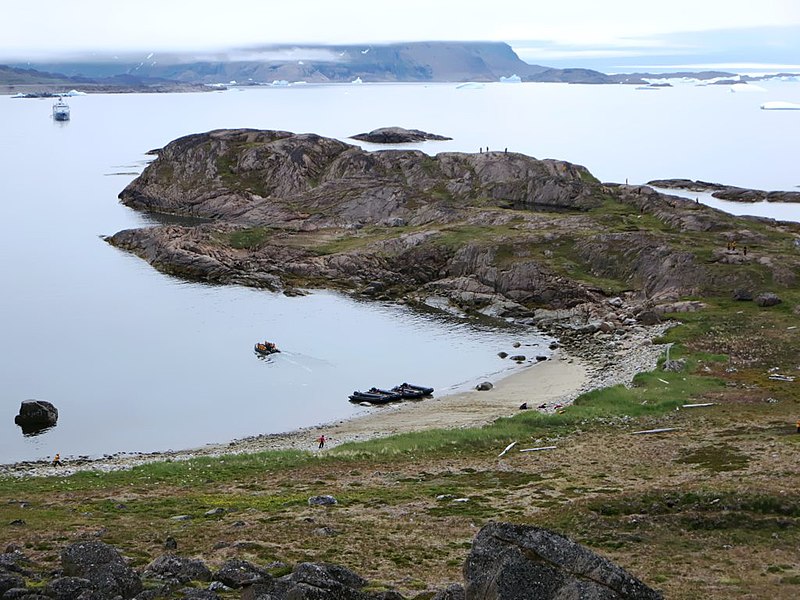
Herjolfsnesin/ Ikigaatin alue nykyisin ~~~ Herjolfsnes/ Ikigaat area today. Kuva/photo Wikipedia.


Kaava ja omat kaavoitusmuutokset ~~~ The pattern and my own alterations
Tämän vaatteen kaava on mielenkiintoinen, sivukiilat tässä vaatteessa ovat lähinnä puolikkaan pullon mallisia ja kiiloja on kaikkineen kymmenen -neljä sivukiilaa kumminkin puolin, lisäksi "tavallisen" kolmion malliset etu- ja takakiilat, joista etukiila erityisesti alkaa varsin ylhäältä (laskin omaani vähän alemmas vähän kompensoidakseni sitä, että muuten mekko ei ole aivan yhtä istuva kuin alkuperäinen on ilmeisesti ollut). Alkuperäisessä sivukiilat on leikattu kankaasta vinoon -tämä antaa toki kovin kauniin laskeutumisen, mutta kuluttaa kangasta aika holtittomasti. Tämän takia päädyin ratkaisuun jossa leikkasin tämän kiilat tylsästi pystysuoraan, kangasta kun ei vaan yksinkertaisesti ollut riittävästi alkuperäiseen leikkuutapaan. Toinen muutos kiilojen suhteen liittyy taskuhalkioihin, joita en tähän mekkoon lisännyt vaikka alkuperäisessä D10580:ssa ne olivatkin. Ne kun viittaavat yleisesti ottaen enemmän päällikerroksen mekkoon, ts. vaatteeseen jonka alla on toinen villamekkokerros, ja tätä mekkoa ajattelin kuitenkin pitää ihan sellaisenaan.³

The pattern of this dress is interesting, the side gores are shaped like half bottles and the total number of gores is ten -four on both sides, and triangular gores in front and back. In the original garment front gore is placed quite high, I lowered mine a little to compensate the fact that my dress is not quite as tight fitting as the original might have been. In the original garment side gores have been cut diagonally -this creates a lovely drape, but the amount of fabric it requires is a whopping lot. This is why I ended up cutting my side gores vertically, I just didn't have enough fabric for the original cutting plan. Another alteration was made with pocket slits, the original D10580 had those but I did not add them to my dress. This is because generally speaking they are a feature associated with overdresses, ie. garments that have another layer of wool under them, and I was thinking of wearing this garment (also) without a second layer.³

Vaatteet ovat Herjolfsnesin hautausmaalla olleet poissa normaalista käyttöyhteydestään ja suorittaneet viimeisen palvelunsa vainajan käärinliinoina, joten tämänkään mekon omistussuhteesta ei oikein voi sanoa paljon mitään. Yleisesti ottaen kuitenkin kun vertaa säilyneiden mekkojen pituutta (nais)vainajien keskipituuteen, vaikuttaa siltä että mekon helma on ollut taiteessa yleisesti nähtyyn verrattuna hurjan lyhyt, puolipohkeeseen-alasääreen (tätä tuli itsekin hiukan tutkittua Herjolfsnes 42 -mekon teon yhteydessä)⁴. Tästä omastani päätin tehdä kuitenkin vähän pidemmän, tähän ratkaisuun päädyin kun mietin sitä että olisiko erityinen helman lyhyys ollut grönlantilainen erikoisuus kuitenkin -nilkkapituinen mekko kun on hyvinkin kätevä myös, sen kanssa on aivan hyvä tehdä töitä.

The clothing found in the Herjolfsnes churchyard were out of their normal use, they had done their last favor as shrouds for the deceased so it is quite impossible to say anything about the ownership of this dress. In general when it comes to the surviving dress lengths and the height of (female) skeletons, it seems as if the dress hemline was very, very high when compared to the dress lengths usually seen in art, approximately mid-shin (I did some researching and experimenting too with my Herjolfsnes 42 -dress)⁴. With this dress I decided to go for more conventional dress length, thinking if the ultra-short dresses were some sort of Greenlandic speciality after all. This ankle-length is very comfortable, after all, and a practical working dress length.

Hihan tein ilman kiilaa, tähän vaikutti ihan sattuma ja vahinko eli mittasin vahingossa olan kaaren hiukan pieleen ja hiha riittikin koko kädentien ympäri. En sitten alkanut leikkomaan siitä osia pois kiilaa varten... Kiilaton hiharatkaisukin kun tunnetaan säilyneistä keskiaikaisista vaatteista, vaikka hiukan harvinaisempi onkin (esim. Bockstenin miehen paita). Herjolfsnes 38:n hihassa ei ole napitusta vaan pieni halkio, jonka itsekin tähän omaani jätin.⁵

When it comes to the sleeves, I made mine without a gusset. This was purely by accident, I measured the sleeve circumference a bit wrong and therefore the sleeve I cut was enough to extend all the way around just by itself, and I decided not to cut it any further... After all, a gusset-less sleeve construction is known from surviving medieval finds, although it is less common than a sleeve with a gusset (for example the Bocksten man's tunic). The Herjolfsnes 38 sleeve doesn't have buttons but a small slit, I left those to my sleeves as well.


Herjolfsnes 38 Poul Norlundin mukaan ~~~~ Herjolfsnoe 38 according to Poul Norlund

Väri ~~~ Colour
Krapinpunainen on ollut erittäin suosittu keskiaikaisessa Turussakin⁶, joten väriä miettiessä ei paljoa vaihtoehtoja lopulta jäänyt. Lähinnä mietinnässä oli sävy joka krapissakin vaihtelee kirkkaanpunaisesta oranssiin ja eriasteisiin pinkin sävyihin. Kirkkaanpunainen ei nyt kuulostanut suunnitelmalta ja muutenkin ajatus oli "tavallisemmasta" vaatteesta voimakkaanvärisen hienostelumekon sijaan, joten oranssi oli se jota alettiin tavoitella. Krappi on keskiajalla ollut kauppatavaraa jota ei oikein Suomessa tahdo kasvaa. Krapin hankintaa on tehty ainakin Alankomaista ja Ranskasta saakka.⁷

Madder red seems to have been very popular in medieval Turku, Finland⁶, so there were really not that many options in my opinion when it comes to picking a colour for my dress, red seemed like a plan right from the start. The question was really more about the hue, because madder yields colours from bright red to orange and pink. Bright red did not feel right, I wanted a more "ordinary" dress instead of a bright and fancy one, so I went looking for orange. In medieval Turku madder was imported, it does not really grow in Finland. It has been imported from the Netherlands and France.⁷

Kangas painoi noin 2,5 kg ja krapinjuurta varasin kilon. Liotin juurenpaloja ensin yön yli, sitten keittelin niitä vielä epämääräisen ajan, parisen tuntia kai (kiehumispisteen saavuttaminen oli pitkän työn tulos koska en, piru vie, löytänyt siihen hätään värjäyspadan kantta). Puretin kankaan 10% alunapuretuksella jonka jälkeen se sai lämmitellä kuumassa liemessä toista tuntia (olipa nyt epämääräistä taas, mutta en oikein katsellut kelloa). Olisi ollut mukava jättää kangas pataan yön yli mutta tässä tapauksessa se ei onnistunut. Kohtuullisen tasainen tulos, vaikka padassa ei ollutkaan mahdottomasti tilaa!

The fabric weighed about 2,5 kilos, and I had one kilo of madder root. First I soaked them overnight, and after that I boiled them for some time, two hours perhaps (it took awfully long for the madder soup to get boiling because I had somehow misplaced my dye kettle lid and I could not find it). I mordanted the fabric using 10% alum, after that I sieved away most of the root pieces and let the fabric sit in a nice and warm bath for approximately another two hours. The end result was quite nice and even, although the dye pot was a bit small for that amount of fabric. 
Vielä värjäämättömänä ~~~ Starting point, undyed wool
Väripadassa -lopputulos alkaa hahmottua! ~~~In the dye pot -getting there!
Valmis kangas ~~~~ Finished result
Palaset leikattuina ja nipussa. Ylijäämääkin jäi jonkin verran. ~~~ Pieces cut and neatly folded. I ended up with some surplus too.
Ompelu ~~~~ Sewing
Ompelu tehtiin täysin villalangalla, tehtävään pestattiin Wetterhoffin Veera joka oli niin ikään värjätty krapilla.

I used only woolen thread for sewing, namely Wetterhof Veera. Said yarn was also dyed with madder.
 

Saumatekniikkana pysyin tämän kanssa tutuilla linjoilla, yhdistävät saumat takapistolla ja pitkissä suorissa saumoissa etupistolla yhteen, yliluottelemalla huolitellen. Tätä tekniikkaa on alkuperäisessäkin käytetty muttei yksinomaan, vaatteessa vaikuttaa olleen varsin vaikuttava kokoelma erilaisia ompelutekniikoita.⁸

When it comes to seam techniques, I used familiar techniques -backstitch for sewing together the pieces, and also some running stitch in long, straight seams. For finishing the seams I used overcast stitch. This technique has also been used in the original Herjolfsnes 38, although it is not the only sewing technique -there seems to have been quite a collection of different seam treatments.⁸

Pääntien ja ranteiden huolitteluun käytettiin "täytelankaa" joka taisi sittenkin olla kokenillivärjättyä, paremmassa valossa katsoen. Vaatehuoneen liian keltaisen valon ongelmia... Mutta hupaisa yksityiskohta se on näinkin, erityisen wau lanka sellaisessa tehtävässä jossa lähinnä vain itse tiedän sen olevan siellä. Kokenilli itsessään on uuden maailman tuliaisia, mutta vastaa väriltään varsin hyvin Euroopassa keskiajallakin käytetyn kermeskirvan väriä. Täytelankaa on alkuperäisessä Herjolfsnes 38:ssakin käytetty, joskaan ei juuri näissä käänteissä.⁹

For finishing the neckline and wrists I used a "filler thread" which eventually, I guess, was cochineal dyed now that I've looked at it in better light conditions. The problems of too yellow light in my closet... But it's a funny detail, an especially wow coloured thread placed so that only I know it's there. Cochineal bug itself is from North America, but it's very much alike in colour to polish cochineal that was used in the medieval period. Filler thread was also used in the original Herjolfsnes 38, just not in these seams.⁹


Viimeistelyt ja yksityiskohdat ~~~ Finishing and details
Helmaan testasin "singling" -vimeistelymetodia (onko tälle suomenkielistä nimeä olemassakaan?). Tässä metodissa lanka pujotellaan helman kankaaseen nurjalta puolelta "aallonmuotoisia" kuvioita tehden eikä se näy oikealta puolelta käytännössä lainkaan. Tämän pitäisi estää helman rispaantuminen, ja viikon mittaisen leirielämän kokemuksella se näyttää tekevän sen lähes moitteettomasti,  se vaikuttaisi kestävän kyllä ihan pelkästäänkin. Tosin aivan sellaisenaan, yksinään se ei esiinny ilmeisesti missään Grönlannin vaatteessa vaan sen kaverina on aina jonkinlainen nauha. Alkuperäisessä Herjolfsnes 38:ssa singlingin lisäksi helmassa oli lautanauha. Sitä odotellessa, kyllä sekin sinne vielä jossain vaiheessa ilmestyy.10

I tested so call singling to the dress hem. In this method a thread is sewn to topmost threads of the reverse side of the  fabric in a wavy pattern, and it's almost invisible on the right side. This is supposed to prevent the fabric from fraying, and based on the first week this garment of mine was in use, it works extremely well -in fact, I think it would be enough just by itself. In Greenland finds singling never occures alone, though, it's always accompanied by a band of some sort. In the original Herjolfsnes 38 singling was accompanied by a tablet woven band and I'm also planning on adding one to this dress. Just waiting for that to happen. It will, eventually...10
Singling nurjalta puolelta, sielläkin pistoja näkyy vain hiukan. ~~~ Singling on the reverse side of the fabric
Viikon leirielämän jälkeen, helman kunto edelleen suorastaan erinomainen. ~~~ After one week of camp life, hem still in excellent condition.
Östergaardin mukaan hihansuissa sekä pääntiessä oli luultavasti ollut kiinni ommeltu nauha, josta oli tutkittaessa enää hihansuissa jäljellä joitakin ompelulankoja -pääntie oli sen verran huonommassa kunnossa, että siinä ei ollut niitäkään. Nauha kieltämättä parantaa vaatteen reunan kestoa ja tekee kokonaisuudesta huolitellun näköisen. Tuntemattoman nauhatyypin päätin ratkaista kolmelenkkiseksi iskunauhaksi, samalla krappipunaisella langalla kuin millä ompelukin oli tehty. Sen sijaan sekä pääntiessä sekä hihan halkioissa säilyneenä oli kaksi riviä "Stab stitchiä", tiheää etupistoa muistuttavaa ommelta. Yksi rivi stab stitchiä oli lisätty myös sivukappaleiden saumoihin.11

 According to Östergaard there had most likely been a braided cord in the neck opening and wrists, but when the garment was examined only some sewing threads remained -neckline was in such a bad condition that not even sewing threads remained. It must be said that an added cord makes a garment look neat and finished and makes it somewhat more durable. Since the cord type was unknown, I decided to go dor a three-loop fingerloop braid, in the very same madder dyed red that I used for sewing as well. What had been surviving in the original garment was two rows of stab stitches (almost like very dense running stitches) in both wrists and neck opening. One row of stab stitching was also added to the side gore seams.11


Koko mekko ilman vyötä, toimisi näinkin oikein mukavasti. Mekon kantaja kuvassa suoraan punkasta -lookissa :) ~~~~ Dress worn without a belt, it works nicely like this too. Dress owner sporting the "I just got out of bed" -look :)

¹ Östergaard 2004, p.32
² Östergaard 2004, p. 255
³ Östergaard 2004, p. 160-162
⁴ Östergaard 2004, p.143
⁵ Östergaard 2004, p. 161
⁶ Kirjavainen 2019, p. 163
⁷ Kirjavainen 2019, p. 163
⁸ Östergaard 2004, p. 162
⁹ Östergaard 2004, p. 161-162
10 Östergaard 2004, p. 99, 161
11 Östergaard 2004, p. 161


Kirjallisuutta/ bibliography:

Kirjavainen, Heini: Vanhoja näytteitä, uusia tuloksia -Åbo Akademin päärakennuksen tontin tekstiilifragmenttien värianalyysitulokset in Pitkin poikin Aurajokea -arkeologisia tutkimuksia. Turun museokeskus 2019.

Östergaard, Else: Woven into the earth, textiles from Norse Greenland. Aarhus university press 2004.