Showing posts with label 14th century 1300-luku. Show all posts

Friday, 2 July 2021

Saksalaista laskettua kirjontaa ~~~ German counted stitch embroidery


Toukokuussa 2020 Instagramin Medievalmay -haasteessa oli yhtenä osiona kirjonta. Ajatus tähän projektiin vähän lähti siitä sitten, koska kirjontaa olen harrastanut ylipäätään hirmuisen vähän. Saksalainen laskettu kirjonta 1300-luvulta on kuitenkin kiinnostanut kovin, joten siitäpä sai Medievalmay sitten sen päivän kuvan, vasta-aloitetusta työstä. Pussukka valmistui lopulta sitten seuraavan vuoden toukokuussa, ei aivan vuoden projekti muttei paljoakaan puuttunut.

In May 2020 there was, for the first time,  Medievalmay - challenge in Instagram. One part of it was embroidery, and this whole project sort of was started there. All in all I have very little experience in embroidery, but I've been super interested in German 14th century counted stitch embroidery, so there it was - Medievalmay's photo of the day was a newly started embroidery project. It took almost a whole year to finish it, the last stitches and laces were in place in May 2021.

Mitä on saksalainen laskettu kirjonta? ~~~ What is German counted thread embroidery?
Laskettu kirjonta koostuu määrämittaisista, samansuuntaisista pistoista, laskenta siis tapahtuu pohjakankaan lankoja laskemalla. Lontoon Victoria & Albert Museumin kokoelmissa on useita saksalaisperäisiä kirjottuja tekstiileitä, joissa lasketun kirjonnan tekniikkaa on käytetty. Yleisimmin V&A:n kirjontojen materiaalit ovat olleet silkkilankaa, joissain tapauksissa pellavalankaakin (valkoista) pellavapohjalle. Useimmat näistä ovat pussukoita. Muualla Euroopassa säilyneissä ja säilytetävissä tekstiileissä on käytetty kirjontalankana silkin lisäksi myös villaa ja tunnetaanpa myös sinistä pellavaakin. Vaikka tekniikkaa kutsutaan saksalaiseksi, säilyneitä on myös Belgiassa ja Ruotsistakin tunnetaan tekniikalla tehtyjä tekstiileitä - kirkollisia nekin (esim. kirjatyynyn päällinen Ärentunasta).

Kirjotut tekstiilit ajoittuvat 1200-luvun lopulta 1400-luvuille. Lasketun kirjonnan tekstiilit ovat hyvin pitkälti kirkollisperäisiä. Toisaalta kirkon piirissä vanhoja tekstiileitä on säilynyt muutenkin enemmän, joten olisikohan tässä ehkä myös vinoutumaa, mene ja tiedä. Erittäin arvokkaita tekstiileitä nämä ovat kuitenkin olleet, ja joka tapauksessa tiedetään, että alkujaan siviilikäytössä olleita arvokkaita tekstiileitä on myös lahjoitettu kirkolle. Taiteessa tällaisiksi tulkittavia en ole siviilikäytössä nähnyt, mutta taiteessa näkymättömyyskään ei sinänsä ole vielä kovin vahva todiste. Pienen pussukan yksityiskohtaisuutta on ymmärrettävästi vaikea kuvata tasolla, josta tekniikan tunnistaisi tai voisi edes arvailla.

Counted thread embroidery consists of stitches made over a certain fixed number of threads, so the embroiderer counts the threads of the foundation fabric. In the Victoria and Albert museum collections there are quite a few surviving medieval counted-thread-embroidered (or, as the technique is also called, German brick stitch embroidered) items of German origin. Mostly those are embroidered with silk thread, and in some cases also white linen thread was used. The V&A items are from church contexts apparently without exception. Elsewhere in museum collections there are also items, that have been made with wool thread, and even blue linen thread has been spotted. Although this technique is commonly called German, surviving items can be found in Belgium and even in Sweden (for example the Ärentuna book cushion). Those, too, are from church context.
 
The surviving German brick stitch embroidered items date to the late 13th century to the 15th century. As previously mentioned, the surviving items are from church context, but as a lot of old textiles do survive in church context, the technique might not really be originally exclusively ecclestial. It is certain, that originally they were very valuable items, and it is known that items, that were in civilian context to begin with were later donated or bequethed to church. In art I haven't come across items like these in civilian use, but that really isn't much of a proof, since such a small detail as purse embroidery technique is obviously difficult to portray in art in a level where it would be recognizable.

Esikuva ~~~ Original inspiration
Pussukka on Victoria & Albert Museumin mukaan tehty 1300-luvulla. Alkuperäisen pussukan materiaalit olivat silkkiä pellavapohjalle, lisäksi päälle ommeltuna kuvioita kultalangalla. Pussukka oli lisäksi vuoritettu punaisella silkillä. Alkuperäinen pussukka oli kooltaan varsin pieni, 14,7 cm korkeudeltaan ja 12,5 cm leveydeltään.

Victoria & Albert Museum ei mainitse pussukan varsinaista käyttötarkoitusta muuten, kuin että se on listattu kirkolliseksi, ja myös kultalangalla kirjotut kuviot viittaavat uskonnolliseen. Hieman osviittaa alkuperäisestä käytöstä antaa se, että kirkollisissa kokoelmissa on erinäisiä lasketulla kirjonnalla tehtyjä pyhäinjäännöspussukoita. Mahdollisesti tämä alkuperäinenkin on ollut sellainen? 
 
 I was inspired by a purse, which is in the V&A collections, and which dates to the 14th century. It was made with silk thread to linen foundation fabric, and on the top of that there are some gold thread embroidered motifs. The purse is lined with red silk. The original purse is relatively small, 14,7 cm in height and 12,5 cm in width.
 
V&A doesn't mention the original use of the purse other, than that it's listed as being ecclestical. Also the gold thread embroidered motifs hint to religious use. Elsewhere in church museum collections items like this purse have been listed as having contained relics - perhaps this one has, too?

Oma versio ~~~  My version
Stitch out of time -sivusto oli erittän ansiokkaasti luonut useista säilyneistä saksalaisen lasketun kirjonnan tekstiileistä valmiit kirjontamallit, näitä sitten hyödynsin projektissani kiitollisena. Tein tieten tahtoen joitain muutoksia alkuperäiseen nähden, joten ihan tarkkaa ennallistusta tästä ei tullut. 
 
Stitch out of time -site has created excellent ready-to-use embroidery patterns form several extant German brick stitch textiles, so I was really grateful to find those and use them in my project. I made some deliberate alterations, so this purse of mine is not 1:1 replica of the original. 

Omassa versiossani käytin pohjana puuvillaista aida-kangasta, sitä kun oli kotona valmiina ja tässä tekniikassa pohjakangas ei näy lainkaan kirjontapinnan alta. Katsoisin, että synti ei siis ehkä ollut suuren suuri ja ainakin aloittelevaa kirjojaa tämä pohjan tasaisuus helpotti suuresti... Kirjontalangat olivat kasvivärjättyä silkkiä (tosin ostettuja, väriaineista en siis osaa sanoa), niin ikään kotona valmiina olleita. Alkuperäisen kaltaista punaista silkkilankaa kotona ei ollut, sinistä sen sijaan löytyi joten pieni värinvaihto piti tehdä. Muuten värit saatiin kohtuullisesti vastaamaan alkuperäistä, keltainen ja lämmin ruskea olivat myös V&A:n pussukassa. Kuvioiden toistumisessa tein pienen muutoksen, alkuperäisessä kuvioiden linja laskee vasemmalta katsoen, omassani linja nousee. Tämä oli oikeastaan oma (harkittu) mokani, kun ensimäisen kahden kuvion valmistumisen jälkeen päätin vaihtaa kankaan suuntaa johon projektia jatkaa.

Koska oma lankani oli paksumpaa kuin alkuperäisen ja näin kuviotkin olivat suurempia, oli järkevää tehdä pussukka myös hieman isompana. Tosin pussukan suurennuksesta päästään myös siihen, että säilyneet keskiaikaiset pussukat ovat yleensä hyvin pieniä, joten liika suurennus tekisi pussukasta myös aikakaudelle epätyypillisen näköisen. Päädyin maltilliseen suurennukseen jotta kuviot pääsisivät kuitenkin oikeuksiinsa, ja kokonaisten kuvioiden sijoittuminenkin asetti hiukan vaatimuksia. Lopulta suurensin pussukkaa aivan ihan verran, joten alkuperäisen 12,5 x 14,7 cm:n mitta muuttui omassa pussukassani 13,5 x 15,5 cm:ksi.

I used a cotton evenweave aida fabric as foundation fabric for my project. I already had it at home, and since in this technique the foundation is completely covered with stitches, I don't think using aida was that big a sin (especially since it helped me a great deal as I am quite inexperienced embroiderer)... The embroidery silks were plant dyed but bought, so I am not sure what dyestuffs were used. Red, such as in the original, was not available, so I made a slight alteration and switched red to blue. Otherwise colours matched the original nicely, yellow and warm brown were quite near the colours seen in V&A's photos. When it comes to pattern repeats, I changed it a bit and where in the original pattern lines are descending, in my purse they are ascending. This was because I realized very soon after starting the project that I need to make my purse a bit bigger than the width of my strip of foundation fabric, and therefore I tilted the whole project 90 degrees... 
 
Because my embroidery thread was thicker than the original and therefore the individual patterns were larger, too, it was only clever to do the entire purse a bit larger than the original. Enlarging too much would make the purse look atypical for its age, though, as medieval purses tend to be quite small. Eventually I ended up enlarging it just some 1 cm in width and height, the measurements on my purse are 13,5 x 15,5 cm.

Vuorituksen tein silkillä. Alkuperäinen pussukka oli vuoritettu punaisella silkillä, omaani käytin keltaista sillä perustein, että vuorituksen väri olisi edelleen sama kuin toinen kuviovärinä käytetty (ja sitä keltaista oli myös kotona valmiina). 
 
I lined the purse with silk. The original V&A purse was lined with red silk, I ended up using yellow since that was still somewhat in line with the original, lining the purse with pattern coloured silk, and I had yellow also ready at home. 
 
Pussukassa oli erinäinen määrä nauhoja. Pussinsuuta sulkemassa oli kaksi iskunyöreiksi tulkittua nyöriä, pussukan kahvana taas tuppiloksi kudottu lautanauha. Alkuperäisessä kahvanauha oli kolmevärinen, puna-kelta-valkoinen, joten loogista oli tehdä omastakin vastaavasti sini-kelta-valkoinen. Olipa muuten myös ensimmäinen kerta, kun kudoin näin ohutta tuppilo-lautanauhaa (ja vielä kohtuullisen joustamattomasta silkistä), mutta hienohan siitä tuli! Reunoissa saumaa peittämässä ja suuaukon ympärillä puolestaan on iskunyörihtävä nyöri, jossa aina iskun välillä pujautettiin lenkkien välistä neulan kanssa ompelulanka sauman molemmin puolin. Tämä nyöri on oikeastaan ainoa osa projektista, johon en ole ihan tyytyväinen, sillä sen molemmin puolin jäi turhan paljon pohjakangasta näkyviin. Kokonaisuutena kuitenkin oikein mainio!

The original purse has several different cords and laces. As drawstring there are two white fingerloop braids, and as a handle there is a tubular three-coloured tablet woven band. In the original V&A purse those three colours are red, yellow and white, so my band was woven with blue, yellow and white. It was my first time for weaving a tubular band this small, and also with silk, which doesn't really stretch, but it ended up lovely! Covering the side seams and opening there is a fingerloop-ish band woven using sewing thread as warp thread. Those bands are really the only part of the project which I'm not 100% happy with, as a bit too much foundation fabric can be seen around them. But all in all I am very pleased on how this turned out!

Loppupäätelmä ~~~ Conclusions
Saksalaisen lasketun kirjonnan tekstiilit osoittautuivat yllättävän mielenkiintoisiksi, ja tekniikka itsessään oikein mukavaksi. Kokematonkin kirjoja sai (hyvillä ohjeilla!) nättiä jälkeä aikaan, ja kirjonnan lisäksi tässä tuli testattua muitakin uusia tekniikoita. Tällä kokemuksella olen sitä mieltä, että voisin kirjoa näin enemmänkin, mutta missäpä sitä sitten käyttäisi - pyhäinjäännöspussukalle kun on sinänsä vähän vähemmän käyttöä, kun siviiliä elävöittää. Mutta kun se on niin nätti!

German brick stitch embroidery textiles turned out to be surprisingly interesting, and I found the technique itself a lot of fun. Even a relatively inexperienced embroiderer managed to create a nice piece of textile (with good instructions!), and as well as embroidery, in this purse I had a chance to test several other new techniques as well. So based on this experience, I could do more brick stitch embroidery, but I think the question is more like where should I use them, then - as I'm re-enacting a civilian, there is not that much use for ecclestial textiles... But it's so pretty!


Thursday, 14 June 2018

Pinkki huppu ~~~~ A pink hood

Uutta napitettua huppua oli ollut ajatuksissa jo jonkin aikaa, ja kun toisesta prokektista jäi hyvä määrä leikkuujätettä, pitihän asiaa ruveta suunnittelemaan. Pinkki ei ole varsinaisesti se väri minkä kanssa olisin eniten kotonani, mutta Romance of Alexanderista (1340-l Flanderi) löytyi niin kiva inspiraatiokuva että sitä lähdettiin lähestymään. 

I've been thinking of a buttoned hood for quite some time now, and since another project left me a generous amount of cutting waste, I  just had to start planning that on a more detailed level. Pink isn't exactly the colour I'm most at home with, but since I found such a nice inspiration pic from the Romance of Alexander (1340s Flanders) I decided to aim for that.
Uusi pinkki huppu! ~~~ new pink hood!

Romance of Alexander, Ms. Bodleian 246, fol. 171r
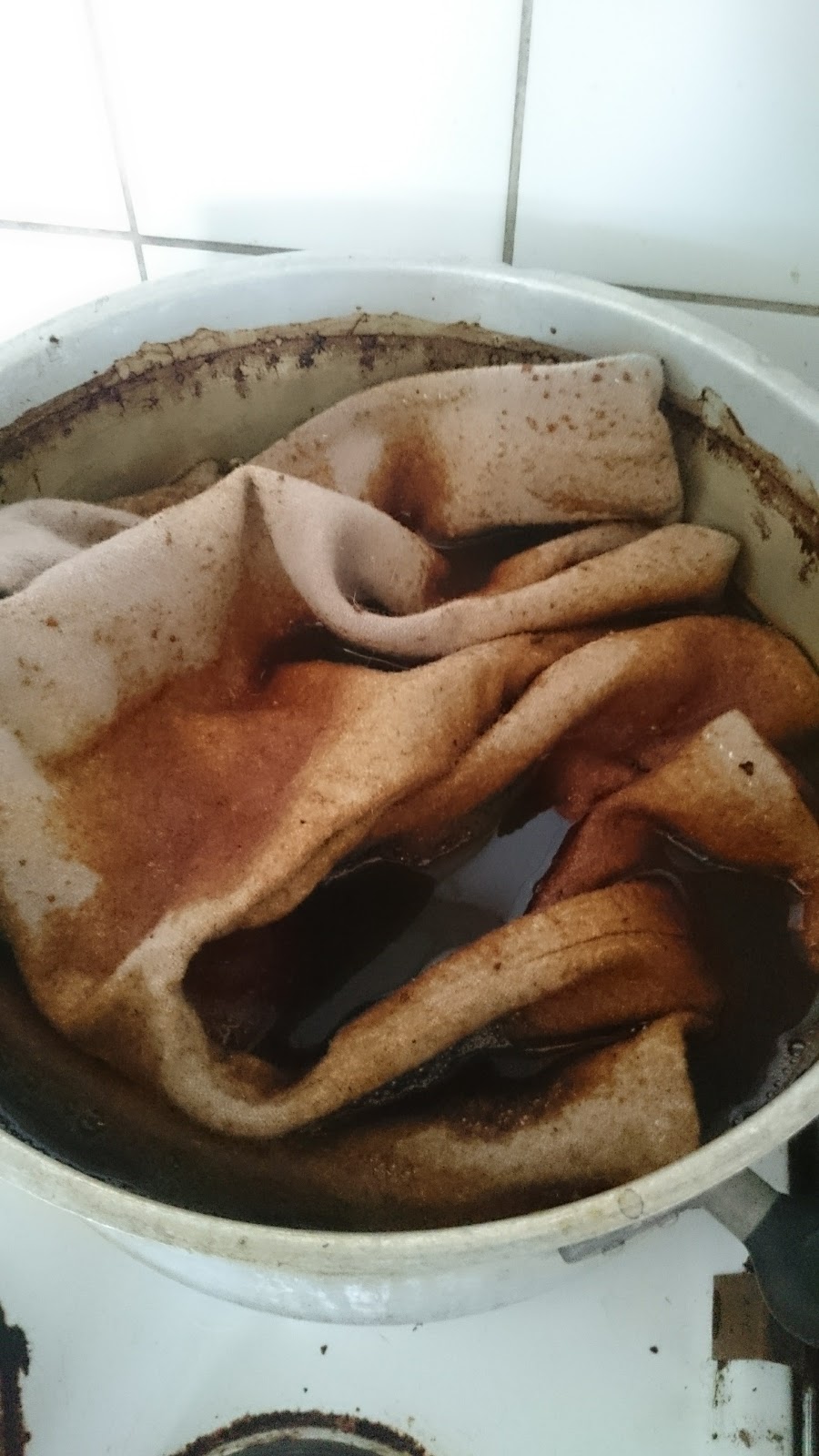
Alkuperäinen kangas oli värjäämätöntä Medeltidsmoden luomuvillaa, toimikassidoksista, kude ja loimi hienokseltaan eri väristä. Pakastimessa puolestaan oli kerran keitetyt krappijuuren palat, nehän eivät yhdellä värjäyksellä luovuta kaikkia värejään joten ne käytettiin uudelleen ja kiva pinkkihän siitä tulikin. Värjäsin kankaan alunapuretuksella ja tulos oli yllättävänkin tasainen, mikä ei aina pienessä kattilassa ole ihan itsestäänselvyys.

The original fabric was undyed organic wool from Medeltidsmode. It was of twill weave, warp and weft slightly different colour. Also I had some once-boiled madder roots in my freezer, they are known not to yield all their colour in one boiling session so I re-boiled them - and the dye ended up as being quite a nice pink! I mordanted the fabric with alum and got an surprisingly even result, not something that can be taken for granted when dyeing in a small-ish kettle.

Värjäämätön kangas, tästä näkee oikean ja nurjan puolen sävyeron. Kissa-apu on tyytyväinen itseensä. ~~~Undyed fabric, one can well see the difference in colour on different sides of fabric. Kitty help is very pleased with himself.

Värjättävänä, alkaa näyttää jo punaiselta. ~~~ Dyeing in process, reddish already.
Nätti kesäpäivä,hyvä kuivattaa kangasta ulkona. ~~~ A pretty summer day, perfect for hanging the fabric out to dry.

Kaavana käytin suuntaa-antavasti Grönlannin Herjolfsnes 66:n kaavaa sillä erolla, että tästähän oli tulossa napitettava kun taas alkuperäinen oli edestä umpinainen, ja pidensin häntää hiukan. Käytin alkuperäisen mittoja niin pitkälle kun niitä oli mainittu. Huppu osoittautuikin yllättävän isoksi, se tulee varsin alas hartioille. Mahdollista on, että tämä on ollut miehen huppu sillä löydettäessä se oli käytetty käärinliinaksi mieheksi tulkitun luurangon jaloille (vaikka eihän se varsinaisesti välttämättä todista sen kummempaa hupun omistussuhteista) ja kuvituksissakin tämäntyyppisiä alemmas tulevia huppuja nähdään enemmän miehillä, naisten huput tuppaavat olemaan pienempiä.

I used the pattern of a norse Greenland find, Herjolfsnes 66, as a guideline. The difference was that I was about to make a buttoned hood where as the original was a closed one. Also I extended the tail somewhat. I used the measurements of the original hood wherever they were mentioned. The hood turned out to be surprisingly large, it extends quite far below shoulders. It's possible that the original Herjolfsnes 66 was a man's hood since it was found wrapped around the feet of a skeleton that was interpreted as being male. That's hardly a definite proof of ownership, though, but also in illustrations larger hoods like this are more commonly seen worn by men, women's hoods are smaller and more snug.
Alkuperäinen Herjolfsnes 66. Kuva sivulta Some clothing of the Middle Ages.


Alkuperäisen Herjolfsnes 66:n ompelu- ja viimeistelytekniikoista ei ollut Woven into the earth -kirjassa mainittu oikein mitään, esimerkiksi tämän hupun alareunaa ei ollut säilynyt, ja tilanne oli huononpuoleinen muissakin hupuissa. Sovelsin sitten hieman muiden Grönlannin huppujen tekniikoita niistä mistä tietoa oli saatavilla, huppu nr. 65:ssa (museonro D10596) pääntien reuna oli ommeltu takapistolla kiinni ja varmistettu kahdella "stab stitch"'-rivillä joten sillä mentiin tämänkin kanssa, sovelsin samaa myös alareunaan ja nappilistaan. Tuli muuten hyvä ja napakka reuna.

The sewing techniques of the original Herjolfsnes 66 were largely unmentioned in Woven into the earth, and for example the lower edge had not survived. The situation was almost as bad with other hoods as well. So I took what I had and applied other Herjolfsnes techniques to this hood. In hood nr. 65 (Museum nr. 10596) the face opening was sewn down with a whip stitch and secured with two rows of stab stitch, so that's what I did with my hood too, and treated the front and lower edges the same way. A nice and firm edge as a result!

Palat yhdessä mutta täysin viimeistelemättä ~~~ pieces joined but still totally unfinished.

Käsikirjoituksen kuva ei ole kovin selkeä mitä tulee nappeihin, joten päätin ratkaista nappimateriaalivalinnan sillä mikä on lähinnä eli hupun leikkuujätteellä ja kangasnapeilla. Tässä kohtaa otin apuun Lontoon löydöt, sieltähän tunnetaan 1300-luvun kerroksista useita isoja jäänteitä napitetuista hupuista. Koska tyypillinen keskiaikainen napitus on kovin tiheää, asensin napit paikoilleen peukalonleveyden välein. Nappien kokonaismääräksi tulikin sitten 15 kappaletta.

The illustration on the manuscript isn't that clear on the choice of button materials, so I took what was closest to me, the cutting waste and made fabric buttons out of that. At this point I decided to go for the London finds for a source, since large fragments of 14th century buttoned hoods have been found from London. Because the typical medieval way of buttoning garments is very dense and lots of buttons, I added buttons only a thumb's width apart. That resulted in 15 buttons altogether.

Napinaihioita ~~~ Buttons in the making

Pellavainen nappilista ~~~ Re-enforcing the buttonhole edge with a strip of linen fabric


Lähteet ~~~ Sources
Woven into the earth
Textiles and clothing from medieval excavations in London 1150-1450
Buried Norsemen in Herjolfsnes

Tuesday, 11 July 2017

Bocksten-hupun uusi väri ~~~ New dye for a Bocksten hood

Kanssaeläjä harmitteli ennen Turun keskiaikaisia markkinoita ja keskiaikaista muotinäytöstä huppunsa laimeaa väriä. Saksanpähkinällä värjätty huppu olikin kieltämättä vähän valju beige, sinänsä se olisi kyllä itselleni mennyt mutta kun kerran herra uutta väriä halusi niin olihan tuo toteutettava (varsin loistava tekosyy päästä värjäämään!). Liian hieno väri ei sopinut tähän suunnitelmaan, kyseessä kun oli "työvaatekokonaisuus", eivät varsinaisesti mitkään edustusvaatteet. Jotain paikallista väriainetta siis, mikä olisi ollut täälläpäin kaikkien saatavilla.

Before the Turku medieval market and its medieval fashion show, the companion was slightly vexed with his hood and its colour. I must admit, it indeed was a very pale beige, dyed with walnut. It would've worked for me, but  since he wanted new colour, of course it had to be dyed (what a brilliant excuse to get the kettle boiling!). The new colour shouldn't be too fancy, since this was a part of a set of "working clothes" and not something that's considered as the Sunday best. So the dye should be something that would've been available for everyone around here.

Siinäpä se menee alkuperäisessä värissä, häntä polvia hipoen. ~~~ There it goes with its original colour, tail reaching the knees. Kuva/photo Arvo Malmi.
Huppu oli Bockstenin hupun mallilla leikattu ja ommeltu, eli esikuva löytyy siis noin 1300-luvun puolivälin Ruotsista. Alkuperäisestä Bockstenin hupusta ei värianalyyseissä oltu löydetty mitään värijäämiä itse huppukankaasta, joskin löydön suoympäristö oli värjännyt hupun ruskeaksi (Bockstenmannen och hans dräkt). Kanssaeläjän hupun beigen päälle sopivaa väriä miettiessä havaitsin että nyt on oikein erityisen hyvä vuosi lepänkävyille, joten siitäpä se ajatus lähti, vaikka lepänkävyillä värjäämisestä ei kovin paljon historiallisia lähteitä olekaan -tässä mentiin siis lähinnä linjalla "mikä ettei". Huppu painoi onnettomat 200 grammaa (varsin kevyttä villaa) mutta jotta väri olisi ollut riittävä eikä taas oltaisi päädytty beigeen, keräsin käpyjä ämpärillisen, vähän vajaa 10 litraa. Liottelin niitä pari päivää ennen keittämistä.

The hood was cut and sewn after the Bocksten hood pattern, so it's based on an mid-14th century Swedish original. The original Bocksten hood showed no traces of dye when tested, although swamp water had dyed it brown (Bockstenmannen och hans dräkt). When I thought of what should I dye the companion's hood with, I noticed that it seemed to be an especially good year for alder "cones", so that's what I went for -although there is very little evidence for alder cones being used as a dye historically, this was more like "why not" -decision. The hood was really light in weight, only 200 grams, but to avoid the new dye being beige too I collected a whole bucket, about 9 liters, of cones. They were soaked in water for a few days before they were boiled.

Alkuperäisen Bockstenin hupun kaava, omassa tuli jätettyä helman korjauspalat pois. ~~~ The original Bocksten hood pattern. I left the tiny bottom edge "repair pieces" out. Kuva/pic Marc Carlson, Some clothing of the Middle ages

Ämpärillinen käpyjä, tässä tosin jo keitettynä. ~~~ A bucket full of cones, already boiled.
Käpysoppa kiehui kolmisen tuntia kuten yleensä on ollut hyvä kovemmille kasviaineksille. Jälkeenpäin oli hyvä havaita että lepänkävyissä olisi tietysti ollut tanniinia joten alunapuretus ei välttämättä olisi ollut tarpeen, mutta eipä siitä varsinaista haittaakaan ollut, laitoin siis "automaattiohjauksella" värjätessäni 20% alunapuretuksen. Hupun kanssa kattilassa ei ollut mitään muuta, joten huppu sai kaiken saatavilla olevan värin ihan kokonaan itselleen. Huppu lämmitteli melkein-kiehuvassa vedessä 12 litran kattilassa pari tuntia ja sai sitten jäähtyä liemessään yön yli, aamulla huuhdottiin.

The cone soup was boiling for three hours, that has previously been a good time for harder parts of plants. Only after the dyeing I realized that the cones too had tannin, so mordanting with alum wouldn't have been necessary. But it doesn't do any harm either, and the fabric was mordanted with 20% alum. The hood was the only thing in the kettle so it got all the colour that was available. It stayed in the 12 liters kettle heated for a few hours, and and after that it was left to cool overnight and it was rinsed in the morning.
Sinne meni, tosi tumma liemi ja aavistus uudesta väristä jo pinnalle loiskahtaneena. ~~~There it went, really dark liquid already partially splashed to the hood

On sanottava että komea lopputulos siis tuli, runsas väriaineen määrä selvästi kannatti koska hupusta tuli suorastaan pronssinruskea. Ja tasainenkin vielä, mikä ei aina kangasta värjätessä ole ihan itsestään selvää. Huppu siis edusti vastavärjättynä keskiaikaisessa muotinäytöksessä ja hyvin edustikin muun Bockstenin-miehen vaatetuksen kanssa!

And I've got to say it ended up as quite handsome, plenty of dyestuff was definitely worth the shot because it ended up as bronze in colour! And very even dye, which is not always self-evident when dyeing fabric. The newly dyed hood was represented in the Turku medieval fashion show, and it indeed looked fabulous with the other Bocksten man gear!
Tällainen tuli. Illan myötä vastavärjätty huppu vaihtui chaperoniksi... ~~~ This was the result. As the night came, the newly dyed hood became a chaperon....

Tuesday, 23 August 2016

Ravintola AD 1393 ~~~ Restaurant AD 1393

Restaurant AD 1393 täydessä käynnissä! ~~~  Restaurant AD 1393 up and running! Photo M. Pulla.
Ravintolapäivähän on ihan paras keksintö ruokamaailmassa, sen turvin on jo tullutkin tutustuttua paikkoihin ja ruokiin joihin ei varmaan olisi muuten tullut ikinä muuten törmättyä (viitaten esimerkiksi taannoiseen vapaaehtoisen palokunnan tempaukseen, jossa tarjolla oli burgeria paloasemalla!). Mutta yksi on meiltä Turusta puuttunut, ilmeisesti ei koko sinä aikana kun ravintolapäivää on järjestetty ole ollut tarjolla historiallista ruokaa (puhumattakaan sitten vakituisemmin toimivista ravintoloista -ja ei, Haraldia ei lasketa vaikka sinänsä hauska ruokapaikka onkin). Olin miettinyt tilanteen korjaamista jo useamman vuoden, mutta harmillisesti ravintolapäivät ovat osuneet päällekäin muiden tapahtumien kanssa. Päällekäisyyksiltä ei vältytty nytkään, mutta päätettiin silti toteuttaa tämä nyt. eikä ollut kovin vaikeaa puhua muita ihmisiä mukaan!

Luonteva valinta oli keskittyä keskiaikaan, säilyneitä reseptejä kun on siltä ajalta ihan reilustikin, ja keskiaikaiseen ruokaan liittyy myös paljon kummallisia ja vääriä käsityksiä (kansanvalistuksellinen näkökulma tottakai!). Mutta kaipailin tarkempaa rajausta yleiseurooppalaisen ja -keskiaikaisen sijaan, ja luontevaa oli sitten keskittyä yhteen lähteeseen. Laajuudessaan Le Ménagier de Paris oli ihan nappivalinta, koska reseptejä siinä on kaikkineen yli kolmesataa, ja muut taloudenhoitovinkit sitten vielä lisänä. Ajatuksena oli ottaa yksi liharuoka, paastoa edustamaan yksi kalaruoka ja huomioida myös kasvissyöjät, kaikki Ménagierin resepteillä mahdollisimman vähän mitään muuttaen. Ja tästähän tempauksemme sai myös nimensä, 1393 kun on oletettu Ménagierin kirjoitusvuosi. Ihan alkuperäisenä ajatuksena oli myös pitää pieniä luentoja keskiajan ruokakulttuurista, mutta tämä onneksi ymmärrettiin jättää tästä tapahtumasta ainakin tällä kertaa -vaikka meitä oli seitsemän henkilöä tekemässä tätä hommaa, kaikilla oli kädet niin täynnä ihan ruuanteko/jakelu/rahastustöissä että vartiksi puhumaan ei olisi oikein ehtinyt.

Kaupungin järjestyssäännöistä johtuen kokkaaminen kaupungin puistossa ei voinut tapahtua tuttuun tapaan avotulella, mutta varmistuksen jälkeen kaasukokkaus kävi päinsä. Meillä oli sitten viisi kaasukeitintä ja kolme kaasupulloa, ja näistä saatiinkin sitten riemua kun tuulisena päivänä liekki sammui aina vähän päästä. Patenttiratkaisuksi tuulisuojaksi kehitettiin sitten erään kokin mekko, tehtävänä henkilöllä oli siis pääosin seistä paikoillaan helmat leveänä! Alkusähläyksistä johtuen pääsimme aloittamaan jo valmiiksi hiukan myöhässä ja ruuan valmistumiset osuivat sitten aivan eri aikoihin, mutta siitäkin sitten lopulta selvittiin kun pääsi vain yli siitä, että lisukkeet eivät osuneet aivan niille ruokalajeille kun oli suunniteltu... Lopulta kävi niin onnellisesti, että lähes kaikki ruoka myytiin loppuun (jäljelle jäi vain vähän keittoa), asiakkaat olivat ilmeisen tyytyväisiä ja tätä pyydettiin uudestaankin järjestettäväksi!

Restaurant day must be one of the best innovations in food world, and because of it I've tasted food I wouldn't perhaps have tasted otherwise or visited places I wouldn't have had a chance to visit (referring to, for example, a burger bar at a local fire station organized by the volunteer fire department!). One thing, however, has been missing -apparently during the whole time the restaurant day has existed, not once historical food has been served here in Turku (not to even mention permanent, actual restaurants). I had thought of fixing the situation for some years now, but unfortunately restaurant days have every time been on the same weekend as some other events. It happened this time too, but we decided to go ahead anyway, and it wasn't really difficult to persuade others to join the effort!

It was only natural to focus on medieval food, since there are quite a few surviving recipes and there also are a lot of misconceptions surrounding it (always there to enlighten the public, me!). But I was craving for a more narrow approach instead of an general European and medieval, so it was also natural to focus on one single source. Le Ménagier de Paris is abundant in its choice of recipes, over three hundred different foods. I was thinking of one meat course, one fish course to represent the foods of the fish days, and one completely vegetarian dish for the lent, all with the recipes of le Ménagier, altering as little as possible. And this was also where our restaurant got its name, 1393 is the year when le Ménagier is assumed written. Originally we had also in mind to have small 10-15 minutes "lectures" about medieval food and food culture, but luckily we decided to ditch that -even with seven people participating, we had our hands totally full.

Due to the city ordinances, cooking with real fire as we usually do was forbidden in a city park but it turned out that cooking with gas was alright. We then had five gas cookers and three bottles of gas, and they did cause some headache -it was a windy day, and the flame was blown out every once in a while. Eventually we came up with a solution, we recruited one person basically just to stand still with her skirts spread out as wide as possible and indeed she did block the wind! Because of the fuss we got to start a bit late and the dishes were pretty much finished all in a different time. No big crisis, though, it only caused the dishes and side dishes to be paired in a different manner than I planned. Eventually, we sold out almost all of our food (only little soup was left for us to share), customers seemed happy and we even were asked to organize this kind of event again!

Tyytyväinen pieni asiakas sai nuolla kauhan kun possukastike loppui. ~~~ A happy little customer got to taste the pork sauce after we ran out of it.  Photo M. Pulla.

Mutta niihin resepteihin! Käytin ohjeita Janet Hinsonin Ménagierin käännöksestä, pahimmissa tapauksissa turvauduin vähän uudempaan Greco & Rose:n käännökseen. Käytännön syistä tämä, Hinsonin reseptit olivat printattuina kun taas Greco & Rose oli oikeana kirjana ja sisäpuoleltaan vielä ihan kunnollisen näköinenkin (kansissa kyllä on vähän kahvia). Printtiresepteihin oli siis mukavampi tehdä merkintöjä... Testikokkauksen jälkeen yksi suunniteltu ruokalaji meni vaihtoon, en vain saanut punajuurikeitosta toimivaa mutta hernekeitto toimi sitten senkin edestä.

But, for the recipes! I used recipes from the Janet Hinson's translation, and in some unclear cases I turned for the Greco & Rose's translation. This was for practical reasons, I had the Hinson recipes printed but the Greco & Rose was a real book, and its insides are still quite neat even though the cover has some coffee in it. The printed recipes allowed me to make  notes, underline and spill food all over them... After the test cooking I changed one planned dish, I just couldn't get the beet soup  to be good but pea soup made up for that.

 Eli seuraavanlaisesti lähdettiin ohjeita toteuttamaan ja muokkaamaan, ohjeet Hinsonin käännöksiä:
We made the dishes as following, recipes from the Hinson translation:

---------------------------------
Mausteinen possukastike ~~~  Spicy pork sauce


FALSE GRAIN DISH. Cook in water and wine livers and giblets of poultry, or meat from veal, or from a leg of pork or mutton, then chop it very finely and fry in lard: then grind up ginger, cinnamon, clove, grains, wine, verjuice, beef bouillon or juices of whatever meat you are using, and lots of egg-yolks, and pour it over your meat, and put it on to boil well. Some add saffron, as it should be yellowish in colour, and others add burnt bread, ground and sieved, for it should be thickened and also eggs and bread, and it should be tart from the verjuice. And in serving, over each bowl, sprinkle powdered cinnamon.

Lihan kanssa ei ilmeisesti tässä ole kovin tarkkaa, mitä nyt sattuu olemaan. Oli sitten 3 kg erilaista possua... Possu meni suolattuun punaviiniin (0,75 l) jota jatkettiin vedellä ja kiehuskeli siellä kunnes oli kovin kypsää. Sen verran, että kun sen otti sieltä pois ja sitä leikkeli pienemmiksi paloiksi, se käytännössä mureni jo siinä. Paistettiin silti vielä reilussa voissa. Tässä tilassa saikin sitten jäädä odottamaan yön yli seuraavaan päivään, jolloin se lämmitettiin ja sitten siihen lisättiin teelusikalliset inkivääriä, kanelia, neilikkaa, mustapippuria (korvaamaan paratiisinsiemeniä joita ei Suomesta tällä hetkellä saa), 0,5 l  punaviiniä ja noin 0,5 dl sitruunamehua (korvaamaan verjuicea jota ei Suomesta tällä hetkellä saa) ja noin 10 kananmunan keltuaiset. Kaipasi vielä vähän nestettä, joten laitettiin vähän vettä ettei pala muttei niin paljoa, että muuttuisi muhennokseksi. Korppujauhoa pidettiin varalla, mutta rakenne ei lopulta sitten kaivannut sitä. Tuli valmis ja tuli valtavan hyvä, loppui kesken!

It seems as if it doesn't matter much what meat does one have to make this dish, we had 3 kilos of pork. We salted some red wine (0.75 l) and added some water and cooked the pork in it until it was well done. So well done, that when we started cutting it to smaller pieces, it basically just crumbled. Then we fried the pork in butter, and then it was put to fridge to wait until the next day. Then it was heated again and approx. one teaspoon of ginger, cinnamon, ground cloves, black pepper (to substitute grains of paradise), 0.5 l red wine, about 0.5 dl lemon juice (to substitute verjuice) and well-beaten yolks of about 10 eggs were added. It still needed some liquid, so we added water but not so much that it would turn into stew. We had spared some breadcrumbs for this, but the dish didn't look like it would need them. Then, it was finished and it was delicious -and the public loved it too, we ran totally out of it!
---------------------------------

Lihapäivän riisi ~~~ Rice for a meat day

RICE for a meat day. Pick it over and wash in two or three changes of hot water, and put to dry on the fire, then add boiling cow's milk, and grind up saffron to colour it yellow: soak with your milk, then add in grease from beef stock.

Yksinkertaista. Tumma riisi (2 paketillista) pääsi kylpyyn kolmeen litraan suolattua maitoa, ja sitä sitten hämmennettiin lähes jatkuvasti kunnes oli kiehunut valmiiksi -sahramihyppysellinen lisättiin vasta vähän ennen kun oli syöntikunnossa. Alkuperäisen suunnitelman mukaan tähän olisi lisätty voita, mutta lopulta se jäi kiireessä tekemättä. Hyvää oli silti.

Fairly simple. Two packages of dark rice ended up in 3 litres of salted milk, and it was constantly stirred until it was ready and well boiled. Only slightly before it was served some ground saffron was added. Originally we had planned on adding butter, but since we were in a bit of a hurry, we didn't do that -and it was good anyway.

---------------------------------
Keitetty hauki ~~~ Boiled pike

SEA-PIKE should be gutted through the vent, cooked in water, eaten with cameline sauce.

Hiukan oiottiin ja ostettiin valmista haukifilettä. Sitä olikin sitten 3 kg! Sopivan syömäkelpoisiksi paloiksi paloiteltu hauki keitettiin suolavedessä noin 15 minuutin ajan, eipä siinä sitten muuta.

We cut some corners and bought pike fillets, total of 3 kg. Then it was cut up so smaller pieces and boiled for some 15 minutes in salt water. That was pretty much all it needed, that and a good sauce!

--------------------------------- 

Cameline-kastike ~~~ Cameline sauce

CAMELINE. Note that at Tournai, to make cameline, they pound ginger, cinnamon, and saffron, and half a nutmeg, moistened with wine, then take it out of the mortar; then take crumb of white bread, without grilling/burning it, moisten with cold water and pound in the mortar, moisten with wine and strain; then boil all [together], and put in last of all some brown sugar; and that is winter cameline. And in summer, they do the same, but it is not boiled at all.

Päädyttiin kesä-camelineen, eli teimme kastikkeen alkoholittomaan valkoviiniin. Ensin sekoitettiin keskenään pari maustemitallista inkivääriä, kanelia, muskottipähkinää ja sahramia. Ne sekoitettiin 0.75 l:aan viiniä jota vähän jatkettiin vedellä, sitten lisättiin noin 3 dl korppujauhoa. Lopuksi noin 1 tl ruskeaa sokeria ja maun tarkistus, taisin lisätä vielä hiukan inkivääriä mutta tämän kastikkeen väri oli todella mahtava!

We went for the summer cameline,  so the basis for this sauce was non-alcoholic white wine. First, spices were mixed together, some two millilitres ginger, cinnamon, nutmeg and saffron. They were added to the wine (some water was added too), then about 3 dl breadcrumbs were added. Finally one teaspoon of brown sugar, after checking the taste I added just a bit of ginger and it was good -and the colour of the sauce was wonderful!
---------------------------------
Frumenty


FRUMENTY. First, you must hull your wheat the same as you would for hulled barley, and remember that for ten bowls you need a pound of hulled wheat, which you can sometimes find at the spice-shop already hulled for one blanc per pound. Clean it and cook it in water in the evening, and leave it overnight covered by the fire in lukewarm water, then take it out and wash it. Then boil milk in a skillet and do not stir it, for it would turn: and without waiting, put it all at once into a clean pot; and when it is cold, take the cream off the top so that this cream does not cause the frumenty to turn, and then boil the milk again with a little wheat, but very little wheat; then take egg yolks and pour them in, that for each sixth of milk a hundred eggs, then take the boiling milk, and beat the eggs with the milk, then move the pot back and throw in the eggs, and move it back (away); and if you see that it is trying to turn, put the pot in a full pail of water. On fish days, use milk: on meat days, use meat juices; and you can add saffron if the eggs aren't yellow enough; item, half a piece of ginger.

Valitsimme vehnäsuurimoiden sjasta spelttiä, joka oli tähän hätään helpommin saatavilla, mutta myös vanhana vehnän lajikkeena tunnettu Ménagierin kirjoitusaikaan (vaikkei ilmeisesti Ranskassa tuolloin viljeltykään, mutta esimerkiksi Saksassa kyllä). Tähän satsiin meni kaksi 800 g:n pakettia suurimoita, jotka eivät onneksi vaatineet alkuperäisohjeessa mainittua liotusta. Speltit keitettiin 3 l:ssa maitoa, mukaan laitettiin vähän suolaa. Hetken kiehumisen jälkeen spelttien joukkoon lisättiin noin 15 hyvin rikottua kananmunan keltuaista sekoittaen. Sitten annettiinkin vaan tekeytyä kunnes speltti oli syöntipehmeää, ja vaikka väri olikin melko keltainen munista, vielä ripaus sahramia ja hyvä tuli.


We chose to use spelt instead of wheat, because in this form it was more easily obtainable, and because as it is also a subspecies of wheat and it was cultivated when le Ménagier was written (although apparently not in France, but for example in Germany). For this dish two packages of spelt á 800 g were used, delightfully they did not require overnight soaking as was mentioned in the original recipe. The spelt was cooked in 3 liters of milk, with some salt added. After a while well-beaten yolks of some 15 eggs were added. Then it was left to cook (stirring had to be done frequently) until it was done. Some saffron was added although the colour was quite nice.

---------------------------------

Tuorehernekeitto  ~~~Soup of fresh peas


When you have NEW PEAS [...] On a fish day and in Lent, fry the onions as is told in the preceding chapter, and then put the oil in which the onions were fried and the onions in along with bread-crumbs, ginger, cloves and grain, ground: and sprinkle with vinegar and wine, and add a little saffron, then adorn the bowl with slices of bread.

Tämä ohje vaatikin sitten hiukan tulkitsemista, mutta koska se oli hernekeitto-ohjeiden keskellä, tulkitsin tämänkin sellaiseksi. Sipuleista oli edellisessä luvussa kerrottu paljonkin, mutta olipa mainittu myös keittäminen ja sen jälkeen paistaminen, joten sillä mentiin. Noin 1,5 kg sipulia paloiteltiin ja keitettiin ja sen jälkeen paistettiin oliiviöljyssä, sitten lisättiin herneet, noin 4 kg. Nesteeksi vettä ja jonkin ajan kiehumisen jälkeen 0.75 l valkoviiniä ja n. 1 dl valkoviinietikkaa, n.1 tl inkivääriä, ripaus mustapippuria (paratiisinsiemenien tilalle) ja neilikkaa. Ripaus sahramia lisättiin aivan viimeiseksi. Keitto suurustettiin gluteenittomalla korppujauholla (350 g), joka teki koostumuksesta seuraavana päivänä ehkä hiukan jännän, mutta tämä onnistui kyllä muuten oikein hyvin! 

This recipe did require some intepretation, but since this recipe was in the text situated in the middle of pea soup recipes, I thought this one must be a pea soup recipe too. As for the onions, the preceding chapter did not really specify one single way to prepare onions, but mentioned cooking and then frying among other ways too, so that's what I did. About 1,5 kg onions were chopped and boiled, and fried in olive oil after boiling. Then peas, massive 4 kgs, were added, and water as the soup liquid. After some boiling a bottle of white wine (0.75 l) was added along with about 1 dl white wine vinegar, and about one teaspoon of ginger, black pepper (grains of paradise were not available) and  ground cloves. A pinch of saffron was added at the end, and the soup was thickend with glutein-free breadcrumbs (350 g). Perhaps because of the breadcrumbs the consistency was a bit funny on the next day, but the taste was really good!

Saturday, 2 July 2016

Herjolfsnesin pillerirasialakki ~~~ Herjolfsnes pillbox cap

Lakintekopuolle on tullut keskityttyä vähän vähänlaisesti (no, kun itse käytän pääasiassa huntuja ja mies on itse ostellut valmiina useampia hattujaan), mutta tilanne tuli eteen kun Turun keskiaikaisten markkinoiden keskiaikaiseen muotinäytökseen tarvittiin miehen Herjolfsnes-settiä täydentämään päähinettä. Hetken pähkäilin matalampien (nrot 83-86) ja korkeamman (nro 87) välillä, mutta lakin tuleva omistaja oli sitä mieltä, että matalampi parempi, joten sillä sitten mentiin.

For some reason I haven't made that many medieval hats (well, I use mostly veils and companion bought several readily made hats for himself), but it became obvious that yet another one was needed fot the Turku medieval market's medieval fashion show as a finishing touch to a man's Herjolfsnes -set of clothing. For a while I wondered if I should be making the not-so-tall one (n:o 83-86) or the taller one (n:o 87), but the future owner of the cap decided that lower is better. So that's the pattern I was going for.


Suunnitelmissa oli myös tehdä lakki jemmassa olevasta harmaasta villakankaasta, mutta kun toivottiin että jotain väriä lakkiin saataisiin ("Etteivät ihmiset nyt luule, että keskiajalla käytettiin vain ruskeaa ja harmaaata"), tutkimushommaksihan ja kokeiluksihan tämä meni -vaikka sama harmaa kangas meni käyttöön silti, koska niin pienestä tilkusta ei juuri muuta olisi saanut kuin pipoa ja pussukkaa.

I also was planning on making the cap out of a grey woolen fabric I had stashed, but since it was requested that the cap would have some colour in it ("So that people would not think that they wore only grey and brown back then"), this sewing project quickly turned to an experiment- and research project too. Although I was still going to use the grey fabric, since I had so little left that it wouldn't be good for anything save caps and purses. 

Woven into the earth kertoi Grönlannin löytöjen väreistä, että luonnonruskean villan värin vahvistaminen tummemmaksi oli ilmeisesti suosituin löytöjen valossa, mutta tämähän oli pipon omistajan toiveiden vastainen värivalinta. Kirja ehdottaa myös, että luonnostaan rautapitoisella jokivedellä olisi saanut punaruskeaa väriä lankoihinkin. Jännä ajatus ja tekisi kieltämättä mieli joskus testata miten tuo onnistuisi, mutta siihen johtavan tilaneen toistaminen ei onnistunut kyllä tähän hätään mitenkään. Morsinkosinistä (tuontiaine) oli yhdessä löydössä, ja sen käyttöönottoa tässä tapauksessa hankaloitti aika tavalla se, että tänä vuonna kylvetyistä morsingonsiemenistä iti tasan yksi, sekin niin taimi pieni vielä ettei käyttöä kannattanut ajatellakaan. Krappia -tuontiainetta- oli myös käytetty vain yhdessä löydössä, takki 63:n koristekaitaleessa, joten sen käyttäminen lakissa ei tuntunut jotenkaan suunnitelmalta. Jäkälävioletti oli löydöissä tutumpi, se olisi ollut jopa yhden pillerirasialakin oma väri, mutta tähän hätäänhän jäkäläviolettia ei ehtinyt valmistaa -kyseessä on kuitenkin monen viikon prosessi. Päädyin tutkimaan sitten Grönlannissa kasvavia muita jäkäliä... Vajavaisella jäkäläntuntemuksella olin löytävinäni sieltä kuvista kalliokarvetta, joka viimeksikin antoi kauniin punaruskeanoranssia -sillä mentiin siis!

Woven into the earth stated that darkening the natural brown colour of the wool was the most popular choice in Greenland according to the finds, but this choice of colour was contrary to what the future owner of the cap requested. The book also suggests, that the naturally iron-rich stream water would've perhaps been used for dyeing the yarn reddish brown. It's an interesting idea and I'd love to try that out sometime, but for now I just couldn't replicate the situation where that could be possible. Woad blue, imported dyestuff, was found only once, and my woad cultivation sucked big time this year -only one plant, and even that was so tiny harvesting was not to be considered. Madder red -also imported- was also found only once, in a decorative strip of cloth in coat 63, so I didn't feel like dyeing a cap with it was a good idea. Lichen purple was used according to the finds, and it was even the colour of one of the surviving caps, but I had no time to make lichen purple as the process takes several weeks. So I ended up looking for other lichens of Greenland, and while my knowledge on lichens is not really that good, I think I spotted Parmelia Saxatilis which also thrives in my back yard. It gave me a pretty reddish brown dye last time, so that's what I dyed with!


Kalliokarvehan on siitä kiitollinen väriaine, että se ei tarvitse edes puretusta. Käytin noin 200 g karvetta ja saman verran värjättävää materiaalia, kankaan lisäksi noin 25 g luonnonvalkoista lankaa. Ladoin jäkälän ja villan kattilaan kerroksittain, ja ei kun lämpöä kehiin -saivat oikein kiehahtaakin ja kaikkineen lämmöt olivat päällä hellalla neljä tuntia. Kääntelin keitosta välillä, ja annoin lopulta jäähtyä kattilassa. Ei tullut aivan niin punainen kuin olisin odottanut ja osin hiukan epätasainen, mutta kaunis väri, kyllä. Jälkivärillekin jäi potkua.

Kappaleethan tässä lakissa ovat oikein yksinkertaiset, pyöreä päänlaen kappale ja pitkä suorakaide reunaksi. Käytössä olevan kankaankappaleen pienuuden takia jouduin kaavassa turvautumaan aivan alkuperäistä mukailevaan ratkaisuun, eli koostamaan pyöreän päälaen kappaleen kahdesta osasta. Reunakappale taas, alkuperäisissä se oli ilmeisesti kokonaan yhdestä osasta, mutta tässä tapauksessa se jouduttiin koostamaan myös osissa olevan kankaan ja tarvittavan kappaleen pitkän koon takia peräti kolmesta kappaleesta... Lopputuloksessa se tosin ei tunnu haittaavan, vaan sulautuu joukkoon varsin nohevasti. Ompelin kappaleet yhteen pellavalla, saumavarojen huolittelun tein ruskealla villalangalla (Wetterhoffin Veera on osoittautunut yllättävän hyväksi ompelulangaksi) ja ainoastaa alareunan huolittelun tein eroavan värisellä langalla. Tässä tein tietoisen poikkeuksen Herjolfsnesin löydöistä, ja mukailin viikinkiajan Hedebyn löytöjä vetäisemällä alareunan käännöksen aitapistolla, "aitapuoli" sisäänpäin jolloin ulkopuolella vaikutelma tuntuu olevan kahdesta etupistorivistä. Samalla se lukitsee rispaantumisherkän reunan aika tiiviisti paikoilleen. Tai no, ainakin sinnepäin.

Parmelia Saxatilis is nice to dye with, it doesn't require mordanting. I used about 200 g lichen and about 200 g fabric, along with about 25 g white woolen yarn. I added the lichen and the fabric to the dyepot layer by layer, and then added some heat -they were boiling four hours altogether. I stirred the pot every now and then, and eventually I let the the soup cool down in the dyepot. It didn't end up quite as red as I would've hoped it to be, and the colour also a bit uneven in places, but the colour is indeed pretty. And it had quite enough dye left for a second dyebatch.

The pattern itself  for this hat is really simple, round crown and a long rectangular upright part. Because I only had fabric scraps left, I had to utilize the cutting pattern of the original find and add a seam in the middle of the crown. The upright part of the hat, however, was originally constructed of one single piece of fabric, which was impossible with my fabric scraps -therefore I had to go for three pieces, which I find to be a cute detail. Let nothing go to waste etc... I used linen thread for joining the pieces and finished the seams with dark brown woolen thread (Wetterhoff Veera has proven to be surprisingly good sewing yarn). Only the finishing of the bottom edge is where I took intentional liberties and added contrasting colour, I was inspired by the viking age Hedeby finds and used herringbone stitch with the "herringbone side" inwards. To the right side it looks as if there are two rows of running stitches, and it locks the fraying bottom edge of the fabric nicely in place.  


Värit aivan ketuillaan, mutta rakenne toivottavasti selviää. ~~~ Colours are less than accurate, but I hope the construction details are clearer.

Ja kaiken tämän jälkeen, lopputuloksesta on sanottava että hieno tuli!

This is what I ended up with. Looking good!


Ja tällainen oli koko värisaalis, jälkiväri kaksi vyyhtiä oikealla. ~~~ This is how the dyejob turned out, two skeins on the right are second dyes.

Tuesday, 26 January 2016

Talvisen matkanteon varusteet, testi 1 ~~~~ What to wear on a winter hike, test no. 1

Tulipa tehtyä oikein mukava pieni päivävaellus talvisessa metsässä Paraisilla valtavan hyvässä seurassa, tällaisia reissuja tarvitaan lisää! Reissun päämäärä virkistäytymisen lisäksi oli testata keskiaikaisten vaatteiden soveltuvuus talviseen matkantekoon. Ajatuksenani oli, että en ota mukaan modernia vaatetta lainkaan vaan lähden reissuun vallan 1300-luvun vetimissä, ja yleisarvosanaksi on sanottava että hyvinhän tämä nopeasti järkeilty kokonaisuus toimi!

Keli oli suorastaan leppoisa -1 astetta, höttöistä lunta oli noin 20 senttiä, tuulta ei juuri ollenkaan. Olosuhteet eivät siis olleet ollenkaan haastavimmasta päästä… 

A happy little group of re-enactors decided to go for a little hike in a winter forest! Our destination was Sattmark hiking route in Parainen, and what a lovely trip it was! Our aim was not only to have fun (which we did!) but also put our clothes to a test in winter-y surroundings. I decided not to take any modern clothing with me but to go totally in 14th century gear, and I must say that they worked more than well. 

Weather was pleasant -1 degrees, approximately 20 cm of fluffy snow and hardly any wind. Not really challenging.


Kuva/ photo Mikke Reinikainen
Ohessa siis muistutukseksi itselleni ja mahdollisesti opiksi muille varustuksen osaset hyvine ja huonoine puolineen. Seuraavalla varustuksella olin siis liikenteessä, alimmasta ulospäin:

As a reminder for myself and perhaps for others to learn, here are the parts of my gear with their good and not-so-good sides mentioned. So my gear was as following, starting from what was closest to the skin:


- Pellavapaita. Aluspaitani oli lyhyempi kuin muut mekot, puolisäärimittainen, ja tämä pellavalle tyypilliseen tapaan imi kosteutta, tällä kertaa lumesta kun hiukan tuli maasto-olosuhteissa myös kompuroitua. Lopulta, aivan loppumatkasta, se oli inhottavan märkä ja toki myös pahuksen kylmä polvien päälle saakka. Miettiä sopii olisiko vielä lyhyempi paita pelastanut tältä kokemukselta, vai olisiko pitänyt jättää pellavakerros pois tyystin. Ei sitä ikävä olisi tullut… Toinen tapa välttyä tältä tunteelta olisi tietysti ollut pitkät hoset, joita tosin en kyllä muista koskaan naisella kuvassa nähneeni enkä edes kuulleeni. Jos jossain esiintyy, kuulisin asiasta mielelläni! 

- Linen shirt. My underdress was shorter than my woolen dresses, mid-calf length, and it did just what linen does, absorbed moisture. Unfortunately moisture in this case came from snow since I occasionally tripped over... When the trip was nearing its end the linen shirt was wet up to my knees and somewhat cold. I was thinking if this could've been avoided by omitting the linen shirt completely -I wouldn't have missed it! Another way to solve this would've been by wearing full-lenght hose, but I've never seen those worn by women. Please let me know if you have!  


-Sukat. Tämä jännitti ennakkoon eniten, mutta yhdistelmä neulakinnassukasta ja sen päällä olevasta villakangassukasta oli oikein toimiva. Kylmä ei tullut ennen kun pysähtyi pidemmäksi aikaa ja sukan ja kengän väliin linttaantunut lumi suli, matkaa tehdessä oli siis varsin lokoisat oltavat. Lumen päätymisen kenkään olisi varmaan saanut ehkäistyä fiksummalla eli istuvammalla kenkävalinnalla...

-Socks. I expected this to be the hardest part, but a combination of nalbinded ankle-lenght socks and woolen fabric socks over them was very efficient. I didn't feel cold at all before we stopped for a longer while and snow that was packed between my socks and shoes started melting -and this could've been easily avoided by wearing a more winterproof pair of shoes.


-Kengät. Kovin matalat ja avonaiset lipokkaat, ilman pohjallista. Koska lumi oli höttöistä pakkaslunta, pohjan pitävyyden kanssa ei ollut ongelmia. Ongelmaksi loppumatkasta muodostui se, että matala kenkä päästi lunta sisään, tämä olisi ollut ratkaistavissa esim. saappailla.

-Shoes. Of low and open type, worn without any special insoles. Since the snow was fluffy and there was no ice under it, the shoes were surprisingly un-slippery. After a while of hiking it turned out, that snow begun to pack between socks and low shoes, but for example by wearing boots this wouldn't have happened.


-2 pitkähihaista nilkkamittaista villamekkoa. Ajatus kahdesta päällekkäisestä villamekosta tuli oikeastaan keskustelusta 1400-luvun birgittalaisnunnien talvivarustuksesta ja talvivarustusten säädöksistä, mutta tämä ratkaisuhan on dokumentoitu muuallakin moneen kertaan ja osoittautui tälläkin matkalla toimivaksi.

- Two long sleeved ankle length woolen dresses. Originally the thought of two long-sleeved wool dresses came from a discussion of 15th cent. clothing regulations for bridgettine nuns and their winter clothing, but this number of clothing layers has well been documented in other places as well.


-Hihaton nilkkapituinen päälimekko. Kolme päällekäistä villakerrosta eristivät vallan mainiosti! 

-Sleeveless ankle-length overdress. Three layers of wool were quite sufficient when it comes to insulation!


-Hartiahuppu, vuoritettu ohuella villalla. Tuntui paikka paikoin liialta, mutta ehkä melkein kolmen tunnin reissun aikana olisi tullut korville muuten kylmä eikä pelkkä huntu olisi riittänyt siihen. Erityisesti jos olisi osunut tuulisempi päivä. 

-Hood, lined with thin wool. At times it felt like it's too much, but perhaps it was a good idea to bring it with me after all. Considering the three hours we spent on the woods it would've been a little cold for the ears, they tend to need some cover, more than a mere veil could provide. Especially it it would've been breezy.

-Viitta. Hieman samat tuntemukset kuin hupunkin kanssa, tuntui osin vähän liialta mutta lopulta hartioita ja olkavarsia lämmittämässä kuitenkin ihan paikallaan, kolmas villamekkokerros kun ei ulottunut niille ollenkaan.

-Cloak. Somewhat similar feelings as with the hood, on occasion it felt like it's too much but after all, without the cloak I would've had only two layers of wool warming my shoulders and arms as the topmost dress was sleeveless. 

-Neulakinnaslapaset. Vanuttamattomat, joten nämähän eivät juuri olisi pitäneet tuulta mutta tällaisella kelillä aivan ehdottomasti paikallaan. Kestivät jopa pienen lumisodankin :)

-Nalbinded mittens. Unfulled, so they wouldn't have been very good in breezy weather. In a weather like this, on the contrary, they were nice to have around. Especially since some snowball throwing happened... :)

Testaus jatkuu, keväällä säiden lämmettyä olisi ajatus tehdä yönyli -reissu! Mutta katsotaan sitä sitten.

Testing continues! Sometime at spring when the weather is warmer, we've been thinking of an overnight-trip. But we'll see about that then.