Saturday, 3 June 2017

Reissu Riikaan, osa 2 - Etnografinen museo ja Pietarinkirkko ~~~ Trip to Riga. Part 2 - Etnographic museum and St. Peter's church

Reissupäivä 1 täällä ~~~ Trip day nr. 1 here

Reissun toinen päivä ja kohteena heti aamusta oli Etnografinen ulkoilmamuseo. Suomalainen voisi herkästi mieltää museon paikalliseksi vastineeksi Seurasaaren, tosin täällä ehkä oli korostetummin esillä Latvian erilaiset paikalliset kulttuurit ja niiden rakennusperinteen erot. 

The second day of our trip, and we headed off to the Etnographic outdoor museum. I have a very limited experience when it comes to outdoor museums, but this one seemed to emphasize the different cultures of Latvia and the differences of the building traditions there. 

Päivä oli kylmänlainen ja muutenkin huomasi että museossa ei ollut vielä ihan kesäsesonki päällä, monet taloista olivat vielä kiinni. Henkilökunnan puutteen tosin kyllä korvasi moneen kertaan kuurinmaalaisen kalastajaperheen asuntoa esitellyt iäkkäämpi mies, joka hyvin puutteellisella englannilla mutta sitäkin innokkaammin esitteli erilaisia työkaluja ja itse tupaa -ja pääsipä turisti siinä sitten itsekin koittamaan mm. pumppuporaa!

It was a chilly day, and it seemed as the summer season wasn't quite on yet, several houses were closed during our visit. Although it must be said that the lack of personnel was totally compensated when we came across an elderly chap who supervised an Curonian fisherman's house. He was so enthusiastic in showing us around the house and telling about almost all of the objects in there with his slightly broken English- they even had a pump drill in there and he actually let me try using that too!


Innostuin myös ihan mahdottomasti talossa esitellystä suorastaan nerokkaasta nauhankudonnan apuvälineestä, kaikessa yksinkertaisuudessaan taipuisa puunoksa jonka  toisessa päässä oli oksanhaara. Oksanhaaraan kieputettiin loimenloppu, oksa taivutettiin kivalle kaarelle ja nauhan valmis pää kiinni oksan toiseen päähän -näin nauha pysyi kireänä, mutta kutoja ei ole itse sidottuna kiinni (mahdollistaa nopean reagoinnin jos vaikkapa jokin talossa vaatii välitöntä puuttumista kesken kaiken) ja tekeleen voi vaikka ripustaa seinälle kun kudonnan lopettaa.

There also was a really brilliant little band-weaving device, not more complicated than a thin tree branch which is forked on the other end. The rest of the warp was wound around the fork. The branch was then bended and the other end of the warp was tied to the other end. That way the tension of the warp stayed even and the weaver isn't tied up and is able to react quickly to whatever happens in the house. And once the weaver has done with the weaving for that day, the project can be, for example, hung up on the wall.


Rakennukset paikalla olivat valtaosin 1800- luvulta, mutta skaalaa on 1600-luvulta 1930-luvulle.

The buildings are mostly from the 19th century, but the oldest ones go way back to the 17th century and the newest are from the 1930s.


Ulkoilmamuseon katsastuksen jälkeen  oli aikaa vielä ihan reippaanlaisesti (vaikka kyllä sitä tuolla menikin erinäisiä tunteja), ja totesimme että ehdimme hyvin Pyhän Pietarin kirkkoon piipahtamaan. Kyseessähän on yksi kaupungin keskiaikaisista kirkoista, jonka 123 metriä korkeaan torniin on rakennettu todella mainio näköalatasanne. Pietarinkirkon rakennustyöt aloitettiin 1209, tämänhetkinen kirkontorni on vuodelta 1746 -aiempia torneja ovat kaataneet mm. salamaniskut. Pietarinkirkon tornin elinikää on perinteisesti korjausten jälkeen ennustettu heittämällä tornista alas lasipikari, ja tornille on ennustettu niin monta vuotta ikää kuin miten moneksi siruksi pikari hajoaa.

After we had seen the museum (it took some time!) we still had time and a change to visit the St. Peter's church. It's one of the medieval churches of the town, building process was started in 1209. It also has a fairly tall tower, 123 m altogether, with a platform where the public can admire the scenery. The tower that stands today is from 1746, the previous ones have collapsed, for example, because of lightning hit it. The "life expectancy" of the tower has traditionally been foretold by throwing a glass beaker from the tower -as many upcoming years as there are glass sherds! 


Kirkko itsessään otti pahasti osumaa toisessa maailmansodassa ja oli palanut sitä ennenkin, sen katto on esimerkiksi rakennettu kokonaan uusiksi -kirkon iästä huolimatta keskiaikaista esineistöä siellä ei siis juuri ollut edes ennen toista maailmansotaa, reformaatiota ennen siellä tosin on arveltu olleen mm. Albrecht Durerin maalaama pyhimysaiheinen taulu...

The church itself was damaged badly during the second world war (the roof had to be completely reconstructed), and that wasn't the first time the church had been burned. So no medieval objects there, but it's been said that before the reformation there was a painting made by Albrecht Durer...


Kolmannessa reissuraportissa sitten matkan kolmas päivä, toisin sanoen Metzendorffin talo sekä Aldariksen olutmuseo :)

As for the third part of the trip report, there will be stuff about the Metzendorff house and Aldaris beer museum :)

Wednesday, 24 May 2017

Reissu Riikaan, osa 1 - historiallinen museo ja tuomiokirkko ~~~ Trip to Riga, part 1 - historical museum and cathedral

Toukokuun ollessa näteimmillään päätettiin tehdä reissu Riikaan! Tällä kaupungillahan on pitkälti historiaa, virallinen kaupungin perustaminen on tapahtunut 1201 mutta asutusta paikalla on ollut jo entuudestaan. Riia oli aikoinaan virallinen hansakaupunki ja keskiaikaisia rakennuksia on kaupungissa edelleen jäljellä, rakennuskantaa löytyy jopa 1200-luvulta kirkkojen muodossa. Ja onhan se sanottava että kovin nätti kaupunki muutenkin -mielestäni muistutti aika tavalla Tallinnaa. Ja kuten Tallinnassakin, Riian vanhakaupunki on myös UNESCO-kohde. Kolmessa päivässä ehti nähdä yhtä ja toista, mutta jäipä paljon vielä näkemättäkin!

When May was at its prettiest we decided to drop by at Riga! This city has a lot of history, officially it was established in 1201 but the area was inhabited even before that. Riga was officially a member of the Hanseatic League, and there are still a number of surviving medieval buildings, even from the 13th century when some of the churches of the town were built. And I just have to say that it's a very pretty town, it reminded me a lot of Tallinn. And as well as Tallinn old town, the old town of Riga is also an UNESCO listed site. In three days there was quite a lot of time to explore and see, but also a lot was left for future visits!

"Kolme veljestä" 1400-1700-luvuilta. ~~~"Three brothers", 15th-18th century
Kaupunginmuuria, niiltä osin kun sitä oli jäljellä. ~~~ Town wall, as much as there's left of it.

Riian tuomiokirkko

Riian tuomiokirkko päätyi reissumme ensimmäiseksi kohteeksi. Sen rakentaminen aloitettiin 1211, mutta muokattiin uuteen kuosiin, korkeammaksi ja muutenkin suuremmaksi 1300-1400-luvuilla. Kirkko kärsi tulipalosta 1547, ja sen lisäksi reformaatio kuvanraastamisineen iski Baltiaan erityisen kovin joten keskiaikaa ei kirkon sisällä juurikaan ole näkyvissä rakenteiden lisäksi. Komea rakennus silti, ja uudempaa historiaa kyllä sitten olikin nähtävissä, hautajaisvaakunoita ja hautamuistomerkkejä. Tuomiokirkko oli kovasti remontissa käyntimme aikana, mikä vähän ehkä häiritsi yleiskuvaa mutta onhan se oikein hyvä että rakennusta huolletaan (ei tosin käynyt kyllä ilmi että mitä siellä tarkalleen ottaen sermien takana puuhaillaan..).

Riga cathedral

Our first target was the Riga cathedral. The building process was started in 1211, but it was significantly renovated and enlarged in the 14th and 15th centuries. It was damaged by fire in 1547, and also the reformation was more harsh in Latvia, so very little remains of the medieval interior (apart from the actual structures) remains. None the less, it's a very handsome building and there is a lot of newer history visible, burial coats-of-arms in the walls and grave monuments and 19th century stained glass windows. The cathedral was being renovated during our visit so there were several temporary walls behind which the work took place -it's very good that the place is being taken care of, but it also made the cathedral look a bit like a construction site.


Kirkon sivusta pääsi luostarin alueelle. Luostarin rakennuksiin ei päässyt sisälle, mutta suljettua pihaa kiersi valtavan nätti ja tunnelmallinen ristikäytävä jossa oli esillä kaikenlaista esineistöä Riian historiasta. Sen kummempaa yhteistä teemaa esillä oleville esineille ei tuntunutkaan löytyvän, esillä oli tykkejä, kirkon vanha kukon mallinen tuuliviiri (kuten kaikissa Riian keskiaikaisissa kirkoissa on ollut ja on edelleen), kaupungin vanhoja rautaisia katulyhtyjä ja mahdollinen kivi-idolikin, Salaspilsin kivinen pää, joka oli lahjoitettu historian museolle 1850-luvulla ja uudelleen löydetty luostarin pihasta kaivauksista vuonna 2000 ja paljon muuta. Kirkon rakennushistoriaakin ehdittiin käsitellä.

From a side door there was an entrance to the cloister area. The cloister buildings were off permits, but the garden was encircled by a cross-vaulted gallery where all kinds of objects concerning the history of Riga were on display. They did not share a common theme beyond being from Riga, there were cannons, an old rooster-shaped weather vane (all medieval churches of Riga still have one), old iron street-lamps and, perhaps as the most interesting object of them all, the stone head of Salaspils, a suspected stone idol which donated to the historical museum in the 1850s and which was found again from the cloister yard in the excavations in the year 2000. And lots of other stuff, even the construction history of the cathedral.


Historiallinen museo

Historiallisessa museossa oli vaihtuvan näyttelyn teemana Latvian ensimmäinen etnografinen näyttely v. 1896, ja ensimmäisen näyttelykerroksen vitriineihin olikin kerätty esineitä ja kokonaisuuksia jotka olivat olleet esillä jo 120 vuotta sitten. Muu anti jäikin sitten tästä näyttelystä vähän hämäräksi, koska englanninkieliset opasteet olivat kovin yleisluontoisia ja kertoivat kyllä näyttelyn yleisteemasta mutteivät yksittäisistä esineistä (ja tämä olikin sitten teemana koko muunkin museon ajan). 

Muusta museosta on sanottava, että erityisesti Latvian rautakausi on löydöllisesti *niin* hieno ja olipa esillä kokonaisen huoneen verran muinaispukurekonstruktioitakin! Valitettavasti vitriinit eivät tuottaneet hyviä valokuvia, mutta uskokaa vain että ennallistettuja vaatteita oli paljon, ja ilahduttavasti myös alkuperäisiä tekstiileitä. Esinesuuntautunutta kävijää ilahdutti muuallakin museossa se, että esillä oli paljon tavaraa, vaikka niiden teksteistä ei paljoa selvää saanutkaan. Kansatieteellisellä osastolla oli  näytteillä myös videomateriaalia erilaisista perinteisistä käsityötekniikoista (supermielenkiintoista!), näissä oli myös englanninkielinen tekstitys.

Historical museum

The first exhibition in the Historical museum was a temporary one, about the very first Ethnographic exhibition in Latvia in the year 1896. The exhibition featured objects and themes that were on display already back then. Otherwise, the impression of the exhibition was a bit superficial as the texts about the objects on display were all in Latvian and English texts covered only the basics and the general idea of the exhibition. As we later noticed, this was true for the rest of the museum as well.

As for the rest of the Historical museum, especially the iron age of Latvia is super interesting, and there was a whole room filled with reconstructions of  iron age dresses, both male and female outfits. Glass display cases were a bit tricky when it comes to taking photographs, but just believe me when I say that the amount of textiles -even originals- was indeed delightful! That goes for the rest of the museum too, lots of items on display but very little text in English (but I'd say it's still better this way, as the items were, after all, pretty self-explanatory). In the ethnographic exhibition there were video clips of traditional crafts which had English subtitles and they were indeed really neat -from making musical instruments to rope shoes!


Koristeltuja nauhalautoja ja muita tekstiilityövälineitä. ~~~ Decorated weaving tablets and other textile crafts stuff.
Yksi muinaispuvuista, pronssia riittää! ~~~ One of the dress reconstructions, plenty of bronze!
Myöhempää historiaa, sisustetttuja huoneita 1700-luvun lopulta alkaen. ~~~ Later history, furnished rooms from the late 18th century on.
Siinäpä varsinaisesti ensimmäisen päivän anti, toisen reissupäivän museo-ja nähtävyysraportti osa 2 löytyy täältä! 

That was mostly it for the first day, the museum- and sightseeing report for the second day of our trip is in here!

Sunday, 14 May 2017

Tekemättömien toukokuu 2017 ~~~ May of Unfinished projects 2017

Toukokuu tuli ja sehän tarkoittaa Tekemättömien Toukokuuta! Kyseessähän on siis historianelävöittäjien vertaistukikampanja vuoden aikana kesken jääneiden projektien valmiiksi saamiseksi ennen  kesän leiri- ja markkinakautta (tapahtuman omat Facebook-sivut), ja taas on vuosi mennyt ja uudet projektit vaiheessa. No, tänä vuonna tuntuu että niitä on varsin vähän, joten mahdollisesti tämän vuoden tehtävät jopa valmistuisivat toukokuussa! Viime vuoden tekeleet siis tässä noin vuotta aiemmassa postauksessa, ja jonkinlaista loputulostakin saatiin.

It's May again and it of course means May of Unfinished Projects! May of Unfinished Projects is an campaign for re-enactors and living history nuts to use peer support and group pressure to finish all the unfinished gear-related projects before the summer's event and camp season (and it even has a Facebook page!). Another year has passed, and I have new projects that have had very little progress. Surprisingly few anyway, so perhaps these indeed will make it in time. My projects for last year were presented in this blog post, and here is what came of them.  


  • Viikinkitakki. No sehän on se sama kuin oli jo viime vuonna kesken, sopivan vuorikankaan puutteessa ei ole oikein edennyt. Eipä silti, en oikein kovin tehokkaasti hakenutkaan, tämän suunnitelmiin tuli vähän muutosta joten ajattelin silti kasata tämän ja katsoa sitten antaisinko tämän vaikka jollekulle kaverille.
  • Viking coat. Yeap, it's the very same coat that was left unfinished last year, and for the lack of proper lining fabric there has been no progress. Not that I've searched for it too intensely, my plans changed but I still thought of finishing this and after that perhaps giving it to a friend or something like that. 

  
  • Taidehaasteen pitkähihainen mekko. Napit hankittu ja kaikkea, tämän olisi kuitenkin syytä olla valmiina kesäkuun lopussa. Haasteeseen kuuluva päälimekko onkin jo testattu hyvin toimivaksi toisen mekon päällä, joten siitä ei erityistä huolta. Kokonaisuus vaan ei ole kokonaisuus ennen kun osat ovat valmiit...
  •  The long-sleeved dress of the Art challenge. I have the fabric, I have the buttons, and this one really should be finished by the end of June. The surcotte that also is a part of the challenge has already been tested and proved functional over another dress, so I have no worries about that -but it isn't a whole entirety until all the parts have been finished...

  • Ryppyhunnun korjaaminen. Aivan kiva huntu mutta irrallisen ryppyosan kiinnitys itse huntuun on melko hirveän näköinen... Lienee pienen tutkimuksen paikka? 
  • Fixing my frilled veil. It's nice, allright, but I just hate how the frill-part, which is separate and sewn-on, is attached to the veil-part. Sounds like some research, apparently? 

Kuva hämää värin suhteen, ei ole musta vaan sininen. ~~~ The photo renders the colours wrong, it's not black but blue.
  • Pelastusprojektin eli kanssaeläjän viikinki-pellavapaidan silkkikoristelun viimeistely. Tämä jumitti hieman materiaalipulan takia (koristekangasta oli alkujaan liian vähän), mutta nyt uudet materiaalit on tilattu ja kovin tässä toivotaan että ne myös tulisivat että saisi tämän valmiiksi!
  • Rescue mission, ie. finishing a man's linen viking tunic and its silk fabric decorations. Because at first I had too little silk for decoration, finishing this was significantly delayed but now that I've ordered more, this should be finished in no time!

Saturday, 13 May 2017

Oluthommia aloittelijalta ~~~ Brewing for the first time


Nykyisenä kaupallisten oluiden aikana on ehkä vähän hankala mieltää miten vähän aikaa on siitä kun olut tehtiin itse, käytännössä joka maaseudun talossa omiin tarpeisiin, vaikka tosin myyntiinhän tehtiin toki myös. Tietyt paikat, erityisesti luostarit, olivat jo keskiajalla erityisen kuuluisia hyvästä oluestaan (yksi oluestaan kuuluisa paikka oli esimerkiksi Vadstenan birgittalaisluostari). Luostarit olivat itse asiassa ensimmäisiä suuremman mittakaavan oluenpanijoita, alkaen jo 800-luvulta. Suuremman mittakaavan oluenteon metodit ja kotitarve-oluenpano alkoivat pikkuhiljaa erota menetelmien suhteen toisistaan -kotitarvemetodit pysyivät pitkään vanhan tavan mukaisina, ison mittakaavan metodeissa otettiin uutuusmenetelmiä käyttöön. Myöhemin oluentekoa säädeltiin ja osin jopa kiellettiin yksityiskäyttöön, tämä tarkoitti monin paikoin perinteisten menetelmien unohtamista mutta Pohjoismaissa ja Baltiassa perinteisiä menetelmiä on kuitenkin säilynyt verrattain hyvin.

Miten sitten tässä yhtäkkiä sitten itse oluentekoon päädyttiin? Jos tätä blogia on hetken seurannut, lienee jo aika selvä että kirjoittajaa kiinnostaa noin suunnilleen vähän kaikki. Eli kun tarjoutui mahdollisuus koittaa oluentekoa, oli tämä tilaisuus toki hyödynnettävä -virallisesti kyseinen tilaisuus oli elävöitysseuran juomantekokilpailu, mutta en itse oikein osannut ajatella asiaa niin erityisen kilpailulliselta kannalta vaan lähinnä testinä -jos tulisi kilpailullista lopputulosta niin sitten tulisi, mutta pääasia että tätäkin testattiin. Ja osoittautuihan tämä semminkin hauskaksi, että jonkinlaisia suunnitelmia on jo uudellekin erälle!

In these days it might be a bit difficult to imagine how little time it's been since beer was home-made, practically each house in the coutryside made their own beer -although of course it has been made for sale too. Already during the medieval times there were places that were especially famous for good beer (one of the famous places was, for example, the Vadstena bridgettine monastery). Monasteries were actually the first ones to engage in larger-scale brewing from the 9th century onwards. Methods for larger-scale brewing and home-brewing started slowly to take different paths -home brewing methods remained more or less archaic, while larger scale brewers invented new methods. Later on brewing was regulated and occasionally even banned for other than professionals and that was fatal for home brewing methods and practices in many places.In Scandinavia and Baltic, however, traditional methods have been preserved relatively well.

So, how did I end up brewing? If you have followed this blog, it's perhaps fairly clear that I'm pretty much interested in, like, everything concerning living history, and when the opportunity to try my hand on brewing arrived, I just had to take the chance! Officially the opportunity was a drink making contest by my re-enactment society, but I didn't really think of it as a contest but more as a test -if there would be success in the contest, fine, but the main point was that I got to try this too. And it indeed ended up being such fun that I am already planning on a second batch!

Sahti

Tämähän oli siis kanssaeläjän projekti ja itse katselin lähinnä sivusta, mutta yleisestä mielenkiinnosta lisäänpä nyt tämänkin ohjeen tähän! Ohje oli lähinnä yhdistelmä erilaisista verkosta löytyneistä sahtiresepteistä. Sahtia varten käytettiin

n. 3,5 kg sahtimallasta
n. 4 g oluthiivaa
Vettä
Katajan oksia


I didn't have much to say or do with this project (but got to observe it closely), but since it might be of interest I'll add details ot its making as well! The recipe was a combination of different recipes found online, and goes as following:

c. 3,5 kg sahti malt
c. 4 g beer yeast
Water
Juniper branches
Ensin -haetaan kataja! ~~~ First off- find a juniper!
Katajan oksat keitettiin erikseen, ja keittovesi lisättiin maltaiden joukkoon kun alettiin mäskäämään (ts. yhdistettiin kuuma vesi ja maltaat). Tavoite oli nostaa lämpötilaa hyyy-yvin hitaasti, 3 tunnin aikana 70 asteeseen -no lämpötila nousi kyllä, eikä sitten tahtonut laskeakaan...

The juniper branches were cooked separately, and the juniper water was added to the malts. The goal was to rise the temperature very slowly, to 70 degrees C within three hours -well, the temperature did indeed rise, and it was very reluctant to cool down after that!

Tarkkaa lämpötilan kanssa. ~~~ Temperature needs supervising.
Kissaa kiinnostaa. ~~~ Kitty makes sure everything goes as planned.
Juustoliinan läpi suodatettu mäskipuuro ~~~ Some mash porridge filtered through a cloth.
Sitten mallasmössö suodatettiin, eli siilattiin ensin siivilän ja sitten juustoliinan läpi. Siinä saikin sitten olla yön yli, ja aamulla lisättiin hiivat huoneenlämpöiseen liemeen. Sitten koko komeus ilmattiin eli kaadettiin korkealta ämpäristä juomatonkkaan, kansi hyvin löyhästi päälle koska sehän alkoi käymään varsin ärmäkästi. Sai käydä 2,5 päivää (ja kyllä kävikin!), sitten siirrettiin kylmään ulkovarastoon eli nipin napin plussan puolelle oleviin lämpötiloihin.

Then the malt porridge was filtered, first through a metal sieve, then through a cheese cloth. There it was left to cool overnight and in the morning when it was room-temperature yeast was added. After that the liquid was aired, ie. poured high to a canister, and lid was placed on very loosely because it started fermenting enthusiastically, and it was left that way for two and a half days. After that the canister was transferred to a cool storage room, temperatures barely over freezing point.

Ehkä 7 litraa lientä, tässä vaiheessa lappoamatta ja menossa kylmään. ~~~ About 7 litres of the nearly-finished liquid, unsiphoned and about to chill.
Neljän päivän kylmässä olon jälkeen neste lapottiin kun hiiva oli laskeutunut pohjalle. Selvästi sahtinen maku siinä sitten olikin vaikka se olikin selvästi vähemmän tuhtia kuin ammattitekijän laittamat sahdit, ja hyvin maistui juojille!

After four days in the cool the liquid was siphoned when the yeast had sunken to the bottom of the bucket. The taste was clearly very sahti-like, although it was obviously less strong than those made by professional sahti-makers. But the ones who drank it all agreed it was tasty (me included!).
Kummatkin erät, ale vasemmalla ja sahti oikealla. Värieroa löytyy! ~~~ Both batches, ale on the left and sahti on the right. Notable difference in colour!

Ale

Oma projektini.  Ohje hiukan muunnettuna blogista Memoirs of a 21st century time traveller.

My very own project. The recipe is slightly altered from the blog Memoirs of a 21st century time traveller.

2,2 kg maltaita
Mesiangervoa ja seljankukkia yhteensä ehkä 45 g (kuivana)
Oluthiivaa n. 4 g
Vettä

2,2 kg malt
Meadowsweet and elderflower blossoms, dried, approx. 45 g
Beer yeast c. 4 g 
Water 


Maltaita keitettiin 2 h, mesiangervon kukkia ja seljankukkia keitettiin vähemmässä vedessä erikseen lyhyen aikaa (15 minuuttia?) Kukkaset siilattiin valtaosin pois, sitten loput nesteet ja vähän kukkasiakin sekoitettiin. Tässä vaiheessa liemi oli vielä kovin kuumaa, joten se sai jäädä jäähtymään yön yli ennen kun hiivat lisättiin -tämä tapahtui sitten seuraavana aamuna.

The malts were boiled for two hours, the flowers were boiled separately in a smaller kettle for a shorter while (15 minutes?). The flowers were sieved away for the most part, and the liquid and some of the flowers were mixed. At this point the liquid was still very hot, so it was left to cool overnight before adding the yeast -that happened on the next morning.

Liemi lähtikin iloisesti käymään, ja lopulta se siilattiin kahden päivän käymisen jälkeeen (ehdoton maksimikäymisaika ohjenuorana toimineen tekstin mukaan olisi ollut kolme päivää). Heitettiin kylmään sitten ja kun hiivamössö oli laskeutunut, lapottiin. Juotavaksi se päätyi seuraavana päivänä, yllättävän mieto maku siinä sitten olikin (voisi sanoa jopa vetiseksi) vaikka tuoksu olikin taivaallinen -prosentteja ei varmaan ollut juurikaan mikä olikin kyllä ihan aikomus. Jännästi muuten tässä kun käyminen tapahtui maltaiden kanssa hiivalitkua tuntui syntyvän enemmän ja vastaavasti juomakelpoista olutta vähemmän kuin sahdin tapauksessa.

And it indeed started fermenting happily! Eventually it was sieved after two days of fermenting (the maximum amount of time for fermentation is according to the blog text is three days). The jar was put to a cool place, and when the yeast was settled to the bottom of the jar, the ale was siphoned and yeast left behind. It was drank on the next day, and it was surprisingly mild -one could say it was even watery- although the scent was heavenly. I assume it was very low on alcohol, which was my intention. Funny enough, when comparing sahti and this ale, this produced a lot more yeast than sahti -perhaps because this ale was fermented with malt in it, where as sahti was sieved before adding the yeast?

Kilpailun voitto muuten meni todella hienosti onnistuneelle simalle, mutta tästä on hyvä jatkaa!

The contest, by the way, was won by a very well made batch of mead, but I consider this a very good starting point!

Linkkejä ja lähteitä aiheesta ~~~ Links and sources

Brewing Nordic - Farmhouse ales

Thursday, 13 April 2017

Päiväretki keskiajan Maskuun ~~~ Day trip to medieval Masku

Intarsiatyömme pääsi käymään "kotonaan" eli Maskun kirkossa! Tässähän haistettiin heti päiväretken paikka, ja matkakohteiksi otettiin sitten lähiseudulta muitakin keskiajan ja myöhäisrautakauden kohteita. Keli suosi ja päivä oli muutenkin nätti, joten mikäs oli muinaisretkeillessä, ensimmäistä kertaa tälle vuodelle!

Our intarsia got a chance to visit its "home", the Masku church! This of course meant a day trip, and we decided to include some other medieval and late iron age places to visit as well. Weather was on our side, it was a pretty day so it was really fun to go outing in search of ancient monuments, for the first time this year.

Humikkalan kalmisto ~~~ Humikkala burial ground

Eli ensin Maskun kirkolle. Kirkko ei aivan vielä ollut auki saapuessamme paikalle (se oli auki vain tapahtumien yhteydessä), mutta onneksi tähän oli varauduttu ja odotusajallekin vaattu katseltavaa -piipahdettiin siis aivan ensimmäiseksi Humikkalan myöhäisrautakautisella kalmistolla. Kalmisto on tunnettu myös Raatomäkenä ja sijaitsee aivan Maskun kirkon takana (nykyisellä kirkon pihalla on mahdollisesti sijainnut polttokenttäkalmisto, joten hautausperinteet tällä paikalla ovat varsin pitkät).

Our first target was the Masku church. It wasn't open yet when we got there (it's only open when there is something going on in the church), but luckily we had plans for waiting time. So off we went, to the Humikkala late iron age burial ground. It's also known as Raatomäki (corpse hill) and it's situated right behind the Masku church (in what is nowadays the churchyard there has apparently been an iron age cremation cemetery, so indeed long traditions in burying the dead there).

Humikkalan kalmistohan on superkuuluisa Maskun muinaispuvun löytöpaikkana (pääosin hauta 32), ja täältä ovat peräisin myös viime syksyn muinaistekstiiliseminaarissa esitellyt miehen takin kulkusnapit (hauta 21). Kaikkineen tuolta oli löydetty 56 hautaa mutta alkujaan niitä on ollut enemmänkin, osa oli tuhoutunut sillä hiekkapohjaista mäkeä oli käytetty aikoinaan hiekan ottoon.

The Humikkala burial ground is super famous for being the place where the Masku ancient dress has its origins (mostly grave 32), and this is also the place where the bronze bell buttons of a man's coat (presented in the ancient textiles seminar last autumn) have been found (grave 21). There has been 56 excavated graves altogether, but originally there were more as some have been destroyed when sandy soil has been dug from the hill.

Hiekkapohjaista harjumaisemaa. Sinne on ollut hyvä kaivaa kuoppaa... ~~~ Sandy hill. Digging a hole in the ground has been fairly easy in there...

Kiviä suorakaiteehkon mallissa Humikkalassa -ensimmäinen ajatus oli tietysti talonpohja mutta tästä ei löytynyt mistään maintaa. ~~~ Stones in rectangular-ish formation in Humikkala - my first thought was of course a building, but I haven't been able to find anything more about it.

Maskun kirkko ~~~ Masku church

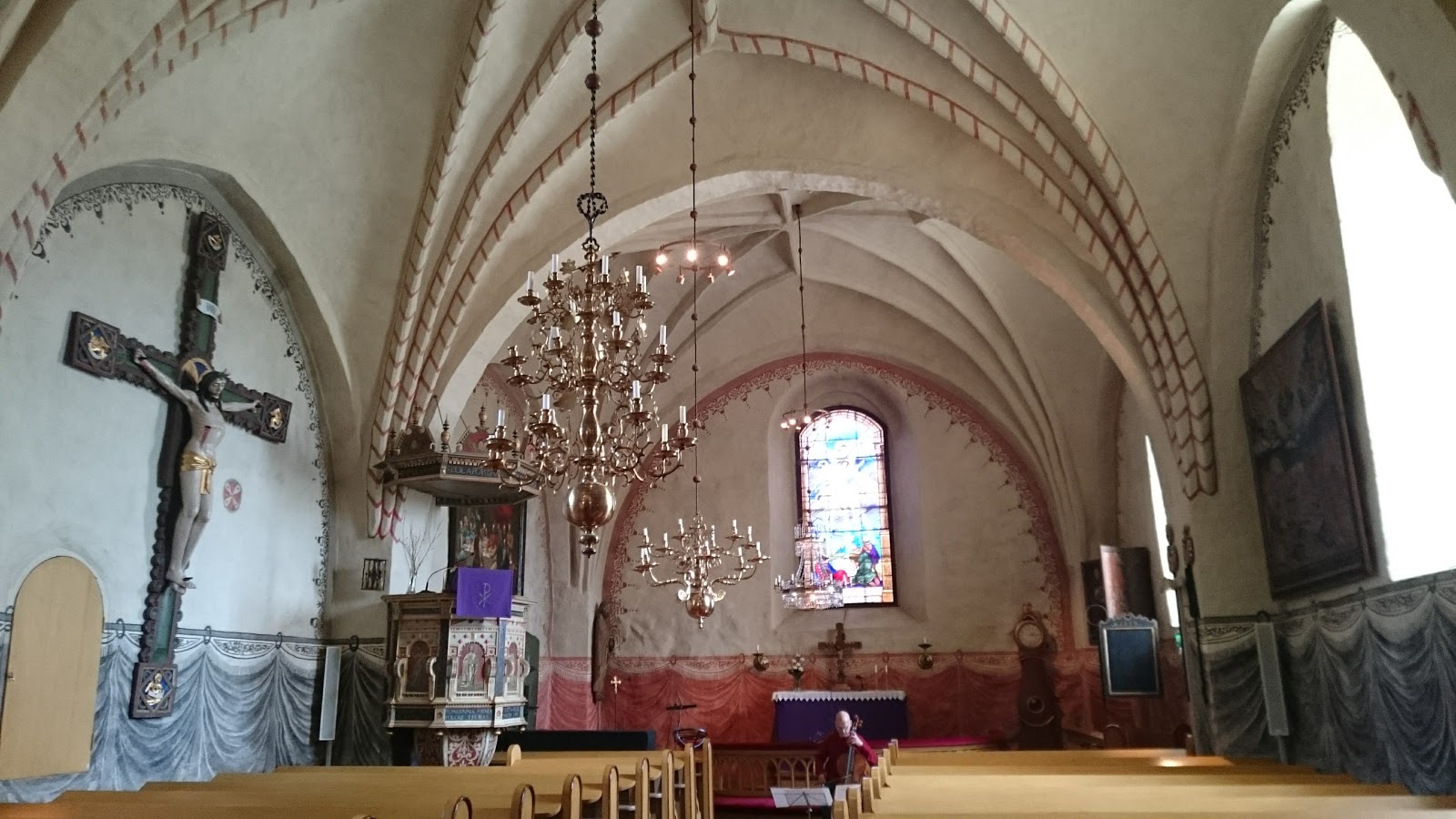
Kun kalmisto oli katsottu, eleltiinkin jo toivossa että päästäisiin kirkkoa katsomaan. Ihan suoraan ei päästy vaan hetken ehdittiin ihmetellä kirkon ympäristön hautakiviä. Kirkkomaalla muuten oli Hemminki Maskulaisen, Piae Cantiones -laulukokoelman kääntäjän, muistokivi -itse hauta on kirkossa, mutta pitihän meidän ryhmän kirkon avautumista odotellessa lurauttaa kiven edustalla yksi (lyhennelty) Gaudete. Sitten suntio saapuikin avaimineen paikalle, päästi retkiryhmän sisään ja osoittautui todella mukavaksi ihmiseksi.

After we checked out the Humikkala site, we were already hoping that the church doors would've been open. Well, they weren't, not quite yet, so we had a moment to explore the church cemetery. We noticed a memorial stone for Hemminki of Masku, the translator for the songbook Piae Cantiones (the grave itself is inside the church) and we spontaniously decided to sing a (profoundly) shortened version of Gaudete. Shortly after that the sexton arrived and let us in the church -and she turned out to be a really nice person, chatty and very interested in the intarsia work as well.

Nykymuoto Maskun kirkolla on enimmäkseen 1400-luvulta, vaikka sillä luultavasti onkin ollut varhaisempia edeltäjiä (Maskun seurakunta mainitaan jo 1230-luvulla). Nykyisessä kirkossa on myös kirkkoa vanhempia esineitä, vanhimmat 1200-luvulta. Yksittäisiä esineitä lukuunottamatta sisustus on aika tavalla kirkkorakennusta uudempi.

The present-day appearance of the Masku church is mostly 15th century, although it has apparently had predecessors (the Masku parish is first mentioned in the 1230s). The present-day church also has objects that are older than the church itself, the oldest ones are from the 13th century. Apart from some objects, most of the interior is a lot newer than the church itself.

Yritimme ajoittaa reissumme niin, että emme häiritsisi mitään kirkon ohjelmaa käynnillämme mutta onnistuimme silti osumaan paikalle niin, että tulevan sellokonsertin päätähti oli paikalla harjoittelemassa ennen konserttiaan. Sellisti oli huomattavan äkäinen siitä että harjoitusrauhaa näin häirittiin (ymmärrettävää kyllä että harmitti, mutta olisi voinut sentään olla jollain tapaa asiallinen)... No, sellisti sai jäädä ihan keskenään soittamaan ja otimme suunnan kohti Stenbergan linnaa.

We tried to arrange our visit so that we wouldn't disturb any of the actual events in the church with our visit but we still managed to arrive so that star of the the upcoming cello concert was rehearsing before his show. He was notably grumpy that his rehearsals were interrupted in this manner (well, being a bit frustrated is understandable, but he still could've shown some manners)... Well, the cello player was left to practice all by himself, we headed off to see Stenberga castle.

*Se* kellotapuli. Tuolta aikoinaan korjattiin talteen vanha riepukasa, ts. intarsiatekstiili. ~~~ *The* belltower. In the late 19th century some old rags (ie. the intarsia textile) were found in there.


No tätähän tultiin katsomaan. Yhtä nätti kuin ennenkin. ~~The very thing we came here for. As pretty as ever.

Sympaattinen pikku kirkko. Seinämaalaukset 1600-luvulta. ~~~ A very sympathetic little church. The wall paintings are 17th century.

1500-luvun alttarikaappi Sleesiasta. ~~~ 16th century altarpiece, Schlesien.

Kirkon vanhin esine, Johannes Kastaja 1200-luvulta. Mahdollisesti suomalaista tekoa. Vieressä pieni 1400-luvun pyhäinjäännösristi. ~~~ The oldest item in the church, 13th century John the Babtist. Perhaps of Finnish origin. A small 15th cent. reliquary cross next to it.


Stenbergan linna ~~~ Stenberga castle

Stenberga eli Teineperi on mainittu ensimmäisen kerran 1389, mutta 1900-luvun alun tutkimusten perusteella se olisi rakennettu jo 1100-1200-luvun taitteessa. Toisen kerran sitä rakennettiin 1300-luvun lopulla ja se on mahdollisesti samaan aikaan Turun voutina toimineen Jakob Abrahaminpojan rakennuttama. Mäellä ilmoitetaan olleen 13 x 13 m  kivisen rakennuksen, mutta onpa kyllä sanottava että mäki on ihan hirveän pieni siihen. Alakuvastakin kyllä näkee että rakenteita löytyi, mutta kyllä, koko nyppäreen koko ei ole kovin paljoa enempää.

Stenberga, also occasionally called Teineperi, first shows up in written sources in 1389, but according to the early 20th century excavations it may be built almost 200 years earlier. It was significantly repaired in the late 14th century, perhaps by the bailiff of Turku Jacob Abrahamsson. According to the excavations there has been an 13 x 13 m stone building in the hill -I must say that the hill is absolutely tiny for that! On a pic below there is a photo of the remaining structures, but yeap, the size of the hill itself isn't much more than the size of that building.

Vaikka nyt meri ei aivan näy mäelle, alava maisema ei kovin kummoista vedenkorkeuden nousua vaadi että lahti olisi jo paljon lähempänä -linnan käytön aikana se on ulottunut varsin lähelle. Alueelle ilmeisesti suunnitelttin birgittalaisluostaria 1400-luvun alkupuolella, mutta varsinainen toteutunut vanha luostarinpaikka on noin kahden kilometrin päässä -ja sekin työ jäi kesken kun luostari siirrettiin parin vuoden jälkeen Maskusta Naantaliin. Lopulta Stenberga purettiin 1500-luvun puolivälissä.

Although the sea nowadays is nowhere to be seen, the land is so low that during the middle ages Stenberga was situated in the seashore. Apparently the site was planned for bridgettine monastery too, but eventually the earliest site for the monastery ended up being approximately two kilometers away -and even that place was left unfinished when the monastery moved to Naantali after only a few years. Stenberga castle was finally demolished in the mid-16th century.


Stenbergan nyppäre. ~~~ The Stenberga hill.

Mäeltä oli hyvä valvoa Maskunjokea, joka on ollut aikoinaan paljon isompi.~~~ It's pretty easy to monitor the Masku river from here -back in the day it's been significantly bigger.

Alkoi vähän epäilyttää että ollaanko oikealla mäellä ensinkään, mutta kyllä tuo on ihmistekoinen. Kivien välistä löytyi vähän tiiltäkin. ~~~ We started wondering wether we were on the right hill to begin with, but this is definitely man-made. Traces of brick was found between the stones.

Suurinpiirtein tämän verran tasaista maata siellä mäen päällä oli.~~~ This much even surface to build on.


Lisäluettavaa ja lähteitä:

Maskun harmaakivikirkko (Maskun kunta)
Kulttuuriympäristön palveluikkuna: Humikkalan kalmisto
Kulttuuriympäristön palveluikkuna: Stenbergan linna

Friday, 31 March 2017

Keskiaikaisia kynttilänjalkoja ja kattokruunuja Suomen museoissa ~~~ Medieval candlesticks and chandleries in Finnish museums

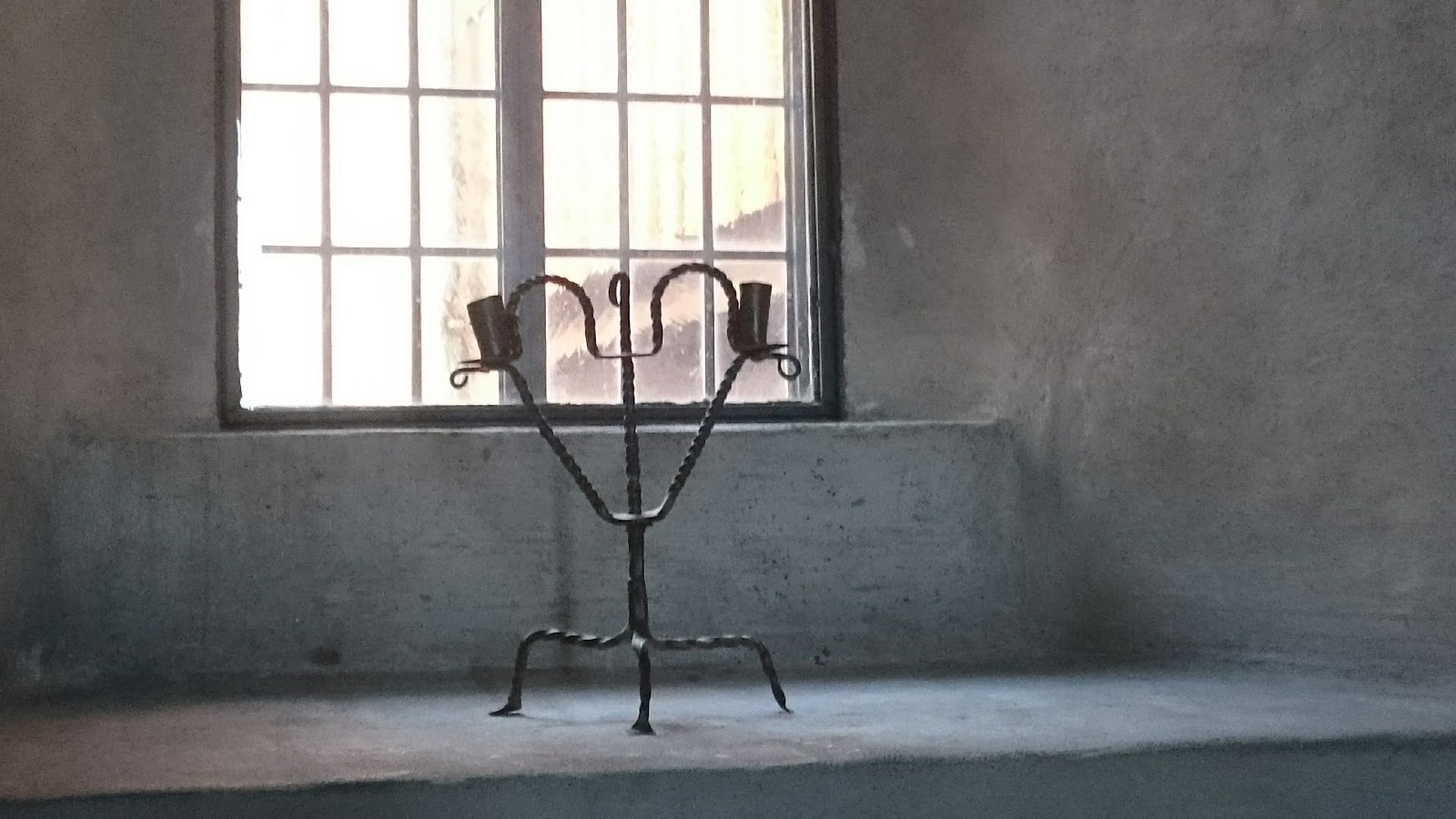
Melkoisen puhtaasti kuvapostaus tulossa! Havahduinpa nimittäin tuossa taannoin käynnillä Turun linnassa siihen, että siellä on esillä aivan valtava määrä keskiaikaisia kynttilänjalkoja. Valaistuksen järjestäminen on historianelävöittäjälle keskiajalla yksi niistä ikuisuusongelmista ja sen mieluusti tekisi ns. kunnolla. Oli siis ilo huomata että Suomestakin on aineistoa, ja vielä näin runsain määrin! Tiedot näistä kynttilänjaloista ovat aika vähäiset, mutta oletettavasti ne ovat kotoisin kirkoista -tiedot niistä ovat aika vähäiset, ajoituskun on aika laajalla skaalalla. Nämä kynttilänjalat ovat ehkä säilyneet juuri siksi että ovat rautaa, sillä oletettavasti ne ovat kirkoista, joiden arvokkaampi jalometalliomaisuus takavarikoitiin reformaation yhteydessä. Mitenkään kattava listaushan tämä ei sitten ole ja museoiden varastoissahan voi olla vaikka mitä, mutta muutamia näytteillä olevia esineitä siis tässä! Tämä täydentyy ehkä jossain vaiheessa, jos uusia löytöjä tulee vastaan.

Almost purely a photo post ahead! While visiting the Turku castle some days ago I realized that there were really quite many medieval candlesticks on display. When doing living medieval history, how to arrange the lighting is one of the key questions and one would gladly do it in a proper way. Therefore it was a joy to realize that when it comes to candlesticks, there is plenty of material from Finland too. It is assumed that the candlesticks are from churches, but fairly little anything else is known of them -even the dating is not very precise. They have maybe survived exactly because they are made of iron, the more valuable possessions of the church was confiscated during the reformation. This is by no means a full and complete list, and who knows what the museum storage rooms may hold, but these ones were readily on display! I may update this at some point, should I find more.

Turun Museokeskuksen kokoelmissa ~~~ From the collections of Turku museum centre

Nämä kynttilänjalat ovat näytteillä Turun Linnassa. Aivan tarkka ajoitus ei ole näillä tiedossa, mutta niitä oletetaan keskiaikaisiksi, 1400-tai 1500-luku. Ne on hankittu museon kokoelmiin melko varhaisessa vaiheessa, joten tiedot niistä ovat vähän vähäiset.

These candlesticks are on display at Turku Castle. The precise dating is unknown, but they're assumed medieval, 15th or 16th century. The museum has acquired them at an early stage of its history, so fairly little is known of them.

Esillä Nunnakappelissa, alkuperä tuntematon. ~~~ On display in the Nun's chapel, origin unknown

Esillä Nunnakappelissa, kotoisin Pyhämaalta. Korkeus säädettävissä! ~~~ On display in the Nun's chapel, from Pyhämaa. Height is adjustable!

Esillä Sturenkirkossa, alkuperä tuntematon. ~~~ On display in the Sture church, origin unknown.

Esillä Sturenkirkossa, alkuperä tuntematon ~~~ On display in the Sture church, origin unknown

Esillä Sturenkirkossa, alkuperä tuntematon. ~~~ On display in the Sture church, origin unknown

Esillä Sturenkirkossa, alkuperä tuntematon. ~~~~ On display in the Sture church, origin unknown

Esillä perusnäyttelyssä. Alkuperä ei mainittu. ~~~ On display in the basic display of the medieval castle. Origin not mentioned.


Museoviraston kokoelmista, esillä Hämeen linnasta
From the collections of the National bureau of antiquities, on display at Häme Castle
Akaan kirkosta ~~~ From Akaa church

Kansallismuseosta
From the National museum of Finland

Kansallismuseon keskiajan perusnäyttelyssä, kotoisin Kokemäeltä. ~~~ The basic exhibition of medieval Finland, from Kokemäki

Friday, 10 March 2017

Keskiaikaista naisten tekemää musiikkia ~~~ Music by medieval women

Aiemmin tällä viikolla naistenpäivän kunniaksi tuli (kirjoittamismielessä) hiukan liian myöhään mieleen keskiaikaisten naisten tekemä musiikki. Harvasta keskiajalta säilyneestä laulusta tiedetään sen säveltäjää, ja tämä on erityisen totta jos yritetään selvittää ajanjaksolla naisten tekemään musiikkia. Lisähupia tähän tulee sillä, että naisten tekemien laulujen sanotuksia tiedetään useampia kuin niiden melodioita. Vielä useammin henkilön tiedetään tehneen musiikkia mutta näistä teoksista ei ole jäljellä sanoja eikä säveltä.

Earlier this week it was the international women's day, and because of that I got the inspiration (a bit late when it comes to researching and writing) to examine music created by medieval women more closely. It's fairly rare to know the composer's name in medieval music, and even more so when it comes to music created by women. It gets even more complex still, because more song lyrics written by women are known than melodies to those songs. And also quite a lot of women who composed and sang are known by their names, but none of their works survive.

Vaikka naisten tekemää musiikkia on ollut varmasti joka puolella Eurooppaa, erityisesti siitä on säilynyt paljon viitteitä Occitanian alueella, jossa trobairitz-laulajan (käytännössä naispuoleisen trubaduurin) uran katsottiin olevan aivan sopiva naiselle. Trobairitz'in tehtävää ei nyt auta ollenkaan sekoittaa stereotyyppiseen luuttu selässä kylästä toiseen kiertelevään trubaduuriin, vaan trobairitz'ina toimiminen oli yläluokkaista (ilmeisesti alempaa säätyryhmää edustavat ja lähempänä tuota stereotyyppiä olevat naiset tunnettiin nimellä joglaressa).

One can be fairly sure that women have created music all over the medieval Europe, but it seems to have been especially common in Occitania where it apparently was totally fine for a woman to perform as a trobairitz (practically as a female troubadour). Trobairitz is not to be confused with the stereotypical travelling lute-player, instead it was a high-class profession (a lower-class counterpart would be a joglaressa, slightly closer to the stereotypical performer).

Yritin tähän postaukseen kaivaa esille niitä harvoja nimeltä tunnettuja naissäveltäjien teoksia. Lopussa vielä bonuksena naisnäkökulmasta miehen kirjoittama laulu!

I tried to find some of the rare medieval female composers and songs by them, and provide some examples. In the end there is a bonus song, written by a man but from a woman's point of view.

-----------------------------

Hildegard von Bingen (O vis aeternatis)


1098-1179 elänyt abbedissa, kahden luostarin perustaja, kirjailija ja säveltäjä on varmasti yksi keskiajan tunnetuimmista naisista. Kirjoituksissaan hän käsitteli teologiaa, lääketiedettä, luonnonhistoriaa ja kosmologiaa, ja kävi laajasti säilynyttä kirjeenvaihtoa mm. neljän eri paavin kanssa. Hildegard julistettiin pyhimykseksi vasta 2012, vaikka kanonisointiprosessi aloitettiin jo 1200-luvulla.

 An abbess, founder of two monasteries, writer and a composer, Hildegard von Bingen (1098-1179) must be one of the most famous medieval women. She wrote about theology, cosmology, natural history and medical matters and corresponded with for example four popes -hundreds of her letters have survived to this day. Hildegard was declared as a saint in 2012, although the process was started well in the 13th century.

Ylemmän linkin O vis aeternatis on tässä Sequentia -ryhmän esittämänä. Alempi linkki on koko Ordo Virtutum -moraalinäytelmä kokonaisuudessaan (hiukan reilun tunnin). Siinä roolit on sielulla, 16 hyveellä sekä puheroolissa paholaisella.

In the upper link the song O vis aeternatis is performed by the group Sequentia. In the lower link the Ordo Virtutum morality play is in its whole (a little more than an hour). It features the roles of a soul, 16 virtues and a devil with a speaking role. 


Comtessa del Dia (A chantar m'er de so)

1100-luvulla elänyt provencelais-syntyinen Dian kreivitär (oletettavasti vaan ei täysin varmasti nimeltään Beatriz) toimi tobairitz-laulajana, ja hänen tuotantonsa on ilmeisesti varhaisin esimerkki naispuoleisesta trubaduurista.  Hänen tuotannostaan sanat viiteen lauluun ovat säilyneet tähän päivään, tämä A chantar m'er de so on ainoa josta on jäljellä myös sävellys. Se on myös ainoa säilynyt oksitaaninkielinen trobairitz'in canso (yleisin alueen laulutyypi ennen 1200-luvun puoltaväliä). A chantar m'er de so, kuten muukin tuotantonsa, on tyylilajille uskollisesti rakkauslaulu.

Troubairitz Comtessa del Dia, countess of Dia, lived in the 12th century. Her first name is assumed being Beatriz, but it is not completely confirmed. Her works are said to be the earliest example of a female troubadour. From her works, lyrics of five songs have survived, but this A chantar m'er de so is the only one to have a surviving melody too. It is also said to be the only surviving canzo (typical song type for the area before the second half of the 13th century) in Occitanian language. As is typical for the genre, A chantar m'er de so is a love song.


Maroie de Dregnau de Lille (Mout m'abelist quant je voi revenir)

Myös tunnettu nimellä Dame Maroie, tämä trouvére (trubaduuri) vaikutti 1200-luvulla Artois'issa, Ranskassa. Juuri muuta hänestä ei ilmeisesti tiedetäkään. Tämä laulukin on säilynyt vain fragmenttina, mutta ainakin tämä alkupätkä on iloisen sävyinen kevälaulu talven viimein väistyttyä.

Also known as Dame Maroie, this trouvére lived in the 13th century Artois, France. This is pretty much all we know of her... This song too has survived only as a fragment, but it is a happy spring song, after the winter has finally passed.


Roïne Blance (Amours ou trop tart me sui pris)

Roïne Blance on arveltu viitanneen Blanka Navarralaiseen (Blanche de Navarre, 1188-1252, Champagnen kreivikunnan sijaishallitsija poikansa puolesta 1201-1222). Musikaalisuus olisi ainakin kulkenut suvussa, sillä pojastaan Thibault I:stä käytetään myös nimeä Thibault trubaduuri, ja ilmeisesti häneltä on säilyneitä laulujakin. Tämä Roïne Blancen teokseksi mainittu Amours ou trop tart me sui pris löytyy Ranskan kansalliskirjaston käsikirjoituksesta f. fr. 21677 (jotenkin tiedonhaku tuntui olevan ihan järjettömän hankalaa tämän kohdalla). Tämä versio laulusta on Amina Alaouin esittämä.

Roïne Blance perhaps refers to Blanche of Navarre (1188-1252, countess regent for her son in Champagne 1201-1222). Musical tendencies would in that case run in the family, because her son Thibault I is also known as Thibault the troubadour and apparently there are surviving songs by him. This song Amours ou trop tart me sui pris, attributed to Roïne Blance, is from a manuscript in the National Library of France f. fr. 21677 (somehow it was insanely difficult to find anything more about it). This version of the song is by Amina Alaoui.


Mon pére m'a donné mari

Bonusbiisinä laulu, jonka tekijä on kylläkin tiettävästi mies (hollantilainen Heinrich Isaacs), mutta tämän 1400-luvun lopun italialaisen mutta ranskankielisen laulun näkökulma, onnettoman avioliiton voivottelu, on selvästikin naisen.

As a bonus song, a late 15th century Italian (but lyrics in French) song which clearly has a woman's point of view (bad marriage) although it is written by a man, dutch Heinrich Isaacs.