Thursday, 22 September 2016

Islannin-kuulumisia, osa 1 ~~~ Greetings from Iceland, part 1

Tuli sitten käytyä Islannissa! Päämääränä oli ajaa saari ympäri, se onnistuikin ja ihan hirveästi tuli nähtyä. Yleisöystävällisesti kaikkea ei floodata yhteen postaukseen, vaan ajattelin jakaa sen kolmeen osaan. Kuvia on noin miljoona, koittakaa kestää ;)

So, we visited Iceland! Our aim was to drive around the island, and that's what we did -and we saw so much! I'll be considerate and not flood the whole trip in one post, actually I was thinking of three parts. And about a million photos ;)


Thingvellir. Tämähän on kai jokaisen Islannin-kävijän vakionähtävyys, ja ihan mukavan lähellä Reykjavikiakin -sellaiset 50 km ja islantilaisittain oikein hyvää tietä. Tämä on tietysti hieno paikka paitsi geologisessa mielessä (mannerlaattojen erkaneminen ei ilmeisesti missään muualla näy yhtä selvästi!), myös Islannin historian kannalta. Tällä paikalla kokoontui Althing, vuonna 930 (noin 60 muotta maan skandinaaviasutuksen alkamisen jälkeen) perustettu parlamentti, maan ylin hallinto. Althing kokoontui tässä merkityksessä vuoteen 1262, ja sen jälkeen vuoteen 1799 lähinnä oikeudenkäyntipaikkana. Thingvelliristä tuli Unescon maailmanperintökohde 2004.

Viikinkiaikaisesta tai keskiaikaisesta Althingistä ei sinänsä ole jäänyt tänne paljoa jälkiä, itse asiassa ihan tarkkaan ei edes tiedetä varmasti mikä oli tapahtumien keskuudessa ollut lakikivi jossa kuka tahansa saattoi pitää puheen tai tuoda muiden tietoon uutisia (teoria on, että se olisi alimmassa Thingvellirin kuvassa näkyvän lipputangon paikalla, mutta muitakin vaihtoehtoja on). Täällä oli pieni museokauppa/kahvilakin, mutta se ei sinänsä tarjonnut varsinaisesti Thingvelliriä koskevaa paljoakaan -yleisesti Islantia luonnon tai historian teoksia ym. olisi sitten ollut senkin edestä. Parkkeeraaminen oli hiukan epäselvää, ja tunnustettava on että saatiin kivan keltainen lappu huomauttamaan siitä että parkkeerasimme itse asiassa alueelle joka olisi ollut parkkimaksun piirissä... (Muille vinkiksi, maksu tarvitsee maksaa ilmeisesti ihan joka ikisessä parkkeeraamiseen vähänkään soveltuvassa kohdassa, ei siis vain siistillä asfalttialueella!)

Thingvellir. This is a must-see for all who go to Iceland, I guess, and it's pleasantly close to Reykjavik -only somewhat 50 km away and the road is good too. Thingvellir, of course, is a spectacular place in geological sense (it is said, that the continental rift is easiest to observe here!) but it's super important in Icelandic history, too. This is the place where the Althing, the general assembly ruling Iceland from 930 to 1262  gathered together, and it continued to function as a court of law until 1799. Thingvellir was chosen as a Unesco world heritage site in 2004.   

There are very little remains of the viking and medieval Althing meetings, actually it's not precisely even known where the Law rock, where anyone could give a speech or tell the audience news, is located (one theory is, that it is where there nowadays is a flag pole. You can see it  in the lowest picture of Thingvellir, but there are other theories too). Thingvellir had a small cafe/museum shop, it had very little Thingvellir-specific stuff, but plenty of books and other stuff about Iceland's history and nature in general. The parking there was a bit unclear, and we ended up with a friendly yellow note on our windshield hinting that we should actually pay for or parking in that area too... (as a hint for others who might visit there, it seems that the parking fee must be payed in every place that even remotely is suitable for parking, not just the fancy asphalt-covered area...) 

Islantilaista rikoshistoriaa, kuolemanrangaistus hukuttamalla pantiin täytäntöön tässä lammessa. Tunnetut tapaukset ovat 1600- ja 1700-luvuilta. ~~~ Icelandic crime history, this is where death sentence by drowning was carried out. The known cases are from the 17th-18th centuries.

Althingiin tulijat leiriytyivät näillä main, tällä tasangolla. Mahdollinen lakikivi on merkitty lipputangolla. ~~~ This is where the folks coming to the Althing camped during the meeting. The suspected law stone is marked wih a flag pole.

Snorrastofa Reykholtissa. Snorri Sturlusonille omistettu museo herran kotipaikalla, tilalla jonka herra omisti 35 vuoden ajan 1206-1241 eli kuolemaansa saakka. Paikalla on museo miehen elämästä, urasta ja saavutuksista, sekä myös jäänteet kotitalosta, keskiaikaisesta kirkosta sen vieressä ja osin edelleen alkuperäisin kivin ladottu (pohja on kuulemma kokonaan alkuperäinen!) kylpyallas! Museo itsessään oli melkoisen tiiviisti tekstiplakaatilla täytetty, aiheet vaihtelivat Snorrin kokoamasta Runo-Eddasta ja muusta kirjallisesta urasta Reykholtin-talon ominaisuuksiin ja siinä samalla tuli käsiteltyä myös Snorrin ura diplomaattina Norjan-matkoineen ja miehen perhesuhteet -tarkkaa ja perusteellista siis. Paikalla oli varsin huisi museokauppa, täällä oli todella kirjaa aivan joka lähtöön.

Ihan ykköskohde oli kuitenkin kauan hinguttu Snorralaug, Reykholtin-talon pihalla sijainnut matalahko kylpyallas -hartiakorkuinen ehkä jos pohjalla istuu- jonne vesi johdetaan läheisestä kuumasta lähteestä. Käydessä se ei kyllä ollut erityisen kuumaa, ehkä (haaleahkon) lämmintä lähinnä. Kuvassakin näkyvästä ovesta oli päässyt aikoinaan sisäkautta päätaloon, käytävän jäänteet ovat edelleen oven takana ja niitä pääsee myös katsomaan. Tämä käytävä lienee sama, jossa Snorri murhattiin 1241 Islannin sisäpoliittisten kähinöiden seurauksena. Sanottava muuten on, että maisema altaalta ei ole ihan niin tunnelmallinen kuin kuvasta näyttää, heti selkäni takana oli entinen koulurakennus ja kuvasta oikealla paikallisia kasvihuoneita, rajausta käytettiin tarkoin :D Siinä olivatkin ensimmäisen päivän kohteet, pimeässä ajeltiin kohti Vík:iä ja yöpaikkaa.

Snorrastofa, Reykholt. A museum dedicated to Snorri Sturluson located where his home was for 35 years, 1206-1241, until his death. The museum is dedicated to Snorri's life, career and achievements and there are also remains of his home and a medieval church remains right next to it, and a bathing pool of the same age still partly lined with original stones (they say the bottom especially is original). The museum itself was fairly tightly packed with text, the subjects varying from the Poetic Edda (which Snorri composed), his career as an author to the features of his Reykholt home and Snorri's career as a diplomat and his personal life and family -very thorough. The museum shop there was awesome, books of all kinds and lots of them!

I had long waited to see Snorralaug, the bathing pool of Snorri's Reykholt home. It was anything but deep, perhaps shoulder-length when one sits in there. The water comes from a nearby hot spring, but when we visited the place the water was only lukewarm. The door in the topmost picture once opened to a hallway which led to the main house, the remains of the hallway are still there and they're open for the public. This hallway is probably the same where Snorri was murdered in 1241, during the Icelandic civil war. I've just got to say, that the scenery wasn't exactly as pretty as it seems in the picture, right behind my back there is an former school building and on the right outside the picture there are local greenhouses :) That was all for the first day of our trip, and it was totally dark when we headed to Vík where we stayed the night.


Uusi aamu ja matka jatkui Vík:istä eteenpäin eteläisessä Islannissa!

Þykkvabæjarklaustur. Katla Geoparkin alueella. Aikoinaan, 1168 lähtien, augustiinimunkkiluostarin paikka ja reformaatiosta eteenpäin paikallishallinnon tyyssija Katlan purkaukseen 1625 saakka. Toimiessaan luostari oli ilmeisen merkittävä kirjallisen kulttuurin keskus Islannissa, ja tämän luostarin ensimmäisestä apotista tuli sittemmin virallisesti kanonisoitu pyhimys. Vähemmän pyhimysmäisesti tämän luostarin munkeilla ja Kirkjubæjarklaustur:in nunnilla (noin 50 km väliä) sanottiin olevan, eh, tekemistä keskenään... Luostarin ylläpitoon tarvittiin iso maatila, ja sen jäänteet ovat vieläkin kuulemma nähtävissä nykyisen kirkon takana, mutta se oli aidattuna lammaslaitumena joten emme lähteneet sinne sitten taapertamaan, olisi tullut vielä sanomista.

A new morning, and we continued our exploration of the southern Iceland! 

Þykkvabæjarklaustur. Katla Geopark area. Originally, from 1168, this was a site of the augustinian monastery for monks, and after the reformation a center of local government until the eruption of Katla in 1625. When the monastery was there, it was apparently a very important centre of literaty culture in Iceland, and the first abbot of the monastery later became an officially canonised saint. Less saintly, the monks of this convent and nuns at Kirkjubæjarklaustur (some 50 kms away) were said to be ... um, involved. The monastery required quite a bit of food and other supplies keep it running, and for this there was a sizable farm nearby. Its remains are said to be still visible behind the modern church, but since the area was now a sheep pasture with a fence, we decided to drop the plan to actually visit the ruins.


Nykyinen kirkko, kovin herttaisen pieni.


Laufskálavarða. Islannissa pidetään hienosti perinteitä elossa, tämä on oikein hyvä esimerkki siitä. Perimätieto kertoo, että tällä paikalla oli skandinaaviasutuksen alun aikaan huomattavan suuri maatila, joka tuhoutui Katlan purkauksessa vuonna 894. Tämän tilan ja tilan isännän muistoksi tapana on, että paikan ensimmäisen kerran ohittava kantaa kiven kekoon, ja Islannin tielaitos edesauttaa tavan säilymistä tuomalla lisää kiviä tienvarteen!

Laufskálavarða.  They're really good in keeping traditions alive in Iceland, and this was a perfect example. The tradition goes, that right at the beginning of the scandinavian settlement there was a large farmhouse in here.  The farmhouse was destroyed in the Katla eruption in 894. To commemorate the farmhouse and its master, the tradition goes that everyone passing by the place for the first time brings a stone and adds it to a pile. Icelandic road adminstration keeps the tradition going by bringing more stones right by the road!

Maisema nyppäreen päältä katsottuna. ~~~Scenery from the hill.
Skaftáreldahraun. Katla Geoparkin alueella tämäkin. Varsinaisestihan tämä ei sinänsä ollutkaan historiallinen vaan enemmänkin paikalliseen luontoon liittyvä kohde, mutta olipa otettava tähän mukaan koska tämä oli niin mainio osoitus tulivuorenpurkausten voimasta -ja tällä purkauksella vielä oli oletettavasti kovin suuri merkitys Euroopan historian kannalta. Lakin purkaus vuonna 1783 vaikutti dramaattisesti ilmastoon koko maailmassa vaikeuttaen mm. sadon kasvua usean vuoden ajan ja saattoi olla siten osaltaan edesauttamassa mm. Ranskan vallankumouksen syntyä vuonna 1789. Jälkipolville todisteeksi tuolla oli sitten laavakiveä tonnitolkulla...

Skaftáreldahraun. At Katla geopark area, this one too. To be precise, this one isn't historical sight per se, more like natural phenomenon, but I just have to add it here because this is such a good example of the exptet of volcanic eruptions -and this eruption especially had a large impact on the history of Europe. The eruption of Laki in 1783 changed the climate for many years causing among other effects the crops to fail. This might be one of the events that triggered the French revolution. As a proof for future generations, there's tons of volcanic rock here...

Kirkjubæjarklaustur. Täällä skandinaaviasuttajat kertoivat kohdanneensa irlantilaismunkkeja, mutta tämänaikaisesta luostarista ei kuitenkaan ole (löydetty) jäännöksiä. Uudempaa luostaritoimintaa alueella sen sijaan olikin, benediktiiniläisnunnaluostari vuodesta 1186 aina reformaatioon saakka ja kyläkirkko senkin jälkeen. Tekstiilinörttiä kovin lämmitti, että tämän nunnaluostarin alueen kaivauksilta oli löydetty Islannin ilmeisesti vanhimmat neulepuikot, 1500-luvun alusta. Nunnaluostari on myös antanut nimensä monille alueen luonnonpaikoille, vuorenrinnettä ylös mentäessä löytyy Systravatn-järvi ja Systrafoss-vesiputous.

Kirkjubæjarklaustur. The scandinavian settlers said they encountered Irish monks here, but remains of a building predating the settlement time hasn't been found, at least not yet. Newer monastery activity is known, though, there was a benedictine nunnery from 1186 to the reformation, and a village church even after that. A textile geek was most pleased to find out, that this is the site where Iceland's eldest knitting pins have been found, dating to the early 16th century. The nunnery had also influenced many of the names around the area, up the hill there's lake Systravatn and right next to it waterfall Systrafoss.
 
Kirkjugolf (kirkonlattia), ihan täysin luonnon muovaama kivimuodostelma vaikkei siltä näytäkään. Irlantilaismunkkien on sanottu asuneen sen lähellä. ~~~Kirkjugolf, church floor. Actually purely geological phenomenon, though it doesn't look that way. The Irish monks have been said to live close to it.
Systravatn. Se on oikeasti noin ylhäällä miltä se näyttää. ~~~ Systravatn. Yeap, it's really that high.

Sandfell. Saagoista tuttu paikka ihan Vattnajökullin kupeessa (täällä oli aika vilakka!). Tänne asettui ensimmäisten muuttajien joukossa taloksi Thorgerdur, joka otti itselleen maata sen verran kun kaksivuotias hieho jaksoi kävellä kevätpäivän auringonnousun ja auringonlaskun välisenä aikana. Thorgerdurin asutus on jo kauan sitten myllätty, sillä tässä paikalla asuttiin ilmeisesti yhtäjaksoisesti 1900-luvulle saakka ja paikka on joutunut kokemaan lukuisia luonnonmullistuksiakin, maanvyöryistä jäätikkölähtöisiin tulviin.

Sandfell. Known from the sagas, situated right next to Vattnajökull (it was pretty chilly!). This is where a woman named Thorgerdur settled when the first scandinvian settlers came, and she claimed land as much as it is possible to a young cow to walk in a single spring day, from sunrise to sunset. Thorgerdur's home has long since been rolled over, this place was constantly inhabited all the way to the 20th century even though the site experienced several natura disasters, from glacial floods to landslides.
Kirkkomaata, takana muistopihlaja.

Lisää tulossa sitten osassa 2!

Wednesday, 21 September 2016

Sopivan elävöityksen jäljillä ~~~ The quest for fitting living history

No menipä filosofiseksi tämä kirjoitus, mutta välillä näinkin. Viime aikoina kun on tullut keskusteltua useammankin ihmisen kanssa ihanteellisesta elävöityksestä, ja ajattelinpa nyt vähän kirjoittaa ylös omia ajatuksiani asiaan.

Disclaimerina, nämä ovat siis ihan omia (ja vain omiani) näkökantojani siitä minkä itselleni olen havainnut sopivimmaksi, jos itsellesi sopivin tapa on joku toinen niin se on tietysti aivan yhtä hyvä.  Mikä kenenkin venettä keikuttaa, en ole tuomitsemassa tai arvostelemassa (ja toivon että mahdollisissa kommenteissa pitäydytään samoissa spekseissä), puhun tässä vain ihan omasta näkökulmastani. Ja myös elävöittämisen tavat jotka ovat itselleni ei-ihanteellisia, ovat ihan kivoja myös (eli jos rivien välistä yritetään tulkita että ryhmä Z tai henkilö Y tekee elävöitystä väärin tai huonosti, tulkitaan ykskantaan pieleen). Tekstissä käytetyt esimerkit ovat fiktiivisiä, mutta suuntaa-antavia.

Getting really philosophical this time. But lately I've had some conversations about ideal living history with several people, and I thought I'd write down some of my thoughts. 

Disclaimer, these are my and mine only opinions on what I think are best fitting for me, if you feel you like something else better for yourself, it's equally fine. Whatever floats your boat, I'm not about to rate or judge (and I'll hope you'll do the same, should you decide to comment) but I'm speaking for myself only. And the ways to do living history which are not ideal to me, are also nice (so if it seems to be written between the lines that group Z or person Y is doing living history somehow wrong, the writing is simply misunderstood). All the examples I've used are fictional, but they do give a hint on the topic at hand.

Markkinat. Mahtava tilaisuus nähdä kavereita, pitää hauskaa ja ehkä tehdä hankintojakin jos vaan sopivaa shoppailtavaa tulee vastaan (monestihan markkinoilla tulee vastaan esimerkiksi käsityöläisiä joiden tuotteita ei juuri muualta saakaan). Myös esiintyjänä, käsityönäytöksessä tykkään olla, sisäinen kansankynttilä saa kummasti iloa siitä että saa esitellä käytännönläheistä historiaa muillekin. Melkein sataprosenttisesti hauskoja tilaisuuksia siis, mutta varsinaista elävöitystä markkinoilla -no, en oikein saa fiiliksestä kiinni. Releet päällä postailu on kyllä kivaa ja kavereiden tapaaminen ihan parasta, mutta en oikein saa siitä elävöitysaspektia esiin. Vaikka siis, markkinoiltahan periaatteessa oma elävöitysuranikin alkoi...

Markets and faires.  A wonderful opportunity to meet friends, have fun and perhaps to do some shopping as well (fairly often one comes across, for example, hand crafted items that are not available anywhere else). I also like crafts demonstrations, I even enjoy doing them myself -showing the public history hands-on, IMO it's the best way there can be! Almost 100% fun events, that is to say, but living history at faires -I wouldn't really call it that, not for myself at least. It indeed is great fun to go out in a nice set of clothing, and meeting fellow history nuts is the best thing there is, but hanging out in faires and doing living history just are different things for me. Although, a faire is where my living history career basically started out...

Piknikki ihanien ihmisten kanssa Turun markkinoilla. No, ähkyhän noilla eväillä tuli. ~~~ Picnic with wonderful people at Turku medieval market. With this supply, we of course ended up as full stuffed.
Mukavuus. Jostain syystä olen törmännyt pariin kertaan ajatukseen siitä, että juhlatilanteen elävöitys tai hyvin toimeentulevan henkilön elävöitys on huonoa elävöitystä (ja vastaavasti sitten ollaan autenttisuuden jäljillä kun on hirveän epämukavaa). En oikein täysin ymmärrä tätä -vaikka sinänsä, tilastollisesti jos katsoo, niin hyvin toimeentulevia oli kyllä selvästikin vähemmän kuin vaatimattomasti eläviä, mutta en hetkeäkään usko että vaatimattomasti eläneilläkään oli jatkuvasti ikävää, se mukavuus ei tule sahramimaustetusta ruuasta tai hienoista kankaista (no onhan ne kivoja kyllä). Nykyelämän mukavuuteen verrattuna tilapäinen epämukavuus on varmasti elämys sekin, mutta autenttisempaa -no jaa. Vaikka siis, epämukavuuskin on kai määrittelykysymys henkilökohtaisen kokemuksen lisäksi, joillekin kai jo ulkohuussi täyttää kriteerit kun taas itselle sitten ollaan epämukavuuden ytimessä kun on talvella liian kevyillä vaatteilla liikkeellä, kengät ja sukat ovat märät ja ulkona on loskaa...

Comfort. For some reason I've come across a couple of times a thought, that it's somehow bad living history to have a well-off persona or recreate a feast (and, on the contrary, when the situation is really uncomfortable, one is closing in on maximum authenticity). I don't really grasp that. Of course, statistically looking the ones that were well off were a much smaller group than those whose living conditions were, say, modest, but I don't believe for a second that those who were not so well off would've have had it miserable all the time - comfortable does not equal expensive food and really fine clothing fabrics (they're nice, though..). When comparing to the comfort of modern life a dose of discomfort must be an experience, but more authentic -dunno... Although, discomfort is a question of definition, too, and a personal experience. For some even an outhouse is uncomfortable, my uncomfortable is where my shoes and socks are soaking wet and cold...

Kesäkoti Middelaldercentretissä. Siellä oli mukavaa. ~~~ Temporary home at Middelaldercentret. Very comfortable.

Paikallisuus. Tapahtumia varten olen kyllä valmis lähtemään kauemmaskin, mutta ensisijaisen tärkeää minulle on kyllä se, että toimintaa ja samanhenkistä väkeä löytyy läheltäkin (siviilityö ja karvajalat kun eivät mitenkään mahdollista sitä että esimerkiksi keskellä viikkoa tai lähes joka viikonloppukaan lähtisi esimerkiksi parin tunnin matkan päähän puuhastelemaan). Verkonkin välityksellä on kiva historianörtätä, mutta säännöllisesti täytyy päästä myös vaahtoamaan jostain sen hetken mielenkiintoisesta myös naamakkain ja samaten kuuntelen ihan innoissani muiden sen hetken historiajännistä -uudet ideatkin tuntuvat ainakin itselleni syntyvän parhaiten kun niitä pääsee heittelemään livenä. ((Siksi turhauttaakin joskus kovasti jos käy niin, että varta vasten tavataan historiamerkeissä ja koko tapaamisen aika meneekin keskusteluun naapurin soutuveneestä tai lämpöpatterin ilmaamisesta ilman että historia-aiheisiin päästään ollenkaan -mutta toisaalta, jos tarkkaa puheenaihetta ei ole määritelty, eikä pidäkään olla koska sattumanvaraisuus on parasta, ei oikein voi sanoa olevan vääriä puheenaiheita. Ja asian vierestä pulisemisellekin on sosiaalinen tilauksensa.))

Local. For events I'm really willing to travel for quite some distances, but it is a priority for me to have fellow history nuts and some activity near me, too (my work and my furry friends make it pretty impossible for me to drive several hundred kilometers for a meeting in the middle of the working week, and I can't do that every weekend either). Geeking via the web is fun, no question about that, but I've found that I just prefer chatting face to face and sharing thoughts about current history events, projects and ideas. New ideas are also usually best hatched too when chatting face to face. ((That's why I've been occasionally somewhat frustrated, when meeting with fellow history nuts the whole meeting time is spent talking about one's uncle's rowing boat or broken fridge without even touching the subject of history or living history during the whole time -but, then again, since no topics of talk are readily defined nor should they be, there really are no wrong topics as such. And the social nature of random chitchat is not to be underestimated, either. )) 

Värjäyshommia varten ei välttämättä tarvitse lähteä kovin kauas. ~~~ For dyeing, it's not necessary to travel far.
Mielenkiinnon kohteet. Kun kerran harrastuksesta ja vapaaehtoisesta toiminnasta on kyse, onhan se tärkeää, että jokaiselle pitäisi jäädä tunne että on tärkeä ja tarpeellinen ja saa tehdä itselleen mielekkäitä asioita -ryhmän teemaan sopien toki. ((Tämän takia muuten äärettömän hienoa elävöitystä tekevät sotakeskittyneet ryhmät ovat jääneet itselleni vähän vieraammiksi, en oikein ole löytänyt itselleni mielekästä osaa siitä ympäristöstä. Harmittaa aavistuksen tämä rajoittuneisuuteni, koska sitten taas niissä ympyröissä on kuitenkin paljon ihmisiä joista tykkään kuin hullu puurosta ja joiden kanssa olisi kiva elävöittää.))

Interests. Since this is after all a hobby and we're voluntarily doing this, it's pretty important that everyone doing this should be left with a feeling that what they do is important and it's also possible for them to do things that are meaningful for them, the group's theme considered. ((This is why I haven't taken much part in the activities of battle- and war-oriented groups, some of which do really splendid living history -I just haven't found a place for myself there that I would find meaningful and fitting. It's a bit of a shame really, me being slightly narrow-minded here, because those groups also involve a lot of people I immensely enjoy spending time with.)) 

Keittohommat, ehdottoman tarpeellisia, silloin tällöin ihan kivoja muttei intohimon kohde. ~~~ Cooking, absolutely necessary, nice on occasion but not my passion.

Tunnelma. Hankala asia, kaikkineen, ja tämähän, jos mikä, on hyvin yksilöllistä että miten sen kokee, mikä riittää onnistuneeseen tunnelmaan ja onko tunnelma edes oleellinen asia. Itselleni onnistuneen tunnelman "fyysiset" kriteerit ovat kuitenkin aika pienet. Periaatteessa itselleni riittävä on, että näkyvissä ei ole räikeän modernia, ja tietyt välttämättömyydethän on ihan mahdollista ohittaakin (ihanteellinen taas olisi varmaan Middelaldercentret ym. varta vasten rakennettu elävän historian kylä vailla moderneja kilkkeitä) . Aineeton puoli onkin sitten toinen asia, ja paljon hankalampi - tuskin on ikinä täysin mahdollista päästä keskiaikaisen ihmisen pään sisälle, mutta se ei tarkoita etteikö voisi yrittää siihen suuntaan. Itselläni olo kun on lähinnä ristiriitainen, jos ympäristö on viimeisen päälle hieno ja vaatteet ja varusteet ojennuksessa -ja sitten siinä istutaan puhumassa kuplavolkkarista tai edes siitä, millaisin lentoyhteyksin olisi mahdollista päästä Guedeloniin (vaikka siis, nämäkin keskustelut ovat poikkeuksetta olleet hyödyllisiä ja/tai hauskoja, mutta historiallista sitten, no eihän ne ole.). Voisi kai sanoa, että oma viehtymykseni vetää sitten aavistuksen verran larppiin päin? Näyttelemällä näyttelemistä tai juonikuvioita ja draamaa en kaipaa ollenkaan, mutta se, että pystyisi sijoittamaan itsensä jollain tarkkuudella elävöittämäänsä aikaan ja paikkaan muutenkin kuin materian tasolla olisi tosi jees.

Atmosphere. This is a tricky one, since it's very personal what one expects, what are the person's criteria for a good atmosphere in an event and also, does the atmosphere even play a significant role at all. The physical qualifications for my good atmosphere in an event are pretty low, basically they're met by removing the obviously modern stuff -and for me it's possible also to just to ignore certain items (ideal, then again, I suppose that would be Middelaldercentret or other living history village without any modern additions). The immaterial side of the atmosphere, then again, it's much more difficult. While it's likely that one can never really step inside a medieval person's mind, I don't think it should stop us from even trying. I tend to have very mixed feelings when the surroundings are made to look nice and clothing and other equipment are in shipshape -and there we sit, talking about Chromecasts or even flight connections to Guedelon (although, these conversations have without exception been interesting and/or useful and/or funny. But historical -well, nope.). So I might say my tendencies tend to lean a bit to the larp direction, then? I don't miss acting or plots and drama or such at all, but I would prefer being able to place myself to the time and place also on other levels than purely material and appearance-wise. 

Olde Hansan syömingeissä alkuvuodesta oli tunnelma kunnossa! ~~~ Atmosphere was lovely in Olde Hansa!
Vaihtelu. Vaikka olen ihan sitä mieltä, että (tekstiili)käsityöt ovat oma lajini, tunnetusti ihan kaikki muukin kiinnostaa enkä halua lukita itseäni mihinkään tiettyyn rajalliseen karsinaan. Eli vaikka imen tekstiilioppia lähes sienen tavalla, ehdottomasti haluan pitää vapauden tehdä kaikennäköistä muutakin kuin tekstiilihommia, ja samalla ehkä jopa oppia asioista joista en (vielä) niin tiedä, oli se sitten oluenpanemista, hirrenveistoa, kynttilänvalua tai tapakulttuurin piiriin kuuluvia asioita.

Variation. Although I am pretty confident that (textile)crafts are my area of speciality, it is known that I'm tremendously interested in, like, everything. And although I want to learn pretty much everything that's textile-related and want to try it all out, I definitely want to retain my liberty to do other stuff than textiles too, and at the same time learn about things that I don't yet know so much of, be it brewing, woodturning, candlemaking or about customs and beliefs.

Tekstiilihommia kai tämäkin, tuore tulensytytystarvike hiilikangas vasta nuotiosta nostettuna. ~~~ Some form of textile crafts, I suppose. Charred linen for lighting fire, freshly lifted from the campfire.
Ja vielä, toistetaan, nämä olivat siis ihan omia näkökantojani siitä minkä itselleni olen havainnut sopivimmaksi, jos itsellesi sopivin tapa on joku toinen niin se on tietysti aivan yhtä hyvä. Mikä kenenkin venettä keikuttaa, en ole tuomitsemassa tai arvostelemassa (ja toivon että kommentoidessa pitäydytään samoissa spekseissä), puhun tässä vain ihan omasta näkökulmastani. Birgitta kuittaa.

And I'm saying it again, these are my and mine only opinions on what I think are best fitting for me, if you feel you like something else better for yourself, it's equally fine. Whatever floats your boat, I'm not about to rate or judge but I'm speaking for myself only (and I'll hope you'll do the same, should you decide to write a comment). Over and out.

Tuesday, 23 August 2016

Ravintola AD 1393 ~~~ Restaurant AD 1393

Restaurant AD 1393 täydessä käynnissä! ~~~  Restaurant AD 1393 up and running! Photo M. Pulla.
Ravintolapäivähän on ihan paras keksintö ruokamaailmassa, sen turvin on jo tullutkin tutustuttua paikkoihin ja ruokiin joihin ei varmaan olisi muuten tullut ikinä muuten törmättyä (viitaten esimerkiksi taannoiseen vapaaehtoisen palokunnan tempaukseen, jossa tarjolla oli burgeria paloasemalla!). Mutta yksi on meiltä Turusta puuttunut, ilmeisesti ei koko sinä aikana kun ravintolapäivää on järjestetty ole ollut tarjolla historiallista ruokaa (puhumattakaan sitten vakituisemmin toimivista ravintoloista -ja ei, Haraldia ei lasketa vaikka sinänsä hauska ruokapaikka onkin). Olin miettinyt tilanteen korjaamista jo useamman vuoden, mutta harmillisesti ravintolapäivät ovat osuneet päällekäin muiden tapahtumien kanssa. Päällekäisyyksiltä ei vältytty nytkään, mutta päätettiin silti toteuttaa tämä nyt. eikä ollut kovin vaikeaa puhua muita ihmisiä mukaan!

Luonteva valinta oli keskittyä keskiaikaan, säilyneitä reseptejä kun on siltä ajalta ihan reilustikin, ja keskiaikaiseen ruokaan liittyy myös paljon kummallisia ja vääriä käsityksiä (kansanvalistuksellinen näkökulma tottakai!). Mutta kaipailin tarkempaa rajausta yleiseurooppalaisen ja -keskiaikaisen sijaan, ja luontevaa oli sitten keskittyä yhteen lähteeseen. Laajuudessaan Le Ménagier de Paris oli ihan nappivalinta, koska reseptejä siinä on kaikkineen yli kolmesataa, ja muut taloudenhoitovinkit sitten vielä lisänä. Ajatuksena oli ottaa yksi liharuoka, paastoa edustamaan yksi kalaruoka ja huomioida myös kasvissyöjät, kaikki Ménagierin resepteillä mahdollisimman vähän mitään muuttaen. Ja tästähän tempauksemme sai myös nimensä, 1393 kun on oletettu Ménagierin kirjoitusvuosi. Ihan alkuperäisenä ajatuksena oli myös pitää pieniä luentoja keskiajan ruokakulttuurista, mutta tämä onneksi ymmärrettiin jättää tästä tapahtumasta ainakin tällä kertaa -vaikka meitä oli seitsemän henkilöä tekemässä tätä hommaa, kaikilla oli kädet niin täynnä ihan ruuanteko/jakelu/rahastustöissä että vartiksi puhumaan ei olisi oikein ehtinyt.

Kaupungin järjestyssäännöistä johtuen kokkaaminen kaupungin puistossa ei voinut tapahtua tuttuun tapaan avotulella, mutta varmistuksen jälkeen kaasukokkaus kävi päinsä. Meillä oli sitten viisi kaasukeitintä ja kolme kaasupulloa, ja näistä saatiinkin sitten riemua kun tuulisena päivänä liekki sammui aina vähän päästä. Patenttiratkaisuksi tuulisuojaksi kehitettiin sitten erään kokin mekko, tehtävänä henkilöllä oli siis pääosin seistä paikoillaan helmat leveänä! Alkusähläyksistä johtuen pääsimme aloittamaan jo valmiiksi hiukan myöhässä ja ruuan valmistumiset osuivat sitten aivan eri aikoihin, mutta siitäkin sitten lopulta selvittiin kun pääsi vain yli siitä, että lisukkeet eivät osuneet aivan niille ruokalajeille kun oli suunniteltu... Lopulta kävi niin onnellisesti, että lähes kaikki ruoka myytiin loppuun (jäljelle jäi vain vähän keittoa), asiakkaat olivat ilmeisen tyytyväisiä ja tätä pyydettiin uudestaankin järjestettäväksi!

Restaurant day must be one of the best innovations in food world, and because of it I've tasted food I wouldn't perhaps have tasted otherwise or visited places I wouldn't have had a chance to visit (referring to, for example, a burger bar at a local fire station organized by the volunteer fire department!). One thing, however, has been missing -apparently during the whole time the restaurant day has existed, not once historical food has been served here in Turku (not to even mention permanent, actual restaurants). I had thought of fixing the situation for some years now, but unfortunately restaurant days have every time been on the same weekend as some other events. It happened this time too, but we decided to go ahead anyway, and it wasn't really difficult to persuade others to join the effort!

It was only natural to focus on medieval food, since there are quite a few surviving recipes and there also are a lot of misconceptions surrounding it (always there to enlighten the public, me!). But I was craving for a more narrow approach instead of an general European and medieval, so it was also natural to focus on one single source. Le Ménagier de Paris is abundant in its choice of recipes, over three hundred different foods. I was thinking of one meat course, one fish course to represent the foods of the fish days, and one completely vegetarian dish for the lent, all with the recipes of le Ménagier, altering as little as possible. And this was also where our restaurant got its name, 1393 is the year when le Ménagier is assumed written. Originally we had also in mind to have small 10-15 minutes "lectures" about medieval food and food culture, but luckily we decided to ditch that -even with seven people participating, we had our hands totally full.

Due to the city ordinances, cooking with real fire as we usually do was forbidden in a city park but it turned out that cooking with gas was alright. We then had five gas cookers and three bottles of gas, and they did cause some headache -it was a windy day, and the flame was blown out every once in a while. Eventually we came up with a solution, we recruited one person basically just to stand still with her skirts spread out as wide as possible and indeed she did block the wind! Because of the fuss we got to start a bit late and the dishes were pretty much finished all in a different time. No big crisis, though, it only caused the dishes and side dishes to be paired in a different manner than I planned. Eventually, we sold out almost all of our food (only little soup was left for us to share), customers seemed happy and we even were asked to organize this kind of event again!

Tyytyväinen pieni asiakas sai nuolla kauhan kun possukastike loppui. ~~~ A happy little customer got to taste the pork sauce after we ran out of it.  Photo M. Pulla.

Mutta niihin resepteihin! Käytin ohjeita Janet Hinsonin Ménagierin käännöksestä, pahimmissa tapauksissa turvauduin vähän uudempaan Greco & Rose:n käännökseen. Käytännön syistä tämä, Hinsonin reseptit olivat printattuina kun taas Greco & Rose oli oikeana kirjana ja sisäpuoleltaan vielä ihan kunnollisen näköinenkin (kansissa kyllä on vähän kahvia). Printtiresepteihin oli siis mukavampi tehdä merkintöjä... Testikokkauksen jälkeen yksi suunniteltu ruokalaji meni vaihtoon, en vain saanut punajuurikeitosta toimivaa mutta hernekeitto toimi sitten senkin edestä.

But, for the recipes! I used recipes from the Janet Hinson's translation, and in some unclear cases I turned for the Greco & Rose's translation. This was for practical reasons, I had the Hinson recipes printed but the Greco & Rose was a real book, and its insides are still quite neat even though the cover has some coffee in it. The printed recipes allowed me to make  notes, underline and spill food all over them... After the test cooking I changed one planned dish, I just couldn't get the beet soup  to be good but pea soup made up for that.

 Eli seuraavanlaisesti lähdettiin ohjeita toteuttamaan ja muokkaamaan, ohjeet Hinsonin käännöksiä:
We made the dishes as following, recipes from the Hinson translation:

---------------------------------
Mausteinen possukastike ~~~  Spicy pork sauce


FALSE GRAIN DISH. Cook in water and wine livers and giblets of poultry, or meat from veal, or from a leg of pork or mutton, then chop it very finely and fry in lard: then grind up ginger, cinnamon, clove, grains, wine, verjuice, beef bouillon or juices of whatever meat you are using, and lots of egg-yolks, and pour it over your meat, and put it on to boil well. Some add saffron, as it should be yellowish in colour, and others add burnt bread, ground and sieved, for it should be thickened and also eggs and bread, and it should be tart from the verjuice. And in serving, over each bowl, sprinkle powdered cinnamon.

Lihan kanssa ei ilmeisesti tässä ole kovin tarkkaa, mitä nyt sattuu olemaan. Oli sitten 3 kg erilaista possua... Possu meni suolattuun punaviiniin (0,75 l) jota jatkettiin vedellä ja kiehuskeli siellä kunnes oli kovin kypsää. Sen verran, että kun sen otti sieltä pois ja sitä leikkeli pienemmiksi paloiksi, se käytännössä mureni jo siinä. Paistettiin silti vielä reilussa voissa. Tässä tilassa saikin sitten jäädä odottamaan yön yli seuraavaan päivään, jolloin se lämmitettiin ja sitten siihen lisättiin teelusikalliset inkivääriä, kanelia, neilikkaa, mustapippuria (korvaamaan paratiisinsiemeniä joita ei Suomesta tällä hetkellä saa), 0,5 l  punaviiniä ja noin 0,5 dl sitruunamehua (korvaamaan verjuicea jota ei Suomesta tällä hetkellä saa) ja noin 10 kananmunan keltuaiset. Kaipasi vielä vähän nestettä, joten laitettiin vähän vettä ettei pala muttei niin paljoa, että muuttuisi muhennokseksi. Korppujauhoa pidettiin varalla, mutta rakenne ei lopulta sitten kaivannut sitä. Tuli valmis ja tuli valtavan hyvä, loppui kesken!

It seems as if it doesn't matter much what meat does one have to make this dish, we had 3 kilos of pork. We salted some red wine (0.75 l) and added some water and cooked the pork in it until it was well done. So well done, that when we started cutting it to smaller pieces, it basically just crumbled. Then we fried the pork in butter, and then it was put to fridge to wait until the next day. Then it was heated again and approx. one teaspoon of ginger, cinnamon, ground cloves, black pepper (to substitute grains of paradise), 0.5 l red wine, about 0.5 dl lemon juice (to substitute verjuice) and well-beaten yolks of about 10 eggs were added. It still needed some liquid, so we added water but not so much that it would turn into stew. We had spared some breadcrumbs for this, but the dish didn't look like it would need them. Then, it was finished and it was delicious -and the public loved it too, we ran totally out of it!
---------------------------------

Lihapäivän riisi ~~~ Rice for a meat day

RICE for a meat day. Pick it over and wash in two or three changes of hot water, and put to dry on the fire, then add boiling cow's milk, and grind up saffron to colour it yellow: soak with your milk, then add in grease from beef stock.

Yksinkertaista. Tumma riisi (2 paketillista) pääsi kylpyyn kolmeen litraan suolattua maitoa, ja sitä sitten hämmennettiin lähes jatkuvasti kunnes oli kiehunut valmiiksi -sahramihyppysellinen lisättiin vasta vähän ennen kun oli syöntikunnossa. Alkuperäisen suunnitelman mukaan tähän olisi lisätty voita, mutta lopulta se jäi kiireessä tekemättä. Hyvää oli silti.

Fairly simple. Two packages of dark rice ended up in 3 litres of salted milk, and it was constantly stirred until it was ready and well boiled. Only slightly before it was served some ground saffron was added. Originally we had planned on adding butter, but since we were in a bit of a hurry, we didn't do that -and it was good anyway.

---------------------------------
Keitetty hauki ~~~ Boiled pike

SEA-PIKE should be gutted through the vent, cooked in water, eaten with cameline sauce.

Hiukan oiottiin ja ostettiin valmista haukifilettä. Sitä olikin sitten 3 kg! Sopivan syömäkelpoisiksi paloiksi paloiteltu hauki keitettiin suolavedessä noin 15 minuutin ajan, eipä siinä sitten muuta.

We cut some corners and bought pike fillets, total of 3 kg. Then it was cut up so smaller pieces and boiled for some 15 minutes in salt water. That was pretty much all it needed, that and a good sauce!

--------------------------------- 

Cameline-kastike ~~~ Cameline sauce

CAMELINE. Note that at Tournai, to make cameline, they pound ginger, cinnamon, and saffron, and half a nutmeg, moistened with wine, then take it out of the mortar; then take crumb of white bread, without grilling/burning it, moisten with cold water and pound in the mortar, moisten with wine and strain; then boil all [together], and put in last of all some brown sugar; and that is winter cameline. And in summer, they do the same, but it is not boiled at all.

Päädyttiin kesä-camelineen, eli teimme kastikkeen alkoholittomaan valkoviiniin. Ensin sekoitettiin keskenään pari maustemitallista inkivääriä, kanelia, muskottipähkinää ja sahramia. Ne sekoitettiin 0.75 l:aan viiniä jota vähän jatkettiin vedellä, sitten lisättiin noin 3 dl korppujauhoa. Lopuksi noin 1 tl ruskeaa sokeria ja maun tarkistus, taisin lisätä vielä hiukan inkivääriä mutta tämän kastikkeen väri oli todella mahtava!

We went for the summer cameline,  so the basis for this sauce was non-alcoholic white wine. First, spices were mixed together, some two millilitres ginger, cinnamon, nutmeg and saffron. They were added to the wine (some water was added too), then about 3 dl breadcrumbs were added. Finally one teaspoon of brown sugar, after checking the taste I added just a bit of ginger and it was good -and the colour of the sauce was wonderful!
---------------------------------
Frumenty


FRUMENTY. First, you must hull your wheat the same as you would for hulled barley, and remember that for ten bowls you need a pound of hulled wheat, which you can sometimes find at the spice-shop already hulled for one blanc per pound. Clean it and cook it in water in the evening, and leave it overnight covered by the fire in lukewarm water, then take it out and wash it. Then boil milk in a skillet and do not stir it, for it would turn: and without waiting, put it all at once into a clean pot; and when it is cold, take the cream off the top so that this cream does not cause the frumenty to turn, and then boil the milk again with a little wheat, but very little wheat; then take egg yolks and pour them in, that for each sixth of milk a hundred eggs, then take the boiling milk, and beat the eggs with the milk, then move the pot back and throw in the eggs, and move it back (away); and if you see that it is trying to turn, put the pot in a full pail of water. On fish days, use milk: on meat days, use meat juices; and you can add saffron if the eggs aren't yellow enough; item, half a piece of ginger.

Valitsimme vehnäsuurimoiden sjasta spelttiä, joka oli tähän hätään helpommin saatavilla, mutta myös vanhana vehnän lajikkeena tunnettu Ménagierin kirjoitusaikaan (vaikkei ilmeisesti Ranskassa tuolloin viljeltykään, mutta esimerkiksi Saksassa kyllä). Tähän satsiin meni kaksi 800 g:n pakettia suurimoita, jotka eivät onneksi vaatineet alkuperäisohjeessa mainittua liotusta. Speltit keitettiin 3 l:ssa maitoa, mukaan laitettiin vähän suolaa. Hetken kiehumisen jälkeen spelttien joukkoon lisättiin noin 15 hyvin rikottua kananmunan keltuaista sekoittaen. Sitten annettiinkin vaan tekeytyä kunnes speltti oli syöntipehmeää, ja vaikka väri olikin melko keltainen munista, vielä ripaus sahramia ja hyvä tuli.


We chose to use spelt instead of wheat, because in this form it was more easily obtainable, and because as it is also a subspecies of wheat and it was cultivated when le Ménagier was written (although apparently not in France, but for example in Germany). For this dish two packages of spelt á 800 g were used, delightfully they did not require overnight soaking as was mentioned in the original recipe. The spelt was cooked in 3 liters of milk, with some salt added. After a while well-beaten yolks of some 15 eggs were added. Then it was left to cook (stirring had to be done frequently) until it was done. Some saffron was added although the colour was quite nice.

---------------------------------

Tuorehernekeitto  ~~~Soup of fresh peas


When you have NEW PEAS [...] On a fish day and in Lent, fry the onions as is told in the preceding chapter, and then put the oil in which the onions were fried and the onions in along with bread-crumbs, ginger, cloves and grain, ground: and sprinkle with vinegar and wine, and add a little saffron, then adorn the bowl with slices of bread.

Tämä ohje vaatikin sitten hiukan tulkitsemista, mutta koska se oli hernekeitto-ohjeiden keskellä, tulkitsin tämänkin sellaiseksi. Sipuleista oli edellisessä luvussa kerrottu paljonkin, mutta olipa mainittu myös keittäminen ja sen jälkeen paistaminen, joten sillä mentiin. Noin 1,5 kg sipulia paloiteltiin ja keitettiin ja sen jälkeen paistettiin oliiviöljyssä, sitten lisättiin herneet, noin 4 kg. Nesteeksi vettä ja jonkin ajan kiehumisen jälkeen 0.75 l valkoviiniä ja n. 1 dl valkoviinietikkaa, n.1 tl inkivääriä, ripaus mustapippuria (paratiisinsiemenien tilalle) ja neilikkaa. Ripaus sahramia lisättiin aivan viimeiseksi. Keitto suurustettiin gluteenittomalla korppujauholla (350 g), joka teki koostumuksesta seuraavana päivänä ehkä hiukan jännän, mutta tämä onnistui kyllä muuten oikein hyvin! 

This recipe did require some intepretation, but since this recipe was in the text situated in the middle of pea soup recipes, I thought this one must be a pea soup recipe too. As for the onions, the preceding chapter did not really specify one single way to prepare onions, but mentioned cooking and then frying among other ways too, so that's what I did. About 1,5 kg onions were chopped and boiled, and fried in olive oil after boiling. Then peas, massive 4 kgs, were added, and water as the soup liquid. After some boiling a bottle of white wine (0.75 l) was added along with about 1 dl white wine vinegar, and about one teaspoon of ginger, black pepper (grains of paradise were not available) and  ground cloves. A pinch of saffron was added at the end, and the soup was thickend with glutein-free breadcrumbs (350 g). Perhaps because of the breadcrumbs the consistency was a bit funny on the next day, but the taste was really good!

Monday, 8 August 2016

Haudankaivuuta ~~~ Digging the grave

Viikonloppu tuli sitten vietettyä kuopassa! Turun kupeessa Kaarinan Ravattulan Ristimäellä varhaiskeskiaikaisella kirkonpaikalla on taas käynnissä tutkimus, ja mukavasti viikonloppuunkin ulottuneiden yleisökaivausten myötä pääsi itsekin pitkästä aikaa kaivuuhommiin. Paikkahan sinänsä oli tuttu mutta aiemmin sielä on tultu osallistuttua ainoastaan maaston raivaamiseen puutalkoiden muodossa (paikka oli saanut kasvaa rauhassa puuta ennen löytymistään kymmenien vuosien ajan). Mutta nyt pääsi siis varsinaisiin töihinkin!

Last weekend was spent in a trench!  The Ravattula Ristimäki early medieval church site is being excavated this year too, and the public was permitted to take part to the archaeological excavations as well, also during the weekend -and of course I had to attend too now that I had a chance! The place was already well familiar to me, but the only real work I had been doing there before was clearing the hill of  trees and branches (the hill had been totally untouched and left to grow freely for decades before the archaeological site was discovered). But now, it was time to do some actual archaeology!

Melkoista idylliä vajaan viiden kilometrin päässä Turun keskustasta... ~~~ Scenery is really idyllic, less than 5 km from the Turku center.

Kaivausjohtaja Juha Ruohonen esittelee kirkkoa, risti on alttarin kohdalla. ~~~ Site director Juha Ruohonen showing us around the site, this is the church itself. Cross stands at the church altar.
Paikalta löytyi vuonna 2013 Suomen vanhin tunnettu kirkonpaikka hautausmaineen, ajoittuen 1100-1200-lukujen vaihteeseen. Hautuumaata nytkin kaivettiin -joskaan vielä ei oltu kaivuussa varsinaisessa hautaussyvyydessä ja haudoista tässä vaiheessa kertoivat lähinnä ympäröivää hiekkamaata tummemmat läiskät maassa (ja eikä haudasta välttämättä muuta löydykään, luu maatuu täällä päin nopeasti ja varsinaisia hauta-antimia ei enää tähän aikaan kristillisellä hautuumaalla juurikaan harrastettu). Tänä viikonloppuna kaivetun viiden sentin kerroksen löydöt liittyivät lähinnä kirkkoa aikaisempaan vaiheeseen, oma kahden päivän "saalis" koostui oikeastaan yksinomaan oksapunosseinäisen rakennuksen savitiivisteestä, joka oli tämän rakennuksen palamisen jälkeen muuttunut meillekin asti säilyvään muotoon (ja aika pieniksi hipuiksi -kirkko itsessään taas ei ollut kohdannut tulipaloa). Ihan mielenkiintoisia kivirakenteitakin maasta näytti tulevan esiin, ne olivat oikeastaan jännittävämpiä kuin savitiivisteet -muutamia kovin isoja kiviä keskellä maata (näitä epäiltiin hautakiviksi) ja joitain pienempien kivien muodostamia ryhmiä, joiden todellinen luonne kai selviää vasta kun kaivetaan lisää. Ehkä nämä pienemmätkin liittyvät hautauksiin, ehkä johonkin muuhun. Täytyy seurata Ristimäen blogia erityisen tiiviisti :) Hupaisaa oli myös päästä lennättämään kuvauskopteria, aikeena oli ottaa yleiskuvia alueesta laajemmin ja varsin hyviä kuvia sillä saikin.

As for the site itself, on 2013 the earliest church known in Finland, dating to the turn on 12th-13th century, was discovered there along with its graveyard. The graveyard was what we excavated this time, too, although the trench wasn't really grave deep yet, there were only slight hints of the graves in the form of darker stains in the sand (and as bone decomposes quickly around here, there might not be really much more than that left if the deceased had been buried without any dress-related objects -grave goods as such were no longer trendy in a christian graveyard). My great discoveries for this weekend and the five centimeters thick layer that was excavated were related to the phase in the hill preceding the church and graveyard, several small bits of burned clay from a wattle-and-daub-structured building which had been burned down. Also there seemed to be some interesting stone structures, several larger stones (suspected gravestones) and smaller groups of stones which might (or might not) be related to the burials too -one cannot really say yet. I'll just have to follow the Ristimäki blog (in finnish, sorry!) really closely from now on! We also had a chance to fly a photo-drone, attempting to take areal photos of the whole Ristimäki site. They ended up being really good ones!
  
Kaivuu käynnissä, kuopassa keskellä oletetut hautakivet. ~~~ Ongoing excavations, the suspected gravestones in the middle of the trench.

Kuvauskopteri nousi kauniisti ja tuulesta huolimatta lensi tasaisesti! ~~~ The drone was flying steadily although it was a bit windy day.
Aktiviteettiahan tuolla Ristimäen mäennyppäreellä on ollut siitä asti kun se kivikaudella vedestä nousi, paikalta on tehty joitain kivikautisiakin löytöjä, ja ympäristössä on erityisesti rautakautista muinaisjäännöstä enemmänkin. Kirkonpaikan viereisellä metsäsaarekkeella on noin 500-luvulle ajoittuva kalmisto, joka ei kielojen alta nyt paljoa näkynyt suurimpia kiviä lukuunottamatta. Sen vieressä olevalla isommalla metsäsaarekkeella on kuppikivi, joka niin ikään täälläpäin yhdistetään myös rautakauteen. Kaivausjohtaja arveli, että rautakautinen tai varhaiskeskiaikainenkaan kylä ei olisi sijainnut läheisellä mäellä kuten nykyinen Ravattulan kylä (parisataa metriä matkaa), vaan ehkä kirkko- ja kalmistomäkeä ympröivällä alueella joka nyt on peltona. Vuosisatoja kestänyt viljely on epäilemättä tuhonnut jäänteet aika tehokkaasti... Melko varmaa kuitenkin on, että Ravattulan alue ei ole kaikkea vielä paljastanut, odottelen innolla uusia uutisia alueesta!

The Ristimäki site had seen a lot of activity ever since it arose from the water during the stone age, some stone age finds have been made there too, and the surrounding area is rich with iron age sites. Only about hundred meters from the church site is a cremation cemetery dating to the 6th century, in the summertime almost invisible under all the vegetation, right on the next hill is a cup stone which are also typical to iron age around here. The site director suspected that the iron age and early medieval village would've been situated in an area that's a cultivated field nowadays, instead of a nearby hill some hundred meters away where the Ravattula village now stands. Centuries of cultivating and ploughing have apparently taken their toll... One thing is for certain, the Ravattula area has not revealed all its secrets yet and I'm really excited for more news!

Kalmistoalue kirkkomäen vierellä. ~~~ Cremation cemetery next to the church hill.
Kuppeja kivessä, pahuksen hankalia kuvattavia. ~~~ Cups in a stone, awfully difficult to take a pic!

Wednesday, 27 July 2016

Eräs näkökulma viikinki-olkainmekkoon ~~~ A version of the viking apron dress

Tästä puhe tällä kertaa!  ~~~ This is what we're talking about this time!

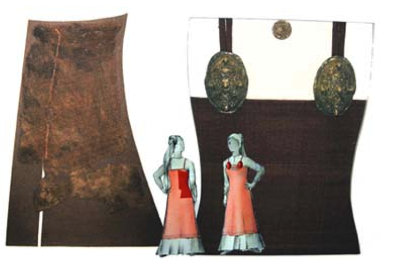
Ehkä tunnusomaisinta viikinkivaatetta ikinä, olkainmekkoja, on tullut tehtyä aikojen saatossa useammatkin kappaleet. Pääasiassa olen käyttänyt Viking apron dress by Vigdis'in kaavaa, ja vaikka se on ollut todella hyvä ja toimiva, nyt tuntui siltä, että voisin koittaa jotain muutakin. Lähtökohdaksi otin sen, että jonkinlainen Hedebyn mekonkappaletta muistuttava pala olisi suotavaa prosessista silti muotoutua ja pituutta olisi hyvä olla ihan kunnolla nilkkaan saakka eikä ainakaan vähempää. Joten ei kun hommiin.

The apron dress is perhaps the most identifiable piece of viking wardrobe ever, nothing screams "viking" quite like it. I've made several apron dresses using the  Viking apron dress by Vigdis pattern, and it's been a really nice and practical pattern. However, now I felt like I should try something new. The goal was that it should end up with a piece of fabric somewhat similar in shape to the Hedeby apron dress fragment and the finished dress should be ankle length, not shorter. So there, off to cutting I went.

Hedebyn mekonkappale Haithabun museossa, kirjasta "A medieval wardrobe". ~~~Hedeby dress fragment from the book "A medieval wardrobe".
Kangasta, sinistä Tippetiltä ostettua lähes vanuttamatonta villapalttinaa, oli noin 150 x 170 cm pala. Kaavassa tein tahallisen poikkeuksen löytöön sillä, että tein suosiolla saumoja ja erillisiä kappaleita muotolaskosten sijaan. Lähdin pilkkomaan kankaan kiilanmallisiksi kappaleiksi, sitten alettiin sovittaa. Tuli yläosastaan tarkoituksella aika vartalonmyötäinen, mutta helmanleveyttä riittää mukavan  210 cm:n verran. Eli homman nimi oli se, että kappaleet ovat yläreunasta vyötärölle saakka hyvinkin suoria, vyötäröltä alkaa leventyminen, vyötärön kohdalla ei ole erityistä levenemisen aloittavaa kulmaa. Tämä leikkuusuunnitelma, jos olisi kapeammasta kankaasta tehty eli reunaan ei olisi jäänyt palaa joka ei tähän mekkoon sopinut, olisi ollut myös Hedebyn löydön mukainen sillä siinä mekonkappaleen yläreunassa on mekon sisäpuolelle käännetty hulpioreuna (Hilde Thunemia kuuluu kiittää tästä tiedosta :) )

I had about 150 x 170 cm piece of blue almost unfulled wool from Tippet in tabby weave. I did a little alteration to the original pattern, and I decided to use seams and not darts as in the fragment. I cut the fabric up to gore-shaped pieces, then I started fitting the garment to me. It ended up as quite snug at the top, but it has a nice hem width, 210 cm. So the thing was, that the dress parts from the top edge to waist ended up pretty straight and they start widening from the waist. This cutting pattern, had it been for a narrower piece of fabric so that this stray piece of fabric on the side would've been omitted, would also match the Hedeby find -on the find there is a turned selvedge on the top of the dress piece. Hilde Thunem is to be thanked for this information :)

Näin yksinkertaisella lähdettiin liikkeelle. ~~~ It started out this simple.
Jälkeenpäin aloin miettiä tämän leikkuusuunnitelman järkevyyttä kankaankudontamielessä, ja vaikka ilman muuta nyt käytetyn leikkuusuunnitelman mukainen oli todistetusti toteutuskelpoinen ja  leikkuusuunta ihan dokumentoitukin, aloin miettiä miten kaavasta voisi saada teoreettisesti vielä hiukan käytännönläheisemmän -päädyin suunnitelmaan jossa valmiita hulpioreunoja päästäisiin hyödyntämään maksimaalisesti. Meinaan vaan että melko varmasti itse olisin iloisempi pitkien saumojen kohdalle asettuvista hulpioista kuin jo kudonnasta asti puolivalmiista helmasta ja pääntiestä -mutta toisaalta tässä suunnitelmassa on myös yksi sauma enemmän. Mene ja tiedä sitten, mutta tulipahan suunniteltua.

After I had cut the dress, I started to think about the pattern in a weaving point of view. The original cutting plan is very efficient and the cutting direction is also documented, too, but I started thinking if it could be a little more practical still. So I started making a cutting plan where the selvedges were utilized as efficiently as possible. I mean, when sewing, I'd appreciate selvedges in long seams more than in hem or neckline -although this pattern has one seam more. Don't know if that's good for really anything, though, but there it is :)

Vaihtoehtoinen leikkuusuunnitelma kapeammalle kankaalle, maksimaalinen valmiiden hulpioiden hyödyntäminen! ~~~ Alternative cutting pattern, taking the most out of the readily-woven selvedges!

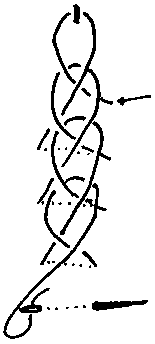
Se suunnittelusta, lisää nippelitietoa tästä omasta mekosta ja sen Hedebyläisestä vastineesta. Omani saumatekniikkana käytin eri puolille kaksinkerroin käännettyjä, yliluotellen ommeltuja saumavaroja. Alkuperäisen yhdistävistä saumoistahan ei voida juuri sanoa mitään sillä niitä ei ole fragmentissa säilynyt, mutta Heather Rose Jonesin mukaan tämä tekniikka on myös Hedebystä tunnettu, joten sillä mentiin. Yläreunan sauma taas fragmentissa oli sisäpuolelta aitapiston tiheämmällä ja koristeellisemmalla versiolla, vehnäntähkäpistolla (termi kirjasta Kirjonnan parhaat pistot, engl. ösenstitch) taitettu ja kiinnitetty, tätä pääsi sentään omaan mekkoonkin koittamaan -samanvärisellä langalla tehtynä, jotenkin tässä viehätti ajatus siitä että kankaan upea sininen väri on itsessäänkin jo koriste, päästää sitten soljet ja helmetkin oikeuksiinsa. Fragmentissa oleva varsinainen koriste, kolmen säiken letillä letitetty nauha muotolaskoksen päällä, kuulosti kyllä kivalta ajatukselta ja ehkä sitä sitten tulee vielä sovellettua sauman päälle, mutta vielä en sitä siis tehnyt.

That's all for planning, I'll still have some odds and ends concerning my dress and the Hedeby fragment. As for seam techniques, in my dress I folded the seam allowances over and stitched them with overcast stitches. The joining seam techniques of the Hedeby dress are not known since no joining seams have survived, but this technique is also known from Hedeby according to Heather Rose Jones. The top edge was folded over and stitched down using a decorative version of herringbone stitch (on the inside!), so called ösenstitch. I used this stitch too, and I really liked the idea of undecorated top edge -a lovely blue colour is decoration by itself, and no trims also mean that brooches and beads stand out even better. The real decorations in the fragment, a braided cord stitched to the dart, I did not use, at least not yet. It does sound like an attractive idea, though, I still might give it a shot at some point.

Vehnäntähkäpistorivi yläreunan sisäpuolella. ~~~ A row of Ösenstirches inside the top edge.


Vehkäntähkäpisto- tee-se-itse! Kuva Carolyn Priest-Dorman.~~~ Ösenstitch DIY! Drawing Carolyn Priest-Dorman.


Tällainen tästä sitten tuli! Lättällään lattialla ei kovin viehättävä, mutta päällä kiva senkin edestä.

So this is what I came up with! Flat on the floor, not really attractive, but when worn, it makes up for that!


Monday, 11 July 2016

Puutarhurointia ja värjäämistä viikonlopun verran ~~~ Dyeing and gardening all weekend long

Viikonloppu vierähti elävöitysporukan kanssa ryhmän omalla maapläntillä leireillessä, ja kummasti sitä taas kuvitteli että yhden viikonlopun aikana saa tehtyä paljon enemmän kuin oikeasti ehtikään... Kaikenlaista tuli otettua mukaan, mutta siitä huolimatta värjääminen oli viikonlopun ykkösjuttu. Lopputuloksena oli monia hienoja värejä ja yksi hienoinen pettymyskin, mutta pettymys menee kyllä kokeilun piikkiin -ainahan ei testi voi tuotta iloista lopputulosta, mutta nytpä ainakin tietää.

This weekend was spent camping with our re-eactment group, on our own little piece of land. I was hugely optimistic when thinking what does one have time to do during one weekend... I took so much stuff with me, but anyway spent most of the weekend dyeing yarn. As a result, we got several really nice dyes and one disappointment too, but that is to be considered as an learning experience -an experiment can't, after all, always turn out to be really splendid.

Eli meillähän oli siis tulilla kuuden padan patteristo, porisemassa verihelttaseitikin jalkoja (kuvassa oranssit ylänarulla), pari viikkoa liotettua koivunlehteä (ylänarulla oikealla), kanervaa (oikealla alanarulla), tammenkuorta soodalla ryyditettynä (takanarulla alhaalla) ja keltahaarakkaita (alanarulla vasemmalla, tämä kuvassa näkyvä tulos saatiin kun haaleaksi jäänyt sieniväri pistettiin kanervaan jälkiväriin). Kuudes oli puretuspata, ihan pelkällä alunalla mentiin. Tammenkuorta kohtaan oli kovat odotukset, sillä liemi oli tosi tummaa ja kauniin punaruskeaa sävyltään (kuten puunkuoret soodalla ovat taipuvaisia olemaan) mutta jostain syystä se ei tarttunut lankoihin oikeastaan lainkaan, tuli lähinnä haaleanbeigeä huuhtomisen ja kuivumisen jälkeen. Aloimme tosin miettiä että olisiko tämä tammenkuoriliemi ollut omimmillaan sittenkin nahan värjäämiseen, mutta se jäi nyt tällä kertaa koittamatta.

So, we had six pots altogether, and on the pots we had cortinarius semisanguineus stipes (on the pic the orange ones on the top clothesline), birch leaves that had been soaked for two weeks (top clothesline, on the right), heather (bottom right clothesline), oak bark with sodium carbonate (back bottom clothesline) and ramaria flava mushrooms (bottom right, they ended up quite lame so this pic is taken after they had been in the heather second dye). The sixth pot was for mordanting, we used only alum. We had really great expectations for the oak bark dyebath, its colour was really dark red-brown, but for some reason it didn't stick and ended up being quite boring beige after the yarns were rinsed and dyed. We started to wonder, though, if it would've been better for dyeing leather, but this is to be tested some other time.


Viikonlopun värjäyssaldo ~~~ Dyes for the weekend
Omat langat ja kankaat kotona. Vasemmalta oikealle koivunlehti, verihelttaseitikki, haarakat + kanerva, kanerva ja vielä vähän märkä tammenkuori ~~~ My fabrics and yarns at home. From left to right birch leaves, cortinarius semisanguineus, ramaria + heather, heather, still slightly damp oak bark.

Melkoisen hyvä osa ajasta meni myös piipertäessä paikallisella kasvimaalla. Kun kerran oma maapläntti on kyseessä, on sinne vonut aika vapaasti suunnitella omia projekteja ja kasvimaa olikin yksi ensimmäisistä jotka sinne toteutettiin (tosin nykyinen kasvimaa on jo toinen versio ensimmäisen kaaduttua oikeastaan tontin luontaisen hiekkamaaperän sopimattomuuteen useimpien kasvien kasvattamiseen). Kasvimaa tuolla tontilla on koostettu kivellä reunustetuista penkeistä. Yleensähän keskiaikaisissa puutarhan kuvissa kasvimaan penkit on reunustettu laudoilla tai pajupunosaidalla, mutta tuolla meidän kasvimaan paikalla tuota kiveä oli enemmän kuin tarpeeksi ja koska kivipenkitkään eivät ole ihan täysin ennenkuulumattomia, sellaiset sitten laitettiin (luotan tässä tiedossa Medieval garden -kirjaan, kirj. Sylvia Landsberg). Viime vuonna aloitettu kasvimaan täysuudistusprojekti koki hiukan takapakkia talven aikana kun kova talvi tappoi useita kasveja. Tätä vahinkoa sitten tänä vuonna ollaan koitettu ottaa takaisin. Ilmeisen hyvin se onkin onnistunut, ainakin vastatuotu humala oli kasvanut jo parissa viikossa vajaan metrin ja talven tappama lipstikkakin on saanut korvaajan. Useita kertoja paikasta toiseen siirretty pieni ruusukin kukki (ja toinenkin ruusu oli aloittamassa kukintaa), ilmeisesti ensimmäistä kertaa koko tämän kasvimaan historian aikana!

I spent quite a while at the local garden, too. Since the place is owned by the society, we've had quite a lot of freedom to plan whatever we please in there (building regulations considered, of course), and garden was among the very first things that saw the daylight in there. The current version of the garden, though, is the second one because the first failed, mostly due to the natural soil being almost pure sand and therefore really unfitting for almost all garden plants. We built raised benches of stone there. Usually medieval gardens have raised benches of tree planks or wattle, but since we had a really lot of stone there, that's what we used for our benches (and this choice of material is also supported by the book Medieval garden, by Sylvia Landsberg). We started the garden renovation last year, but we experienced some drawbacks because of an especially harsh winter which killed off some of our plants. We've tried to repair the damage, and apparently we've suceeded since newly planted hops are growing like mad! Also, a small rose bush which has been moved form one place to another several times has started to make flowers, this is its first time ever in this garden!


Ja sitten viikon kuva-arvoitus, mihin tässä on ainekset? No, ei pidetä jännityksessä, mutta jos ehdit katsoa että pystykangaspuihin siinä voisi olla potentiaalia, niin olit ihan oikeassa. Tosin vastakaadettuina ne joutuvat kuivumaan vielä tovin jos toisenkin, ja varmaan pystypuita joutuu vielä hiukan lyhentämään... Ovat nyt puuvajassa kuivumassa ja ensi keväällä sitten niitä pääsee käpistelemään enemmän sitten.

And then, the quiz for this week: what are these going to be? Ok, I'm not going to keep you wondering, but just in case you saw them as having potential to become an upright loom, you were absolutely right. They're newly felled, though, so they'll have to dry for a while, and I'll probably have to adjust the measurements some too. For now, they're patiently waiting at the woodshed..