Tuesday, 23 August 2016

Ravintola AD 1393 ~~~ Restaurant AD 1393

Restaurant AD 1393 täydessä käynnissä! ~~~  Restaurant AD 1393 up and running! Photo M. Pulla.
Ravintolapäivähän on ihan paras keksintö ruokamaailmassa, sen turvin on jo tullutkin tutustuttua paikkoihin ja ruokiin joihin ei varmaan olisi muuten tullut ikinä muuten törmättyä (viitaten esimerkiksi taannoiseen vapaaehtoisen palokunnan tempaukseen, jossa tarjolla oli burgeria paloasemalla!). Mutta yksi on meiltä Turusta puuttunut, ilmeisesti ei koko sinä aikana kun ravintolapäivää on järjestetty ole ollut tarjolla historiallista ruokaa (puhumattakaan sitten vakituisemmin toimivista ravintoloista -ja ei, Haraldia ei lasketa vaikka sinänsä hauska ruokapaikka onkin). Olin miettinyt tilanteen korjaamista jo useamman vuoden, mutta harmillisesti ravintolapäivät ovat osuneet päällekäin muiden tapahtumien kanssa. Päällekäisyyksiltä ei vältytty nytkään, mutta päätettiin silti toteuttaa tämä nyt. eikä ollut kovin vaikeaa puhua muita ihmisiä mukaan!

Luonteva valinta oli keskittyä keskiaikaan, säilyneitä reseptejä kun on siltä ajalta ihan reilustikin, ja keskiaikaiseen ruokaan liittyy myös paljon kummallisia ja vääriä käsityksiä (kansanvalistuksellinen näkökulma tottakai!). Mutta kaipailin tarkempaa rajausta yleiseurooppalaisen ja -keskiaikaisen sijaan, ja luontevaa oli sitten keskittyä yhteen lähteeseen. Laajuudessaan Le Ménagier de Paris oli ihan nappivalinta, koska reseptejä siinä on kaikkineen yli kolmesataa, ja muut taloudenhoitovinkit sitten vielä lisänä. Ajatuksena oli ottaa yksi liharuoka, paastoa edustamaan yksi kalaruoka ja huomioida myös kasvissyöjät, kaikki Ménagierin resepteillä mahdollisimman vähän mitään muuttaen. Ja tästähän tempauksemme sai myös nimensä, 1393 kun on oletettu Ménagierin kirjoitusvuosi. Ihan alkuperäisenä ajatuksena oli myös pitää pieniä luentoja keskiajan ruokakulttuurista, mutta tämä onneksi ymmärrettiin jättää tästä tapahtumasta ainakin tällä kertaa -vaikka meitä oli seitsemän henkilöä tekemässä tätä hommaa, kaikilla oli kädet niin täynnä ihan ruuanteko/jakelu/rahastustöissä että vartiksi puhumaan ei olisi oikein ehtinyt.

Kaupungin järjestyssäännöistä johtuen kokkaaminen kaupungin puistossa ei voinut tapahtua tuttuun tapaan avotulella, mutta varmistuksen jälkeen kaasukokkaus kävi päinsä. Meillä oli sitten viisi kaasukeitintä ja kolme kaasupulloa, ja näistä saatiinkin sitten riemua kun tuulisena päivänä liekki sammui aina vähän päästä. Patenttiratkaisuksi tuulisuojaksi kehitettiin sitten erään kokin mekko, tehtävänä henkilöllä oli siis pääosin seistä paikoillaan helmat leveänä! Alkusähläyksistä johtuen pääsimme aloittamaan jo valmiiksi hiukan myöhässä ja ruuan valmistumiset osuivat sitten aivan eri aikoihin, mutta siitäkin sitten lopulta selvittiin kun pääsi vain yli siitä, että lisukkeet eivät osuneet aivan niille ruokalajeille kun oli suunniteltu... Lopulta kävi niin onnellisesti, että lähes kaikki ruoka myytiin loppuun (jäljelle jäi vain vähän keittoa), asiakkaat olivat ilmeisen tyytyväisiä ja tätä pyydettiin uudestaankin järjestettäväksi!

Restaurant day must be one of the best innovations in food world, and because of it I've tasted food I wouldn't perhaps have tasted otherwise or visited places I wouldn't have had a chance to visit (referring to, for example, a burger bar at a local fire station organized by the volunteer fire department!). One thing, however, has been missing -apparently during the whole time the restaurant day has existed, not once historical food has been served here in Turku (not to even mention permanent, actual restaurants). I had thought of fixing the situation for some years now, but unfortunately restaurant days have every time been on the same weekend as some other events. It happened this time too, but we decided to go ahead anyway, and it wasn't really difficult to persuade others to join the effort!

It was only natural to focus on medieval food, since there are quite a few surviving recipes and there also are a lot of misconceptions surrounding it (always there to enlighten the public, me!). But I was craving for a more narrow approach instead of an general European and medieval, so it was also natural to focus on one single source. Le Ménagier de Paris is abundant in its choice of recipes, over three hundred different foods. I was thinking of one meat course, one fish course to represent the foods of the fish days, and one completely vegetarian dish for the lent, all with the recipes of le Ménagier, altering as little as possible. And this was also where our restaurant got its name, 1393 is the year when le Ménagier is assumed written. Originally we had also in mind to have small 10-15 minutes "lectures" about medieval food and food culture, but luckily we decided to ditch that -even with seven people participating, we had our hands totally full.

Due to the city ordinances, cooking with real fire as we usually do was forbidden in a city park but it turned out that cooking with gas was alright. We then had five gas cookers and three bottles of gas, and they did cause some headache -it was a windy day, and the flame was blown out every once in a while. Eventually we came up with a solution, we recruited one person basically just to stand still with her skirts spread out as wide as possible and indeed she did block the wind! Because of the fuss we got to start a bit late and the dishes were pretty much finished all in a different time. No big crisis, though, it only caused the dishes and side dishes to be paired in a different manner than I planned. Eventually, we sold out almost all of our food (only little soup was left for us to share), customers seemed happy and we even were asked to organize this kind of event again!

Tyytyväinen pieni asiakas sai nuolla kauhan kun possukastike loppui. ~~~ A happy little customer got to taste the pork sauce after we ran out of it.  Photo M. Pulla.

Mutta niihin resepteihin! Käytin ohjeita Janet Hinsonin Ménagierin käännöksestä, pahimmissa tapauksissa turvauduin vähän uudempaan Greco & Rose:n käännökseen. Käytännön syistä tämä, Hinsonin reseptit olivat printattuina kun taas Greco & Rose oli oikeana kirjana ja sisäpuoleltaan vielä ihan kunnollisen näköinenkin (kansissa kyllä on vähän kahvia). Printtiresepteihin oli siis mukavampi tehdä merkintöjä... Testikokkauksen jälkeen yksi suunniteltu ruokalaji meni vaihtoon, en vain saanut punajuurikeitosta toimivaa mutta hernekeitto toimi sitten senkin edestä.

But, for the recipes! I used recipes from the Janet Hinson's translation, and in some unclear cases I turned for the Greco & Rose's translation. This was for practical reasons, I had the Hinson recipes printed but the Greco & Rose was a real book, and its insides are still quite neat even though the cover has some coffee in it. The printed recipes allowed me to make  notes, underline and spill food all over them... After the test cooking I changed one planned dish, I just couldn't get the beet soup  to be good but pea soup made up for that.

 Eli seuraavanlaisesti lähdettiin ohjeita toteuttamaan ja muokkaamaan, ohjeet Hinsonin käännöksiä:
We made the dishes as following, recipes from the Hinson translation:

---------------------------------
Mausteinen possukastike ~~~  Spicy pork sauce


FALSE GRAIN DISH. Cook in water and wine livers and giblets of poultry, or meat from veal, or from a leg of pork or mutton, then chop it very finely and fry in lard: then grind up ginger, cinnamon, clove, grains, wine, verjuice, beef bouillon or juices of whatever meat you are using, and lots of egg-yolks, and pour it over your meat, and put it on to boil well. Some add saffron, as it should be yellowish in colour, and others add burnt bread, ground and sieved, for it should be thickened and also eggs and bread, and it should be tart from the verjuice. And in serving, over each bowl, sprinkle powdered cinnamon.

Lihan kanssa ei ilmeisesti tässä ole kovin tarkkaa, mitä nyt sattuu olemaan. Oli sitten 3 kg erilaista possua... Possu meni suolattuun punaviiniin (0,75 l) jota jatkettiin vedellä ja kiehuskeli siellä kunnes oli kovin kypsää. Sen verran, että kun sen otti sieltä pois ja sitä leikkeli pienemmiksi paloiksi, se käytännössä mureni jo siinä. Paistettiin silti vielä reilussa voissa. Tässä tilassa saikin sitten jäädä odottamaan yön yli seuraavaan päivään, jolloin se lämmitettiin ja sitten siihen lisättiin teelusikalliset inkivääriä, kanelia, neilikkaa, mustapippuria (korvaamaan paratiisinsiemeniä joita ei Suomesta tällä hetkellä saa), 0,5 l  punaviiniä ja noin 0,5 dl sitruunamehua (korvaamaan verjuicea jota ei Suomesta tällä hetkellä saa) ja noin 10 kananmunan keltuaiset. Kaipasi vielä vähän nestettä, joten laitettiin vähän vettä ettei pala muttei niin paljoa, että muuttuisi muhennokseksi. Korppujauhoa pidettiin varalla, mutta rakenne ei lopulta sitten kaivannut sitä. Tuli valmis ja tuli valtavan hyvä, loppui kesken!

It seems as if it doesn't matter much what meat does one have to make this dish, we had 3 kilos of pork. We salted some red wine (0.75 l) and added some water and cooked the pork in it until it was well done. So well done, that when we started cutting it to smaller pieces, it basically just crumbled. Then we fried the pork in butter, and then it was put to fridge to wait until the next day. Then it was heated again and approx. one teaspoon of ginger, cinnamon, ground cloves, black pepper (to substitute grains of paradise), 0.5 l red wine, about 0.5 dl lemon juice (to substitute verjuice) and well-beaten yolks of about 10 eggs were added. It still needed some liquid, so we added water but not so much that it would turn into stew. We had spared some breadcrumbs for this, but the dish didn't look like it would need them. Then, it was finished and it was delicious -and the public loved it too, we ran totally out of it!
---------------------------------

Lihapäivän riisi ~~~ Rice for a meat day

RICE for a meat day. Pick it over and wash in two or three changes of hot water, and put to dry on the fire, then add boiling cow's milk, and grind up saffron to colour it yellow: soak with your milk, then add in grease from beef stock.

Yksinkertaista. Tumma riisi (2 paketillista) pääsi kylpyyn kolmeen litraan suolattua maitoa, ja sitä sitten hämmennettiin lähes jatkuvasti kunnes oli kiehunut valmiiksi -sahramihyppysellinen lisättiin vasta vähän ennen kun oli syöntikunnossa. Alkuperäisen suunnitelman mukaan tähän olisi lisätty voita, mutta lopulta se jäi kiireessä tekemättä. Hyvää oli silti.

Fairly simple. Two packages of dark rice ended up in 3 litres of salted milk, and it was constantly stirred until it was ready and well boiled. Only slightly before it was served some ground saffron was added. Originally we had planned on adding butter, but since we were in a bit of a hurry, we didn't do that -and it was good anyway.

---------------------------------
Keitetty hauki ~~~ Boiled pike

SEA-PIKE should be gutted through the vent, cooked in water, eaten with cameline sauce.

Hiukan oiottiin ja ostettiin valmista haukifilettä. Sitä olikin sitten 3 kg! Sopivan syömäkelpoisiksi paloiksi paloiteltu hauki keitettiin suolavedessä noin 15 minuutin ajan, eipä siinä sitten muuta.

We cut some corners and bought pike fillets, total of 3 kg. Then it was cut up so smaller pieces and boiled for some 15 minutes in salt water. That was pretty much all it needed, that and a good sauce!

--------------------------------- 

Cameline-kastike ~~~ Cameline sauce

CAMELINE. Note that at Tournai, to make cameline, they pound ginger, cinnamon, and saffron, and half a nutmeg, moistened with wine, then take it out of the mortar; then take crumb of white bread, without grilling/burning it, moisten with cold water and pound in the mortar, moisten with wine and strain; then boil all [together], and put in last of all some brown sugar; and that is winter cameline. And in summer, they do the same, but it is not boiled at all.

Päädyttiin kesä-camelineen, eli teimme kastikkeen alkoholittomaan valkoviiniin. Ensin sekoitettiin keskenään pari maustemitallista inkivääriä, kanelia, muskottipähkinää ja sahramia. Ne sekoitettiin 0.75 l:aan viiniä jota vähän jatkettiin vedellä, sitten lisättiin noin 3 dl korppujauhoa. Lopuksi noin 1 tl ruskeaa sokeria ja maun tarkistus, taisin lisätä vielä hiukan inkivääriä mutta tämän kastikkeen väri oli todella mahtava!

We went for the summer cameline,  so the basis for this sauce was non-alcoholic white wine. First, spices were mixed together, some two millilitres ginger, cinnamon, nutmeg and saffron. They were added to the wine (some water was added too), then about 3 dl breadcrumbs were added. Finally one teaspoon of brown sugar, after checking the taste I added just a bit of ginger and it was good -and the colour of the sauce was wonderful!
---------------------------------
Frumenty


FRUMENTY. First, you must hull your wheat the same as you would for hulled barley, and remember that for ten bowls you need a pound of hulled wheat, which you can sometimes find at the spice-shop already hulled for one blanc per pound. Clean it and cook it in water in the evening, and leave it overnight covered by the fire in lukewarm water, then take it out and wash it. Then boil milk in a skillet and do not stir it, for it would turn: and without waiting, put it all at once into a clean pot; and when it is cold, take the cream off the top so that this cream does not cause the frumenty to turn, and then boil the milk again with a little wheat, but very little wheat; then take egg yolks and pour them in, that for each sixth of milk a hundred eggs, then take the boiling milk, and beat the eggs with the milk, then move the pot back and throw in the eggs, and move it back (away); and if you see that it is trying to turn, put the pot in a full pail of water. On fish days, use milk: on meat days, use meat juices; and you can add saffron if the eggs aren't yellow enough; item, half a piece of ginger.

Valitsimme vehnäsuurimoiden sjasta spelttiä, joka oli tähän hätään helpommin saatavilla, mutta myös vanhana vehnän lajikkeena tunnettu Ménagierin kirjoitusaikaan (vaikkei ilmeisesti Ranskassa tuolloin viljeltykään, mutta esimerkiksi Saksassa kyllä). Tähän satsiin meni kaksi 800 g:n pakettia suurimoita, jotka eivät onneksi vaatineet alkuperäisohjeessa mainittua liotusta. Speltit keitettiin 3 l:ssa maitoa, mukaan laitettiin vähän suolaa. Hetken kiehumisen jälkeen spelttien joukkoon lisättiin noin 15 hyvin rikottua kananmunan keltuaista sekoittaen. Sitten annettiinkin vaan tekeytyä kunnes speltti oli syöntipehmeää, ja vaikka väri olikin melko keltainen munista, vielä ripaus sahramia ja hyvä tuli.


We chose to use spelt instead of wheat, because in this form it was more easily obtainable, and because as it is also a subspecies of wheat and it was cultivated when le Ménagier was written (although apparently not in France, but for example in Germany). For this dish two packages of spelt á 800 g were used, delightfully they did not require overnight soaking as was mentioned in the original recipe. The spelt was cooked in 3 liters of milk, with some salt added. After a while well-beaten yolks of some 15 eggs were added. Then it was left to cook (stirring had to be done frequently) until it was done. Some saffron was added although the colour was quite nice.

---------------------------------

Tuorehernekeitto  ~~~Soup of fresh peas


When you have NEW PEAS [...] On a fish day and in Lent, fry the onions as is told in the preceding chapter, and then put the oil in which the onions were fried and the onions in along with bread-crumbs, ginger, cloves and grain, ground: and sprinkle with vinegar and wine, and add a little saffron, then adorn the bowl with slices of bread.

Tämä ohje vaatikin sitten hiukan tulkitsemista, mutta koska se oli hernekeitto-ohjeiden keskellä, tulkitsin tämänkin sellaiseksi. Sipuleista oli edellisessä luvussa kerrottu paljonkin, mutta olipa mainittu myös keittäminen ja sen jälkeen paistaminen, joten sillä mentiin. Noin 1,5 kg sipulia paloiteltiin ja keitettiin ja sen jälkeen paistettiin oliiviöljyssä, sitten lisättiin herneet, noin 4 kg. Nesteeksi vettä ja jonkin ajan kiehumisen jälkeen 0.75 l valkoviiniä ja n. 1 dl valkoviinietikkaa, n.1 tl inkivääriä, ripaus mustapippuria (paratiisinsiemenien tilalle) ja neilikkaa. Ripaus sahramia lisättiin aivan viimeiseksi. Keitto suurustettiin gluteenittomalla korppujauholla (350 g), joka teki koostumuksesta seuraavana päivänä ehkä hiukan jännän, mutta tämä onnistui kyllä muuten oikein hyvin! 

This recipe did require some intepretation, but since this recipe was in the text situated in the middle of pea soup recipes, I thought this one must be a pea soup recipe too. As for the onions, the preceding chapter did not really specify one single way to prepare onions, but mentioned cooking and then frying among other ways too, so that's what I did. About 1,5 kg onions were chopped and boiled, and fried in olive oil after boiling. Then peas, massive 4 kgs, were added, and water as the soup liquid. After some boiling a bottle of white wine (0.75 l) was added along with about 1 dl white wine vinegar, and about one teaspoon of ginger, black pepper (grains of paradise were not available) and  ground cloves. A pinch of saffron was added at the end, and the soup was thickend with glutein-free breadcrumbs (350 g). Perhaps because of the breadcrumbs the consistency was a bit funny on the next day, but the taste was really good!

Monday, 8 August 2016

Haudankaivuuta ~~~ Digging the grave

Viikonloppu tuli sitten vietettyä kuopassa! Turun kupeessa Kaarinan Ravattulan Ristimäellä varhaiskeskiaikaisella kirkonpaikalla on taas käynnissä tutkimus, ja mukavasti viikonloppuunkin ulottuneiden yleisökaivausten myötä pääsi itsekin pitkästä aikaa kaivuuhommiin. Paikkahan sinänsä oli tuttu mutta aiemmin sielä on tultu osallistuttua ainoastaan maaston raivaamiseen puutalkoiden muodossa (paikka oli saanut kasvaa rauhassa puuta ennen löytymistään kymmenien vuosien ajan). Mutta nyt pääsi siis varsinaisiin töihinkin!

Last weekend was spent in a trench!  The Ravattula Ristimäki early medieval church site is being excavated this year too, and the public was permitted to take part to the archaeological excavations as well, also during the weekend -and of course I had to attend too now that I had a chance! The place was already well familiar to me, but the only real work I had been doing there before was clearing the hill of  trees and branches (the hill had been totally untouched and left to grow freely for decades before the archaeological site was discovered). But now, it was time to do some actual archaeology!

Melkoista idylliä vajaan viiden kilometrin päässä Turun keskustasta... ~~~ Scenery is really idyllic, less than 5 km from the Turku center.

Kaivausjohtaja Juha Ruohonen esittelee kirkkoa, risti on alttarin kohdalla. ~~~ Site director Juha Ruohonen showing us around the site, this is the church itself. Cross stands at the church altar.
Paikalta löytyi vuonna 2013 Suomen vanhin tunnettu kirkonpaikka hautausmaineen, ajoittuen 1100-1200-lukujen vaihteeseen. Hautuumaata nytkin kaivettiin -joskaan vielä ei oltu kaivuussa varsinaisessa hautaussyvyydessä ja haudoista tässä vaiheessa kertoivat lähinnä ympäröivää hiekkamaata tummemmat läiskät maassa (ja eikä haudasta välttämättä muuta löydykään, luu maatuu täällä päin nopeasti ja varsinaisia hauta-antimia ei enää tähän aikaan kristillisellä hautuumaalla juurikaan harrastettu). Tänä viikonloppuna kaivetun viiden sentin kerroksen löydöt liittyivät lähinnä kirkkoa aikaisempaan vaiheeseen, oma kahden päivän "saalis" koostui oikeastaan yksinomaan oksapunosseinäisen rakennuksen savitiivisteestä, joka oli tämän rakennuksen palamisen jälkeen muuttunut meillekin asti säilyvään muotoon (ja aika pieniksi hipuiksi -kirkko itsessään taas ei ollut kohdannut tulipaloa). Ihan mielenkiintoisia kivirakenteitakin maasta näytti tulevan esiin, ne olivat oikeastaan jännittävämpiä kuin savitiivisteet -muutamia kovin isoja kiviä keskellä maata (näitä epäiltiin hautakiviksi) ja joitain pienempien kivien muodostamia ryhmiä, joiden todellinen luonne kai selviää vasta kun kaivetaan lisää. Ehkä nämä pienemmätkin liittyvät hautauksiin, ehkä johonkin muuhun. Täytyy seurata Ristimäen blogia erityisen tiiviisti :) Hupaisaa oli myös päästä lennättämään kuvauskopteria, aikeena oli ottaa yleiskuvia alueesta laajemmin ja varsin hyviä kuvia sillä saikin.

As for the site itself, on 2013 the earliest church known in Finland, dating to the turn on 12th-13th century, was discovered there along with its graveyard. The graveyard was what we excavated this time, too, although the trench wasn't really grave deep yet, there were only slight hints of the graves in the form of darker stains in the sand (and as bone decomposes quickly around here, there might not be really much more than that left if the deceased had been buried without any dress-related objects -grave goods as such were no longer trendy in a christian graveyard). My great discoveries for this weekend and the five centimeters thick layer that was excavated were related to the phase in the hill preceding the church and graveyard, several small bits of burned clay from a wattle-and-daub-structured building which had been burned down. Also there seemed to be some interesting stone structures, several larger stones (suspected gravestones) and smaller groups of stones which might (or might not) be related to the burials too -one cannot really say yet. I'll just have to follow the Ristimäki blog (in finnish, sorry!) really closely from now on! We also had a chance to fly a photo-drone, attempting to take areal photos of the whole Ristimäki site. They ended up being really good ones!
  
Kaivuu käynnissä, kuopassa keskellä oletetut hautakivet. ~~~ Ongoing excavations, the suspected gravestones in the middle of the trench.

Kuvauskopteri nousi kauniisti ja tuulesta huolimatta lensi tasaisesti! ~~~ The drone was flying steadily although it was a bit windy day.
Aktiviteettiahan tuolla Ristimäen mäennyppäreellä on ollut siitä asti kun se kivikaudella vedestä nousi, paikalta on tehty joitain kivikautisiakin löytöjä, ja ympäristössä on erityisesti rautakautista muinaisjäännöstä enemmänkin. Kirkonpaikan viereisellä metsäsaarekkeella on noin 500-luvulle ajoittuva kalmisto, joka ei kielojen alta nyt paljoa näkynyt suurimpia kiviä lukuunottamatta. Sen vieressä olevalla isommalla metsäsaarekkeella on kuppikivi, joka niin ikään täälläpäin yhdistetään myös rautakauteen. Kaivausjohtaja arveli, että rautakautinen tai varhaiskeskiaikainenkaan kylä ei olisi sijainnut läheisellä mäellä kuten nykyinen Ravattulan kylä (parisataa metriä matkaa), vaan ehkä kirkko- ja kalmistomäkeä ympröivällä alueella joka nyt on peltona. Vuosisatoja kestänyt viljely on epäilemättä tuhonnut jäänteet aika tehokkaasti... Melko varmaa kuitenkin on, että Ravattulan alue ei ole kaikkea vielä paljastanut, odottelen innolla uusia uutisia alueesta!

The Ristimäki site had seen a lot of activity ever since it arose from the water during the stone age, some stone age finds have been made there too, and the surrounding area is rich with iron age sites. Only about hundred meters from the church site is a cremation cemetery dating to the 6th century, in the summertime almost invisible under all the vegetation, right on the next hill is a cup stone which are also typical to iron age around here. The site director suspected that the iron age and early medieval village would've been situated in an area that's a cultivated field nowadays, instead of a nearby hill some hundred meters away where the Ravattula village now stands. Centuries of cultivating and ploughing have apparently taken their toll... One thing is for certain, the Ravattula area has not revealed all its secrets yet and I'm really excited for more news!

Kalmistoalue kirkkomäen vierellä. ~~~ Cremation cemetery next to the church hill.
Kuppeja kivessä, pahuksen hankalia kuvattavia. ~~~ Cups in a stone, awfully difficult to take a pic!

Wednesday, 27 July 2016

Eräs näkökulma viikinki-olkainmekkoon ~~~ A version of the viking apron dress

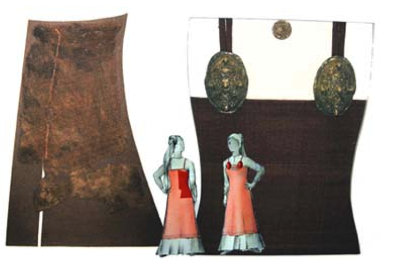
Tästä puhe tällä kertaa!  ~~~ This is what we're talking about this time!

Ehkä tunnusomaisinta viikinkivaatetta ikinä, olkainmekkoja, on tullut tehtyä aikojen saatossa useammatkin kappaleet. Pääasiassa olen käyttänyt Viking apron dress by Vigdis'in kaavaa, ja vaikka se on ollut todella hyvä ja toimiva, nyt tuntui siltä, että voisin koittaa jotain muutakin. Lähtökohdaksi otin sen, että jonkinlainen Hedebyn mekonkappaletta muistuttava pala olisi suotavaa prosessista silti muotoutua ja pituutta olisi hyvä olla ihan kunnolla nilkkaan saakka eikä ainakaan vähempää. Joten ei kun hommiin.

The apron dress is perhaps the most identifiable piece of viking wardrobe ever, nothing screams "viking" quite like it. I've made several apron dresses using the  Viking apron dress by Vigdis pattern, and it's been a really nice and practical pattern. However, now I felt like I should try something new. The goal was that it should end up with a piece of fabric somewhat similar in shape to the Hedeby apron dress fragment and the finished dress should be ankle length, not shorter. So there, off to cutting I went.

Hedebyn mekonkappale Haithabun museossa, kirjasta "A medieval wardrobe". ~~~Hedeby dress fragment from the book "A medieval wardrobe".
Kangasta, sinistä Tippetiltä ostettua lähes vanuttamatonta villapalttinaa, oli noin 150 x 170 cm pala. Kaavassa tein tahallisen poikkeuksen löytöön sillä, että tein suosiolla saumoja ja erillisiä kappaleita muotolaskosten sijaan. Lähdin pilkkomaan kankaan kiilanmallisiksi kappaleiksi, sitten alettiin sovittaa. Tuli yläosastaan tarkoituksella aika vartalonmyötäinen, mutta helmanleveyttä riittää mukavan  210 cm:n verran. Eli homman nimi oli se, että kappaleet ovat yläreunasta vyötärölle saakka hyvinkin suoria, vyötäröltä alkaa leventyminen, vyötärön kohdalla ei ole erityistä levenemisen aloittavaa kulmaa. Tämä leikkuusuunnitelma, jos olisi kapeammasta kankaasta tehty eli reunaan ei olisi jäänyt palaa joka ei tähän mekkoon sopinut, olisi ollut myös Hedebyn löydön mukainen sillä siinä mekonkappaleen yläreunassa on mekon sisäpuolelle käännetty hulpioreuna (Hilde Thunemia kuuluu kiittää tästä tiedosta :) )

I had about 150 x 170 cm piece of blue almost unfulled wool from Tippet in tabby weave. I did a little alteration to the original pattern, and I decided to use seams and not darts as in the fragment. I cut the fabric up to gore-shaped pieces, then I started fitting the garment to me. It ended up as quite snug at the top, but it has a nice hem width, 210 cm. So the thing was, that the dress parts from the top edge to waist ended up pretty straight and they start widening from the waist. This cutting pattern, had it been for a narrower piece of fabric so that this stray piece of fabric on the side would've been omitted, would also match the Hedeby find -on the find there is a turned selvedge on the top of the dress piece. Hilde Thunem is to be thanked for this information :)

Näin yksinkertaisella lähdettiin liikkeelle. ~~~ It started out this simple.
Jälkeenpäin aloin miettiä tämän leikkuusuunnitelman järkevyyttä kankaankudontamielessä, ja vaikka ilman muuta nyt käytetyn leikkuusuunnitelman mukainen oli todistetusti toteutuskelpoinen ja  leikkuusuunta ihan dokumentoitukin, aloin miettiä miten kaavasta voisi saada teoreettisesti vielä hiukan käytännönläheisemmän -päädyin suunnitelmaan jossa valmiita hulpioreunoja päästäisiin hyödyntämään maksimaalisesti. Meinaan vaan että melko varmasti itse olisin iloisempi pitkien saumojen kohdalle asettuvista hulpioista kuin jo kudonnasta asti puolivalmiista helmasta ja pääntiestä -mutta toisaalta tässä suunnitelmassa on myös yksi sauma enemmän. Mene ja tiedä sitten, mutta tulipahan suunniteltua.

After I had cut the dress, I started to think about the pattern in a weaving point of view. The original cutting plan is very efficient and the cutting direction is also documented, too, but I started thinking if it could be a little more practical still. So I started making a cutting plan where the selvedges were utilized as efficiently as possible. I mean, when sewing, I'd appreciate selvedges in long seams more than in hem or neckline -although this pattern has one seam more. Don't know if that's good for really anything, though, but there it is :)

Vaihtoehtoinen leikkuusuunnitelma kapeammalle kankaalle, maksimaalinen valmiiden hulpioiden hyödyntäminen! ~~~ Alternative cutting pattern, taking the most out of the readily-woven selvedges!

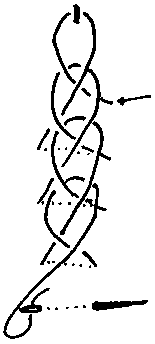
Se suunnittelusta, lisää nippelitietoa tästä omasta mekosta ja sen Hedebyläisestä vastineesta. Omani saumatekniikkana käytin eri puolille kaksinkerroin käännettyjä, yliluotellen ommeltuja saumavaroja. Alkuperäisen yhdistävistä saumoistahan ei voida juuri sanoa mitään sillä niitä ei ole fragmentissa säilynyt, mutta Heather Rose Jonesin mukaan tämä tekniikka on myös Hedebystä tunnettu, joten sillä mentiin. Yläreunan sauma taas fragmentissa oli sisäpuolelta aitapiston tiheämmällä ja koristeellisemmalla versiolla, vehnäntähkäpistolla (termi kirjasta Kirjonnan parhaat pistot, engl. ösenstitch) taitettu ja kiinnitetty, tätä pääsi sentään omaan mekkoonkin koittamaan -samanvärisellä langalla tehtynä, jotenkin tässä viehätti ajatus siitä että kankaan upea sininen väri on itsessäänkin jo koriste, päästää sitten soljet ja helmetkin oikeuksiinsa. Fragmentissa oleva varsinainen koriste, kolmen säiken letillä letitetty nauha muotolaskoksen päällä, kuulosti kyllä kivalta ajatukselta ja ehkä sitä sitten tulee vielä sovellettua sauman päälle, mutta vielä en sitä siis tehnyt.

That's all for planning, I'll still have some odds and ends concerning my dress and the Hedeby fragment. As for seam techniques, in my dress I folded the seam allowances over and stitched them with overcast stitches. The joining seam techniques of the Hedeby dress are not known since no joining seams have survived, but this technique is also known from Hedeby according to Heather Rose Jones. The top edge was folded over and stitched down using a decorative version of herringbone stitch (on the inside!), so called ösenstitch. I used this stitch too, and I really liked the idea of undecorated top edge -a lovely blue colour is decoration by itself, and no trims also mean that brooches and beads stand out even better. The real decorations in the fragment, a braided cord stitched to the dart, I did not use, at least not yet. It does sound like an attractive idea, though, I still might give it a shot at some point.

Vehnäntähkäpistorivi yläreunan sisäpuolella. ~~~ A row of Ösenstirches inside the top edge.


Vehkäntähkäpisto- tee-se-itse! Kuva Carolyn Priest-Dorman.~~~ Ösenstitch DIY! Drawing Carolyn Priest-Dorman.


Tällainen tästä sitten tuli! Lättällään lattialla ei kovin viehättävä, mutta päällä kiva senkin edestä.

So this is what I came up with! Flat on the floor, not really attractive, but when worn, it makes up for that!


Monday, 11 July 2016

Puutarhurointia ja värjäämistä viikonlopun verran ~~~ Dyeing and gardening all weekend long

Viikonloppu vierähti elävöitysporukan kanssa ryhmän omalla maapläntillä leireillessä, ja kummasti sitä taas kuvitteli että yhden viikonlopun aikana saa tehtyä paljon enemmän kuin oikeasti ehtikään... Kaikenlaista tuli otettua mukaan, mutta siitä huolimatta värjääminen oli viikonlopun ykkösjuttu. Lopputuloksena oli monia hienoja värejä ja yksi hienoinen pettymyskin, mutta pettymys menee kyllä kokeilun piikkiin -ainahan ei testi voi tuotta iloista lopputulosta, mutta nytpä ainakin tietää.

This weekend was spent camping with our re-eactment group, on our own little piece of land. I was hugely optimistic when thinking what does one have time to do during one weekend... I took so much stuff with me, but anyway spent most of the weekend dyeing yarn. As a result, we got several really nice dyes and one disappointment too, but that is to be considered as an learning experience -an experiment can't, after all, always turn out to be really splendid.

Eli meillähän oli siis tulilla kuuden padan patteristo, porisemassa verihelttaseitikin jalkoja (kuvassa oranssit ylänarulla), pari viikkoa liotettua koivunlehteä (ylänarulla oikealla), kanervaa (oikealla alanarulla), tammenkuorta soodalla ryyditettynä (takanarulla alhaalla) ja keltahaarakkaita (alanarulla vasemmalla, tämä kuvassa näkyvä tulos saatiin kun haaleaksi jäänyt sieniväri pistettiin kanervaan jälkiväriin). Kuudes oli puretuspata, ihan pelkällä alunalla mentiin. Tammenkuorta kohtaan oli kovat odotukset, sillä liemi oli tosi tummaa ja kauniin punaruskeaa sävyltään (kuten puunkuoret soodalla ovat taipuvaisia olemaan) mutta jostain syystä se ei tarttunut lankoihin oikeastaan lainkaan, tuli lähinnä haaleanbeigeä huuhtomisen ja kuivumisen jälkeen. Aloimme tosin miettiä että olisiko tämä tammenkuoriliemi ollut omimmillaan sittenkin nahan värjäämiseen, mutta se jäi nyt tällä kertaa koittamatta.

So, we had six pots altogether, and on the pots we had cortinarius semisanguineus stipes (on the pic the orange ones on the top clothesline), birch leaves that had been soaked for two weeks (top clothesline, on the right), heather (bottom right clothesline), oak bark with sodium carbonate (back bottom clothesline) and ramaria flava mushrooms (bottom right, they ended up quite lame so this pic is taken after they had been in the heather second dye). The sixth pot was for mordanting, we used only alum. We had really great expectations for the oak bark dyebath, its colour was really dark red-brown, but for some reason it didn't stick and ended up being quite boring beige after the yarns were rinsed and dyed. We started to wonder, though, if it would've been better for dyeing leather, but this is to be tested some other time.


Viikonlopun värjäyssaldo ~~~ Dyes for the weekend
Omat langat ja kankaat kotona. Vasemmalta oikealle koivunlehti, verihelttaseitikki, haarakat + kanerva, kanerva ja vielä vähän märkä tammenkuori ~~~ My fabrics and yarns at home. From left to right birch leaves, cortinarius semisanguineus, ramaria + heather, heather, still slightly damp oak bark.

Melkoisen hyvä osa ajasta meni myös piipertäessä paikallisella kasvimaalla. Kun kerran oma maapläntti on kyseessä, on sinne vonut aika vapaasti suunnitella omia projekteja ja kasvimaa olikin yksi ensimmäisistä jotka sinne toteutettiin (tosin nykyinen kasvimaa on jo toinen versio ensimmäisen kaaduttua oikeastaan tontin luontaisen hiekkamaaperän sopimattomuuteen useimpien kasvien kasvattamiseen). Kasvimaa tuolla tontilla on koostettu kivellä reunustetuista penkeistä. Yleensähän keskiaikaisissa puutarhan kuvissa kasvimaan penkit on reunustettu laudoilla tai pajupunosaidalla, mutta tuolla meidän kasvimaan paikalla tuota kiveä oli enemmän kuin tarpeeksi ja koska kivipenkitkään eivät ole ihan täysin ennenkuulumattomia, sellaiset sitten laitettiin (luotan tässä tiedossa Medieval garden -kirjaan, kirj. Sylvia Landsberg). Viime vuonna aloitettu kasvimaan täysuudistusprojekti koki hiukan takapakkia talven aikana kun kova talvi tappoi useita kasveja. Tätä vahinkoa sitten tänä vuonna ollaan koitettu ottaa takaisin. Ilmeisen hyvin se onkin onnistunut, ainakin vastatuotu humala oli kasvanut jo parissa viikossa vajaan metrin ja talven tappama lipstikkakin on saanut korvaajan. Useita kertoja paikasta toiseen siirretty pieni ruusukin kukki (ja toinenkin ruusu oli aloittamassa kukintaa), ilmeisesti ensimmäistä kertaa koko tämän kasvimaan historian aikana!

I spent quite a while at the local garden, too. Since the place is owned by the society, we've had quite a lot of freedom to plan whatever we please in there (building regulations considered, of course), and garden was among the very first things that saw the daylight in there. The current version of the garden, though, is the second one because the first failed, mostly due to the natural soil being almost pure sand and therefore really unfitting for almost all garden plants. We built raised benches of stone there. Usually medieval gardens have raised benches of tree planks or wattle, but since we had a really lot of stone there, that's what we used for our benches (and this choice of material is also supported by the book Medieval garden, by Sylvia Landsberg). We started the garden renovation last year, but we experienced some drawbacks because of an especially harsh winter which killed off some of our plants. We've tried to repair the damage, and apparently we've suceeded since newly planted hops are growing like mad! Also, a small rose bush which has been moved form one place to another several times has started to make flowers, this is its first time ever in this garden!


Ja sitten viikon kuva-arvoitus, mihin tässä on ainekset? No, ei pidetä jännityksessä, mutta jos ehdit katsoa että pystykangaspuihin siinä voisi olla potentiaalia, niin olit ihan oikeassa. Tosin vastakaadettuina ne joutuvat kuivumaan vielä tovin jos toisenkin, ja varmaan pystypuita joutuu vielä hiukan lyhentämään... Ovat nyt puuvajassa kuivumassa ja ensi keväällä sitten niitä pääsee käpistelemään enemmän sitten.

And then, the quiz for this week: what are these going to be? Ok, I'm not going to keep you wondering, but just in case you saw them as having potential to become an upright loom, you were absolutely right. They're newly felled, though, so they'll have to dry for a while, and I'll probably have to adjust the measurements some too. For now, they're patiently waiting at the woodshed..


Thursday, 7 July 2016

Ruotsiin ja Tanskaan, osa 3 - Kotia päin ~~~ Off to Sweden and Denmark, part 3 - Homewards


Matkaraportin ensimmäinen osa ja toinen osa!
The first part and the second part of our trip report! 

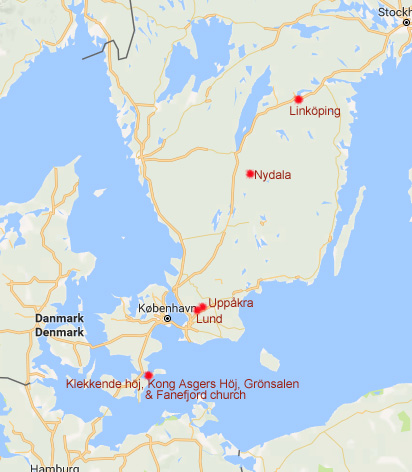
Ikävästi jouduttiin jättämään Middelaldercentret taakse ja lähtemään kotimatkalle. Olisi sinne keskukseen voinut jäädäkin, mutta lähdön tuskaa vähän helpotti, että kotimatkallekin oli varattu vaikka mitä jännää. Joten Falsterin saarelta lähdettiin naapurisaarelle Møniin, ja aloitettiin neoliittipitoisella kohdekatsauksella.

We sadly had to leave Middelaldercentret behind and start heading back home. I surely would've loved to stay there, but the distress of leaving was relieved by the fact that we had planned several different and hugely interesting sights for our journey back home too. So, we left the island of Falster and headed off to neighbouring island of Møn and neolithic times.

Ensimmäinen kohteemme oli Klekkende Höj. Enpä ollut sitten aiemmin  nähnytkään ihka oikeaa kumpuhautaa saati sitten sellaisella käynyt sisällä, mutta näinpä sellainenkin tuli sitten tehtyä. Ja vielä sujuvasti aloitettiin Mønin hienoimmaksi sanotulta kummulta. Näitä rakennettiin Tanskassa neoliittisella kivikaudella n. 3250-3100 eaa (Tanskan kansallismuseon sivuilta tämä). Tämä oli siitä mielenkiintoinen tapaus kumpuhautojen suhteen yleensäkin, että tässä oli kaksi vierekkäistä hautakammiota, kumpikin omalla sisäänkäynnillään. Toiseen vain pääsi sisälle, toiseen oli laitettu portti eteen ja ilmeisesti sinne oli rekonstruoitu hautauksia (kuva tuossa ensimmäisessä linkissä). No, eipä tuota toistakaan hautakammiota ihan vapaasti sisään käveltäväksi oltu suunniteltu, joten ahdastahan siellä oli ja käytävä kovin matala ja kapea (ja kyllä, arvatkaapa kuka oli liikkeellä hameen ja korkkareiden kanssa). Kammioon päästyä tilanne parani, katto oli kammiossa korkeammalla muttei seisomakorkeudella sittenkään. Tunnelma oli vähän ankea pienessä kopissa useita metrejä maan sisällä, joten aika pikaisesti sieltä tultiin pois. Mutta voi sanoa käyneensä!

Our first destination was Klekkende Höj. I hadn't even seen an actual neolithic burial mound before, let alone visited one -now I did, and we started out with what was said to be the finest mound in Møn island. These burial mounds were built in Denmark in the neolithic stone age, approximately 3250-3100 BC (Danish national museum is to be thanked for this information). This was a somewhat special burial mound since it had two separate burial chambers, both with their own entrance. Only the other one was accessible, the other had a gate blocking the way -apparently there were reconstructed burials in the chamber (pic on the first link). Well, the other one wasn't exactly built for comfortable entering either, so the hallway was narrow and its roof was low, one had to enter in all fours (and yeap, I was wearing a skirt and heels...). Inside the actual chamber we were better off, but one couldn't stand straight in there either. The atmosphere in a small chamber several meters under ground wasn't too cheerful, so we exited pretty quickly. But, hey, I can now say was there!


Neoliitista väliin hyppäys viiden kilometrin päähän ja keskiaikaan, seuraavaksi oli vuorossa läheinen Fanefjordin kirkko. Itse kirkko oli rakennettu n. 1300, mutta maalaukset joista tämä kirkko on kuuluisa, on maalattu vasta noin 200 vuotta myöhemmin. Ja maalattu sitten olikin, katto oli aivan täynnä kuvia Raamatusta ja yleisesti moraalisista aiheista. Asialla oli ollut Elmelundin mestarina tunnettu maalari, joka on lähiseudulla Mønin ja Falsterin saarilla maalannut useita kirkkoja. Hienot olivat maalaukset, ei millään muotoa huono välipiipahdus. Kirkolta oli myös kovin nätti merimaisema :)

From the neolithic we did a quick jump to medieval and five kilometers away, our next target was the Faneford church. The church itself was built in the early 14th century, but the church paintings for which this church is famous, are about 200 years younger. And the paintings were fine! The whole ceiling was totally filled with scenes from the bible and moral teachings painted by the so called Elmelund master, who had painted several churches nearby in the islands of Falster and Møn. The sea scenery by the church was also pretty!


Takaisin neoliitin pariin! Grönsalenin pitkäkumpu sijaitsee aivan Fanefjordin kirkon vieressä, vain kahdensadan metrin päässä. Tämä oli aivan maatalon kupeessa ja tuntuikin hiukan nololta kävellä käytännössä toisen pihalle tätä katsomaan... Tällaisia alettiin Tanskassa rakentaa melko nopeasti maanviljelyksen alettua, 3800-3500 eaa (Tanskan kansallismuseolle kiitos tiedosta!). Tätä kehuttiin Tanskan parhaiten säilyneeksi pitkäkummuksi, ja hieno ja massiivinen se ainakin oli -kolmen ihmisen hauta oli pituudeltaan 102 metriä ja leveydeltäänkin 13 metriä. Grönsaleniinkin liittyi mielenkiintoista kansanperinnettä tähän haudatuista muinaisista soturikuningas Grönistä ja kuningatar Fanesta, jotka hallitsivat läntistä Mønin saarta. Peräähän näissä legendoissa ei taida olla edes nimeksi, mutta mielenkiintoisiahan ne ovat, ehdottomasti!

Back to the neolithic! Grönsalen long barrow is situated right next to Fanefjord church, only two hundred meters away. It's also right next to a farmhouse, and I felt a little embarrassed having to walk almost to their yard to see Grönsalen... Barrows like these were built in Denmark fairly quickly after they took up farming, 3800-3500 BC (again, thank you Denmark's national museum). This was praised as the best preserved barrow in Denmark and it sure was impressive -grave for three was 102 meters in length and 13 meters in width . Grönsalen was associated with interesting folklore about this being the grave of warrior king Grön and queen Fane, who ruled the western part of Møn. The legends might not have any fact to them, but they're really interesting! 


Kong Asgers Höj, reissun toinen kumpuhauta. Tänne ei kauaa ajanut Grönsalenilta, matkaa oli noin 8 km ja sekin valtaosin suoraa tietä. Asgerin kummussa ei, toisin kuin Klekkende Höj:ssä, ollut  kuin yksi hautakammio joka tuntuikin sitten olevan vähän tilavampi sisätiloiltaan kuin Klekkende Höj. Muuten eipä niillä suurempaa eroa keskenään ollutkaan.

Kong Asgers Höj, the second burial mound for this trip. It wasn't far from Grönsalen, at about 8 kilometers away. King Asger's mound had, unlike Klekkende Höj, only one burial chamber, but it seemed like the chamber was somewhat bigger. Otherwise, not much difference.


Sprovedyssen. Hihi, elämäni ensimmäinen dolmen! Tämä oli yllättävän lähellä Kong Asgers höj:ta, välimatkaa vain vajaat 150 metriä ja oikeastaan näköetäisyydellä, mutta niin, että dolmenilta näki kummun mutta kummun viereltä ei nähnyt dolmenia (päältä olisi nähnyt). Ajoimmekin hyvän matkaa ohi kun havainnointi oli vähän heikonlaista... Tanskan dolmenit myös ajoittuvat neoliittiselle ajalle, pitkäkumpujen rakentamisvaiheen jälkeen ja jonkin verran ennen käytävähautojen rakennus"buumia" (kiitos tästä tiedosta Tanskan kansallismuseolle). Kuten dolmenit yleensä, tämäkin on aikoinaan ollut kummun peittämä mutta sittemmin paljastunut eroosion myötä maan alta. Käytävä kummun sisälle on edelleen noin lantiomittaan saakka maan sisällä.

Sprovedyssen. My very first dolmen! This was surprisingly near Kong Asgers höj, only about 150 meters away and basically at seeing distance -but so, that one could see the mound from the dolmen, but not vice versa (only if one would've climbed to the top of the mound). We, the two unobservant ones, did spend some time looking for the dolmen... The dolmens in Denmark are also from the neolithic, built after the longbarrows but before the mounds (Danish national museum is to be thanked for this information too). Just as dolmens in usual, this one had also been originally covered with a mound, but the earth had eroded away and revealed the stones. The path leading to the "chamber" was still at about one meter inside the ground.

Siinä olivatkin Tanskan kohteet, yön nukkumisen jälkeen otimme suunnan kohti Ruotsia. Lund oli kivasti heti Malmön vieressä, ja keskiaikaisena suurkaupunkina ihan ehdoton piipahduskohde. Lundin yliopiston historiallinen museo oli siinä ensimmäisenä matkan varrella, oikeastaan eksyimme sinne koska emme ihan siihen hätään ymmärtäneet eroa Lundin yliopiston museon ja Kulttuurihistoriallisen museon välillä (ne sijaitsevatkin vielä ihan vierekkäin). Mutta ei siis todellakaan ollut huono reissu, yliopiston museossa oli kokoelmaa vaikka miten ja erityisesti tuoimokirkkomuseon ja keskiaikaisen kirkkotaiteen kokoelma oli todella mahtava. Tekstiilinörttinä keskiaikaiset kirkkotekstiilit olivat melko hengästyttäviä...

And that was all of Denmark this time, after we had a night's sleep we headed towards Sweden. Lund is nicely right next to Malmö, and as a medieval metropolis it was mandatory to drop by. Lund university historical museum was our first destination, and actually it was a bit accidental since we didn't at that point quite understand the difference between University historical museum and Cultural history museum -especially since they were really close to one another. But really I'm not regretting going there at all, the collections were massive and especially the Cathedral museum collections and medieval church art rooms were wonderful. As a textiles geek the medieval church textiles were pretty breathtaking...

"Myöhäiskeskiaikainen" hirveän suuri pellavapaita. Erillinen helmaosa! ~~~ "Late medieval" tremendously big linen shirt. Note the waist seam!


Lundin kulttuurihistoriallinen museo oli histel-nörtille namia! Keskiaikaista Lundia esittelevä osasto oli upean laaja, ja erityisbonuksena sydämentykytyksiä aiheutti kokoelmahuone, jossa oli vitriinitolkulla löytöjä Lundista -ei niinkään antamassa nättiä yleiskuvaa muutaman esineen voimin, vaan juuri esinesuuntautuneille kävijöille tutkittavaksi kymmenittäin saman aihepiirin esineistöä (ja näitä vitriineitä oli vieri vieressä koko huoneen seinät täynnä). Avaimia, tekstiilityövälineitä, työkaluja, solkia... Odotan kovasti koska museon esinetietokanta palaa henkiin, siellä näitä kaikkia esineitä (ja täällä näytillähän ei ollut tietenkään kaikkia löytöjä, tietokannasta löytyy!) pääsisi katsomaan yksityiskohtaisemmin ja katsomaan myös niiden lisätietoja esim. ajoituksesta. Kulttuurihistoriallisessa museossa olisi näitä osastoja ollut kaikkineen vaikka miten, mutta ajanpuutteen takia emme edes yrittäneet muihin kohteisiin. Samassa sisäpihassa oli tekstiilimuseo (melko pieni näyttely mutta kansantekstiilit oikein kivoja) ja asenäyttely (isompi, ihan mielenkiintoinen mutta nyt vaivasi jo infoähky), niihin tutustuttiin pikaisesti kunnes museo meni kiinni.

Lund cultural history museum was a treat for a living history geek! The medieval Lund exhibition was incredibly large, and especially the collections room might've caused my heart to miss a few beats. The collections room didn't just aim to give a nice picture with a few objects, but for a visitor interested in objects it had a room full of glass cases full of objects of same subject -keys, textile tools, brooches, working tools... I'm eagerly waiting for the museum's online collections database to be resurrected from the dead, because of course not all objects were on display and the database also has more detailed info on them, for example dates, measurements and materials. The cultural history museum would've had really many exhibitions, but for the most of them, we didn't even try to squeeze ourselves in. In the same courtyard there were textiles exhibition (rather small but the folk textiles were interesting) and weapons exhibition (larger, interesting but I was suffering from an information OD).  So we were happy with a quick peek, ad that was all we had time for before the museum closed.


Lundin tuomiokirkko oli juuri menossa kiinni kun ängimme sisään, ja emme kyllä pitkälle päässeetkään ennen kun vahtimestari -sinänsä kyllä aivan ystävällisesti- ohjasti meidät takaisin pihalle. Tulipa nähtyä kuitenkin kuuluisa astronominen kello, rakennettu 1420-luvulla. Tämä on jopa käytössä ja toiminnassa edelleen (vaikka nykyisin käytössä oleva ei ole se aivan alkuperäinen, jonka osia on taas esillä yliopiston museon tuomiokirkkomuseossa). Kello soittaa muutaman kerran päivässä melodian In dulci jubilo, toisen soiton kuulimmekin kun olimme silloin juuri kirkon ulkopuolella :) Kirkossa olisi ollut keskiaikaista esineistöä enemmänkin, mutta niihin tutustuminen jäi sitten seuraavalle käynnille.

Lund cathedral was about to close when we rushed in, and we might've had like five minutes before we were (very politely) informed that we should be on our way... Well, we did see the famous astronomical clock, built in the 1420s. It's in use and functioning, although this isn't the original one (parts of which are on display at the Lund cathedral museum). The clock plays the melody "In dulci jubilo" twice a day, and we actually managed to hear the other time it played, we were right outside the church at that time :) The church would've had other medieval objects too, but they're waiting for our next visit to Lund.  


Photo M. Pulla
Muutaman minuutin ajo Lundista ulos, ja päästiinkin jo seuraavalle ja päivän viimeiselle kohteelle, Uppåkra. Hankala paikka esitellä, kun alueella maan päälle ei näy oikein yhtään mitään vaikka paikalla onkin huisi historiallinen merkitys. Ilmeisesti paikalla on ollut jonkinlaista toimintaa jo kivikaudella ja pronssikaudella (alueella on kaksi aikakauden hautakumpua), mutta varsinaisesti se kukoisti rautakaudella ajanlaskun alusta noin vuoteen 1000. Kukoistuksensa aikaan Uppåkra on ollut jopa Birkaa suurempi, messevä 40 hehtaarin alue, ja alueella on ollut ilmeisesti jonkinlainen uskonnollinen kulttikeskus ja rikkaista löydöistä päätellen myös maallisen vallan keskuspaikka. Uppåkra jäi käytöstä kun alueellinen keskus siirtyi (kristinuskon myötä?) muutaman kilometrin päähän Lundiin ja löytyi uudestaan oikeastaan vasta 1990-luvulla. Tutkimukset jatkuvat edelleen, ja alueella on hieno opastuskyltitys -muutenhan sitä ei missään merkittävässä paikassa tajuaisi olevansakaan, niin vähän siitä maan päälle näkyy.

A few minutes drive and we were outside Lund, and at our next destination, Uppåkra (last destination for that day). It's a bit difficult to exhibit such a place, next to nothing is visible above ground although it has a huge historical significance. Apparently there has been something going on in there already in the stone age and bronze age (there are two burial mounds in the area), but really Uppåkra had its heyday in the iron age, approximately for thousand years until the year 1000. During its heyday Uppåkra was larger than Birka, total 40 hectares, and based on the finds, it seems to have had featured both religious and secular centers. Uppåkra area fell out of use shortly after Lund was established a few kilometers away (religious reasons?), and was really rediscovered in the 1990s. The research is still ongoing. The area has very good guiding signs -were there not, one wouldn't really have a clue on the history under one's feet since it looks just like a plain grass field. 


Uusi päivä ja matka jatkui, vuorossa oli Nydalan luostari. Sistersiläismunkkiluostari perustettiin 1143, ja se voi hyvin vuoteen 1521 saakka jolloin se ryöstettiin verisesti. Vuonna 1529 luostari reformaation myötä suljettiin. Nykyinen kirkko on osa vanhasta luostarikirkosta, lyhennetty versio ja sisältä sitä ei keskiaikaiseksi uskoisikaan. Pihalla taas, kappelin takana muurien suojassa oli tämän kohteen ehdottomasti paras anti, valtavan ihana uudelleenrakennettu luostarin puutarha. Sielläkin kasvoi lääke- ja maustekasveja, sekä kovin pörheästi voiva humalatarha. Jaossa oli esitteitäkin puutarhan kasveista, sellainenhan oli ihan pakko napata mukaan ennen kun jatkettiin matkaa!

New day and the road goes on, the next target was Nydala abbey. Cistercian monks moved in at 1143, and the abbey thrived until 1521 when it was plundered in a bloody manner. 1529 came the reformation, and the abbey was closed. The church that nowadays stands at Nydala has been modified of the old abbey church, and on the inside it's a bit hard to believe it's actually medieval. But the treat in Nydala, it's behind a small chapel, sheltered by stone walls -a wonderful rebuilt cloister garden. There were medicinal herbs and spices, and hops growing vigorously. They had some brochures there which exhibited the plants growing there and their uses, and of course I had to take a brochure with me before we went on with our trip!

Photo M. Pulla


Matka siis jatkui, ja parin tunnin päästä saavuttiin Linköpingiin. Ensimmäinen kohde siellä oli Linköpingin tuomiokirkko, alkujaan (kivikirkkona) 1120-luvulta mutta laajennettu sen jälkeen erinäisiä kertoja. Paha sanoa syytä, mutta tämä ei jotenkin aiheuttanut ihan sellaista "wau" -tunnelmaa kuin Lundin ja Vadstenan kirkot... Erityisen hauska yksityiskohta kirkon sisustuksessa silti oli, 1300-luvun alkupuolella ilmeisesti englantilaisen kuvanveistäjän kaivertamat ihmiskasvot (joka naama erilainen!) kirkon vasemmalla seinustalla, ehkä noin kolmasosan mitalla kirkon koko pituudesta.

So, off we went and after a few hours drive we arrived to Linköping. Our first destination was the Linköping cathedral, originally built (as a stone church) in the 1120s but modified and expanded after that several times. Hard to say why exactly, but this place didn't give me such a "wow" -sensation as the churches of Lund and Vadstena... But there was a lovely detail, in the early 14th century there had been an english stonemason who had carved human faces (each one different!)

 Keskiaikaista kirkonrakennustekniikkaa ~~~ Medieval church building techniques! Photo M. Pulla

Linköpingin linna oli ihan kirkon vieressä, ja kuten kirkkokin, sitäkin oli alettu rakentaa 1100-luvulla. Tämä teki linnasta Ruotsin vanhimman säilyneen maallisen rakennuksen. Tästä vanhimmasta rakennusvaiheesta tosin ei ihan hirveästi ollut näkyvissä, ja pääosin nykymuoto onkin 1700-1800-luvuilta. Nykyisin puolet linnasta on maaherran asuntona ja työtiloina, puolet kirkko- ja linnamuseona. Vaihtuvana näyttelynä museossa oli keskiajan ruoka -aiheinen näyttely joka mielenkiintoisesti keskittyi vuodenkierron tehtäviin. Nämä oli yksityiskohtaisesti kuvattu KH 54 -tunnuksella merkityssä käsikirjoituksessa, määräykset piispa Johannes Braskin (1464-1538)  taloudenhoitoa varten. Täytyy tutustua, jos se vaan onnistuu jotenkin järkevästi.

Linköping castle was right next to the cathedral, and just like the church, its construction was started during the 12th century -this makes the Linköping castle the oldest surviving secular building in Sweden. There isn't much left of this oldest phase of building, especially on the outside -the appearance nowadays is mostly from the 18th-19th centuries. Nowadays half of the castle is functioning as the office and residence of the governor, the other half hosts a museum of Linköping castle and cathedral. There was a temporary exhibition about medieval food, which nicely focused on the tasks of the year -what to do and when, to keep oneself well fed. The tasks and schedules were based on the household instructions by bishop Johannes Brask (1464-1538), surviving in a manuscript known as KH 54. I must check that out some time, if it's possible.
Photo M. Pulla

Pienoismalli linnan 1600-luvun asusta ~~~ Model on how the castle loooked during the 17th century