Thursday, 7 July 2016

Ruotsiin ja Tanskaan, osa 3 - Kotia päin ~~~ Off to Sweden and Denmark, part 3 - Homewards


Matkaraportin ensimmäinen osa ja toinen osa!
The first part and the second part of our trip report! 

Ikävästi jouduttiin jättämään Middelaldercentret taakse ja lähtemään kotimatkalle. Olisi sinne keskukseen voinut jäädäkin, mutta lähdön tuskaa vähän helpotti, että kotimatkallekin oli varattu vaikka mitä jännää. Joten Falsterin saarelta lähdettiin naapurisaarelle Møniin, ja aloitettiin neoliittipitoisella kohdekatsauksella.

We sadly had to leave Middelaldercentret behind and start heading back home. I surely would've loved to stay there, but the distress of leaving was relieved by the fact that we had planned several different and hugely interesting sights for our journey back home too. So, we left the island of Falster and headed off to neighbouring island of Møn and neolithic times.

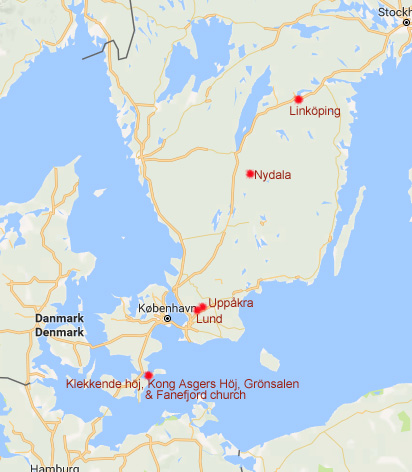
Ensimmäinen kohteemme oli Klekkende Höj. Enpä ollut sitten aiemmin  nähnytkään ihka oikeaa kumpuhautaa saati sitten sellaisella käynyt sisällä, mutta näinpä sellainenkin tuli sitten tehtyä. Ja vielä sujuvasti aloitettiin Mønin hienoimmaksi sanotulta kummulta. Näitä rakennettiin Tanskassa neoliittisella kivikaudella n. 3250-3100 eaa (Tanskan kansallismuseon sivuilta tämä). Tämä oli siitä mielenkiintoinen tapaus kumpuhautojen suhteen yleensäkin, että tässä oli kaksi vierekkäistä hautakammiota, kumpikin omalla sisäänkäynnillään. Toiseen vain pääsi sisälle, toiseen oli laitettu portti eteen ja ilmeisesti sinne oli rekonstruoitu hautauksia (kuva tuossa ensimmäisessä linkissä). No, eipä tuota toistakaan hautakammiota ihan vapaasti sisään käveltäväksi oltu suunniteltu, joten ahdastahan siellä oli ja käytävä kovin matala ja kapea (ja kyllä, arvatkaapa kuka oli liikkeellä hameen ja korkkareiden kanssa). Kammioon päästyä tilanne parani, katto oli kammiossa korkeammalla muttei seisomakorkeudella sittenkään. Tunnelma oli vähän ankea pienessä kopissa useita metrejä maan sisällä, joten aika pikaisesti sieltä tultiin pois. Mutta voi sanoa käyneensä!

Our first destination was Klekkende Höj. I hadn't even seen an actual neolithic burial mound before, let alone visited one -now I did, and we started out with what was said to be the finest mound in Møn island. These burial mounds were built in Denmark in the neolithic stone age, approximately 3250-3100 BC (Danish national museum is to be thanked for this information). This was a somewhat special burial mound since it had two separate burial chambers, both with their own entrance. Only the other one was accessible, the other had a gate blocking the way -apparently there were reconstructed burials in the chamber (pic on the first link). Well, the other one wasn't exactly built for comfortable entering either, so the hallway was narrow and its roof was low, one had to enter in all fours (and yeap, I was wearing a skirt and heels...). Inside the actual chamber we were better off, but one couldn't stand straight in there either. The atmosphere in a small chamber several meters under ground wasn't too cheerful, so we exited pretty quickly. But, hey, I can now say was there!


Neoliitista väliin hyppäys viiden kilometrin päähän ja keskiaikaan, seuraavaksi oli vuorossa läheinen Fanefjordin kirkko. Itse kirkko oli rakennettu n. 1300, mutta maalaukset joista tämä kirkko on kuuluisa, on maalattu vasta noin 200 vuotta myöhemmin. Ja maalattu sitten olikin, katto oli aivan täynnä kuvia Raamatusta ja yleisesti moraalisista aiheista. Asialla oli ollut Elmelundin mestarina tunnettu maalari, joka on lähiseudulla Mønin ja Falsterin saarilla maalannut useita kirkkoja. Hienot olivat maalaukset, ei millään muotoa huono välipiipahdus. Kirkolta oli myös kovin nätti merimaisema :)

From the neolithic we did a quick jump to medieval and five kilometers away, our next target was the Faneford church. The church itself was built in the early 14th century, but the church paintings for which this church is famous, are about 200 years younger. And the paintings were fine! The whole ceiling was totally filled with scenes from the bible and moral teachings painted by the so called Elmelund master, who had painted several churches nearby in the islands of Falster and Møn. The sea scenery by the church was also pretty!


Takaisin neoliitin pariin! Grönsalenin pitkäkumpu sijaitsee aivan Fanefjordin kirkon vieressä, vain kahdensadan metrin päässä. Tämä oli aivan maatalon kupeessa ja tuntuikin hiukan nololta kävellä käytännössä toisen pihalle tätä katsomaan... Tällaisia alettiin Tanskassa rakentaa melko nopeasti maanviljelyksen alettua, 3800-3500 eaa (Tanskan kansallismuseolle kiitos tiedosta!). Tätä kehuttiin Tanskan parhaiten säilyneeksi pitkäkummuksi, ja hieno ja massiivinen se ainakin oli -kolmen ihmisen hauta oli pituudeltaan 102 metriä ja leveydeltäänkin 13 metriä. Grönsaleniinkin liittyi mielenkiintoista kansanperinnettä tähän haudatuista muinaisista soturikuningas Grönistä ja kuningatar Fanesta, jotka hallitsivat läntistä Mønin saarta. Peräähän näissä legendoissa ei taida olla edes nimeksi, mutta mielenkiintoisiahan ne ovat, ehdottomasti!

Back to the neolithic! Grönsalen long barrow is situated right next to Fanefjord church, only two hundred meters away. It's also right next to a farmhouse, and I felt a little embarrassed having to walk almost to their yard to see Grönsalen... Barrows like these were built in Denmark fairly quickly after they took up farming, 3800-3500 BC (again, thank you Denmark's national museum). This was praised as the best preserved barrow in Denmark and it sure was impressive -grave for three was 102 meters in length and 13 meters in width . Grönsalen was associated with interesting folklore about this being the grave of warrior king Grön and queen Fane, who ruled the western part of Møn. The legends might not have any fact to them, but they're really interesting! 


Kong Asgers Höj, reissun toinen kumpuhauta. Tänne ei kauaa ajanut Grönsalenilta, matkaa oli noin 8 km ja sekin valtaosin suoraa tietä. Asgerin kummussa ei, toisin kuin Klekkende Höj:ssä, ollut  kuin yksi hautakammio joka tuntuikin sitten olevan vähän tilavampi sisätiloiltaan kuin Klekkende Höj. Muuten eipä niillä suurempaa eroa keskenään ollutkaan.

Kong Asgers Höj, the second burial mound for this trip. It wasn't far from Grönsalen, at about 8 kilometers away. King Asger's mound had, unlike Klekkende Höj, only one burial chamber, but it seemed like the chamber was somewhat bigger. Otherwise, not much difference.


Sprovedyssen. Hihi, elämäni ensimmäinen dolmen! Tämä oli yllättävän lähellä Kong Asgers höj:ta, välimatkaa vain vajaat 150 metriä ja oikeastaan näköetäisyydellä, mutta niin, että dolmenilta näki kummun mutta kummun viereltä ei nähnyt dolmenia (päältä olisi nähnyt). Ajoimmekin hyvän matkaa ohi kun havainnointi oli vähän heikonlaista... Tanskan dolmenit myös ajoittuvat neoliittiselle ajalle, pitkäkumpujen rakentamisvaiheen jälkeen ja jonkin verran ennen käytävähautojen rakennus"buumia" (kiitos tästä tiedosta Tanskan kansallismuseolle). Kuten dolmenit yleensä, tämäkin on aikoinaan ollut kummun peittämä mutta sittemmin paljastunut eroosion myötä maan alta. Käytävä kummun sisälle on edelleen noin lantiomittaan saakka maan sisällä.

Sprovedyssen. My very first dolmen! This was surprisingly near Kong Asgers höj, only about 150 meters away and basically at seeing distance -but so, that one could see the mound from the dolmen, but not vice versa (only if one would've climbed to the top of the mound). We, the two unobservant ones, did spend some time looking for the dolmen... The dolmens in Denmark are also from the neolithic, built after the longbarrows but before the mounds (Danish national museum is to be thanked for this information too). Just as dolmens in usual, this one had also been originally covered with a mound, but the earth had eroded away and revealed the stones. The path leading to the "chamber" was still at about one meter inside the ground.

Siinä olivatkin Tanskan kohteet, yön nukkumisen jälkeen otimme suunnan kohti Ruotsia. Lund oli kivasti heti Malmön vieressä, ja keskiaikaisena suurkaupunkina ihan ehdoton piipahduskohde. Lundin yliopiston historiallinen museo oli siinä ensimmäisenä matkan varrella, oikeastaan eksyimme sinne koska emme ihan siihen hätään ymmärtäneet eroa Lundin yliopiston museon ja Kulttuurihistoriallisen museon välillä (ne sijaitsevatkin vielä ihan vierekkäin). Mutta ei siis todellakaan ollut huono reissu, yliopiston museossa oli kokoelmaa vaikka miten ja erityisesti tuoimokirkkomuseon ja keskiaikaisen kirkkotaiteen kokoelma oli todella mahtava. Tekstiilinörttinä keskiaikaiset kirkkotekstiilit olivat melko hengästyttäviä...

And that was all of Denmark this time, after we had a night's sleep we headed towards Sweden. Lund is nicely right next to Malmö, and as a medieval metropolis it was mandatory to drop by. Lund university historical museum was our first destination, and actually it was a bit accidental since we didn't at that point quite understand the difference between University historical museum and Cultural history museum -especially since they were really close to one another. But really I'm not regretting going there at all, the collections were massive and especially the Cathedral museum collections and medieval church art rooms were wonderful. As a textiles geek the medieval church textiles were pretty breathtaking...

"Myöhäiskeskiaikainen" hirveän suuri pellavapaita. Erillinen helmaosa! ~~~ "Late medieval" tremendously big linen shirt. Note the waist seam!


Lundin kulttuurihistoriallinen museo oli histel-nörtille namia! Keskiaikaista Lundia esittelevä osasto oli upean laaja, ja erityisbonuksena sydämentykytyksiä aiheutti kokoelmahuone, jossa oli vitriinitolkulla löytöjä Lundista -ei niinkään antamassa nättiä yleiskuvaa muutaman esineen voimin, vaan juuri esinesuuntautuneille kävijöille tutkittavaksi kymmenittäin saman aihepiirin esineistöä (ja näitä vitriineitä oli vieri vieressä koko huoneen seinät täynnä). Avaimia, tekstiilityövälineitä, työkaluja, solkia... Odotan kovasti koska museon esinetietokanta palaa henkiin, siellä näitä kaikkia esineitä (ja täällä näytillähän ei ollut tietenkään kaikkia löytöjä, tietokannasta löytyy!) pääsisi katsomaan yksityiskohtaisemmin ja katsomaan myös niiden lisätietoja esim. ajoituksesta. Kulttuurihistoriallisessa museossa olisi näitä osastoja ollut kaikkineen vaikka miten, mutta ajanpuutteen takia emme edes yrittäneet muihin kohteisiin. Samassa sisäpihassa oli tekstiilimuseo (melko pieni näyttely mutta kansantekstiilit oikein kivoja) ja asenäyttely (isompi, ihan mielenkiintoinen mutta nyt vaivasi jo infoähky), niihin tutustuttiin pikaisesti kunnes museo meni kiinni.

Lund cultural history museum was a treat for a living history geek! The medieval Lund exhibition was incredibly large, and especially the collections room might've caused my heart to miss a few beats. The collections room didn't just aim to give a nice picture with a few objects, but for a visitor interested in objects it had a room full of glass cases full of objects of same subject -keys, textile tools, brooches, working tools... I'm eagerly waiting for the museum's online collections database to be resurrected from the dead, because of course not all objects were on display and the database also has more detailed info on them, for example dates, measurements and materials. The cultural history museum would've had really many exhibitions, but for the most of them, we didn't even try to squeeze ourselves in. In the same courtyard there were textiles exhibition (rather small but the folk textiles were interesting) and weapons exhibition (larger, interesting but I was suffering from an information OD).  So we were happy with a quick peek, ad that was all we had time for before the museum closed.


Lundin tuomiokirkko oli juuri menossa kiinni kun ängimme sisään, ja emme kyllä pitkälle päässeetkään ennen kun vahtimestari -sinänsä kyllä aivan ystävällisesti- ohjasti meidät takaisin pihalle. Tulipa nähtyä kuitenkin kuuluisa astronominen kello, rakennettu 1420-luvulla. Tämä on jopa käytössä ja toiminnassa edelleen (vaikka nykyisin käytössä oleva ei ole se aivan alkuperäinen, jonka osia on taas esillä yliopiston museon tuomiokirkkomuseossa). Kello soittaa muutaman kerran päivässä melodian In dulci jubilo, toisen soiton kuulimmekin kun olimme silloin juuri kirkon ulkopuolella :) Kirkossa olisi ollut keskiaikaista esineistöä enemmänkin, mutta niihin tutustuminen jäi sitten seuraavalle käynnille.

Lund cathedral was about to close when we rushed in, and we might've had like five minutes before we were (very politely) informed that we should be on our way... Well, we did see the famous astronomical clock, built in the 1420s. It's in use and functioning, although this isn't the original one (parts of which are on display at the Lund cathedral museum). The clock plays the melody "In dulci jubilo" twice a day, and we actually managed to hear the other time it played, we were right outside the church at that time :) The church would've had other medieval objects too, but they're waiting for our next visit to Lund.  


Photo M. Pulla
Muutaman minuutin ajo Lundista ulos, ja päästiinkin jo seuraavalle ja päivän viimeiselle kohteelle, Uppåkra. Hankala paikka esitellä, kun alueella maan päälle ei näy oikein yhtään mitään vaikka paikalla onkin huisi historiallinen merkitys. Ilmeisesti paikalla on ollut jonkinlaista toimintaa jo kivikaudella ja pronssikaudella (alueella on kaksi aikakauden hautakumpua), mutta varsinaisesti se kukoisti rautakaudella ajanlaskun alusta noin vuoteen 1000. Kukoistuksensa aikaan Uppåkra on ollut jopa Birkaa suurempi, messevä 40 hehtaarin alue, ja alueella on ollut ilmeisesti jonkinlainen uskonnollinen kulttikeskus ja rikkaista löydöistä päätellen myös maallisen vallan keskuspaikka. Uppåkra jäi käytöstä kun alueellinen keskus siirtyi (kristinuskon myötä?) muutaman kilometrin päähän Lundiin ja löytyi uudestaan oikeastaan vasta 1990-luvulla. Tutkimukset jatkuvat edelleen, ja alueella on hieno opastuskyltitys -muutenhan sitä ei missään merkittävässä paikassa tajuaisi olevansakaan, niin vähän siitä maan päälle näkyy.

A few minutes drive and we were outside Lund, and at our next destination, Uppåkra (last destination for that day). It's a bit difficult to exhibit such a place, next to nothing is visible above ground although it has a huge historical significance. Apparently there has been something going on in there already in the stone age and bronze age (there are two burial mounds in the area), but really Uppåkra had its heyday in the iron age, approximately for thousand years until the year 1000. During its heyday Uppåkra was larger than Birka, total 40 hectares, and based on the finds, it seems to have had featured both religious and secular centers. Uppåkra area fell out of use shortly after Lund was established a few kilometers away (religious reasons?), and was really rediscovered in the 1990s. The research is still ongoing. The area has very good guiding signs -were there not, one wouldn't really have a clue on the history under one's feet since it looks just like a plain grass field. 


Uusi päivä ja matka jatkui, vuorossa oli Nydalan luostari. Sistersiläismunkkiluostari perustettiin 1143, ja se voi hyvin vuoteen 1521 saakka jolloin se ryöstettiin verisesti. Vuonna 1529 luostari reformaation myötä suljettiin. Nykyinen kirkko on osa vanhasta luostarikirkosta, lyhennetty versio ja sisältä sitä ei keskiaikaiseksi uskoisikaan. Pihalla taas, kappelin takana muurien suojassa oli tämän kohteen ehdottomasti paras anti, valtavan ihana uudelleenrakennettu luostarin puutarha. Sielläkin kasvoi lääke- ja maustekasveja, sekä kovin pörheästi voiva humalatarha. Jaossa oli esitteitäkin puutarhan kasveista, sellainenhan oli ihan pakko napata mukaan ennen kun jatkettiin matkaa!

New day and the road goes on, the next target was Nydala abbey. Cistercian monks moved in at 1143, and the abbey thrived until 1521 when it was plundered in a bloody manner. 1529 came the reformation, and the abbey was closed. The church that nowadays stands at Nydala has been modified of the old abbey church, and on the inside it's a bit hard to believe it's actually medieval. But the treat in Nydala, it's behind a small chapel, sheltered by stone walls -a wonderful rebuilt cloister garden. There were medicinal herbs and spices, and hops growing vigorously. They had some brochures there which exhibited the plants growing there and their uses, and of course I had to take a brochure with me before we went on with our trip!

Photo M. Pulla


Matka siis jatkui, ja parin tunnin päästä saavuttiin Linköpingiin. Ensimmäinen kohde siellä oli Linköpingin tuomiokirkko, alkujaan (kivikirkkona) 1120-luvulta mutta laajennettu sen jälkeen erinäisiä kertoja. Paha sanoa syytä, mutta tämä ei jotenkin aiheuttanut ihan sellaista "wau" -tunnelmaa kuin Lundin ja Vadstenan kirkot... Erityisen hauska yksityiskohta kirkon sisustuksessa silti oli, 1300-luvun alkupuolella ilmeisesti englantilaisen kuvanveistäjän kaivertamat ihmiskasvot (joka naama erilainen!) kirkon vasemmalla seinustalla, ehkä noin kolmasosan mitalla kirkon koko pituudesta.

So, off we went and after a few hours drive we arrived to Linköping. Our first destination was the Linköping cathedral, originally built (as a stone church) in the 1120s but modified and expanded after that several times. Hard to say why exactly, but this place didn't give me such a "wow" -sensation as the churches of Lund and Vadstena... But there was a lovely detail, in the early 14th century there had been an english stonemason who had carved human faces (each one different!)

 Keskiaikaista kirkonrakennustekniikkaa ~~~ Medieval church building techniques! Photo M. Pulla

Linköpingin linna oli ihan kirkon vieressä, ja kuten kirkkokin, sitäkin oli alettu rakentaa 1100-luvulla. Tämä teki linnasta Ruotsin vanhimman säilyneen maallisen rakennuksen. Tästä vanhimmasta rakennusvaiheesta tosin ei ihan hirveästi ollut näkyvissä, ja pääosin nykymuoto onkin 1700-1800-luvuilta. Nykyisin puolet linnasta on maaherran asuntona ja työtiloina, puolet kirkko- ja linnamuseona. Vaihtuvana näyttelynä museossa oli keskiajan ruoka -aiheinen näyttely joka mielenkiintoisesti keskittyi vuodenkierron tehtäviin. Nämä oli yksityiskohtaisesti kuvattu KH 54 -tunnuksella merkityssä käsikirjoituksessa, määräykset piispa Johannes Braskin (1464-1538)  taloudenhoitoa varten. Täytyy tutustua, jos se vaan onnistuu jotenkin järkevästi.

Linköping castle was right next to the cathedral, and just like the church, its construction was started during the 12th century -this makes the Linköping castle the oldest surviving secular building in Sweden. There isn't much left of this oldest phase of building, especially on the outside -the appearance nowadays is mostly from the 18th-19th centuries. Nowadays half of the castle is functioning as the office and residence of the governor, the other half hosts a museum of Linköping castle and cathedral. There was a temporary exhibition about medieval food, which nicely focused on the tasks of the year -what to do and when, to keep oneself well fed. The tasks and schedules were based on the household instructions by bishop Johannes Brask (1464-1538), surviving in a manuscript known as KH 54. I must check that out some time, if it's possible.
Photo M. Pulla

Pienoismalli linnan 1600-luvun asusta ~~~ Model on how the castle loooked during the 17th century

Monday, 4 July 2016

Ruotsiin ja Tanskaan, osa 2 - Middelaldercentret ~~~ Off to Sweden and Denmark, part 2 - Middelaldercentret

((Osa 1 täällä ~~~ Part 1 here))

Perille päästiin! Muu osa yhdeksän hengen seurueesta olikin tullut jo aiemmin päivällä lentokoneella edeltä, ja olivat jo asettuneet taloksi siinä vaiheessa kun itse päästiin paikalle. Suurin osa muusta Iloisen Joutsenen väestä olikin ollut Middelaldercentretissä jo aiemmin, tämä helpotti kun talon käytännöt olivat valmiina jo tiedossa eikä ihan joka asia tullut ainakaan koko porukalle uutena eteen. Kyseessähän on siis ulkoilmamuseo, jota 25 vuotta sitten lähdettiin rakentamaan lähtien paikalle tehdystä heittokoneesta ja siitä sitten pikkuhiljaa laajentaen rakennus kerrallaan (eikä se valmiiksi ole tullut vieläkään), keskiaikaisilla työvälineillä ja tekniikoilla, pyrkien mahdollisimman autenttiseen lopputulokseenkin. Paikan päällä sääntö oli, että keskuksen aukioloaikoina näkyvissä ei saanut olla mitään modernia, sulkemisajan jälkeen sai sitten ottaa esimerkiksi kuviakin.

And we arrived to our destination! The other part of our group, nine persons strong, came to Denmark with a plane and had already arrived to Middelaldercentret and were well settled by the time we came. Most of the Merry Swans had been to Middelaldercentret before, so they were quite able to explain us newcomers the ways and customs of our home for this week. Middelaldercentret is an outdoor museum center which started out 25 years ago when they constructed a catapult, and it's been growing ever since with new buildings. And it's still growing, with medieval techniques and tools, aiming for as authentic result as possible. During the opening hours all modern items had to be kept out of sight. After the village had closed for public it was permitted to, for example, take photos.


Kynttiläntekijän talon takapiha, oikealla sepän paja. ~~~ The backyard of candlemaker's house, smithy on the right.


Keskuksen ravintola. Ei tingitty tyylistä! ~~~ The restaurant at Middelaldercentret. So stylish!
Kesäkotimme oli tukkukauppiaan talossa. Tukkukauppias ei selvästikään tehnyt erityisen isoa bisnestä, sillä talo oli aika yksinkertainen (lasi-ikkuna löytyi sentään, ja asuntilassa savitiililattia). Talossa oli kauppatavaran varastopuoli ja yksi huone ihmisille, mutta siellä asusteli vallan hyvin ja mieluusti, eipä sitä sen kummempaa olisi oikeastaan tarvinnutkaan. Sisustuksena oli sänky ja muutama ihminen olisi lisäksi tarpeen vaatiessa mahtunut seinänvierustan lavereille. Lisäksi tuvassa oli pöytä ja pari jakkaraa, seinähylly astioille sekä kaksi ihan hyvän kokoista arkkua. ja tietysti ruuanlaittofasiliteettina liesi, joka, vaikka savupiiputon olikin, malliltaan oli hyvin savut ylös, pois asuintilasta, ohjaava. Isommat ja hienommat talot olivat sitten hienommin varusteltujakin, työhuoneet toki asianmukaisin työvälineinkin.

Our temporary home was the wholesaler's house. The wholesaler wasn't apparently into big business, the house was quite simple (although it did have glass windows and a tiled floor at the living room). The house had a storage room for merchandise and one room for living, but there was all one could ask for. There was a bed, and a few persons more could've slept in the chest-benches by the walls. The house also had a table and a few chairs, shelf on the wall for plates and bowls, and two sizable chests. For cooking there was a stove, and although there was no chimney, the structure of the stove led the smoke nicely up, away from the room and people living there. Bigger and finer houses were furnished accordingly, and the workshops of course had all the tools necessary for the trade.

Tukkukauppiaan talo ulkoa päin ~~~ Wholesaler's house
Tukkukauppiaan talon sisätilat ~~~ Insides of the wholesaler's house
Kauppiaan talon asuinpuolelta ~~~ Living area of the merchant's house
Maalarin työpiste ~~~ Painter's workshop
Kaikki saatiin siis taloon mahtumaan mitä tarve oli, ja oli myös ilahduttavaa huomata että ehkäpä sitä on toistakymmentä vuotta tapahtumiin pakatessa oppinut jotain -käyttämättä jääneitä astioita tai vaatteita ei juuri jäänyt, eikä mitään jäänyt myöskään kaipaamaan. Ehkä kaksi villamekkoa olisi riittänyt (nyt oli kolme) ja varalta oli vielä yksi alusmekko joka ei päässyt käyttöön, mutta sadekelin tai muun katastrofin varalta varakappale olikin ihan hyvä. En nimittäin huomannut että tuolla olisi ainakaan aikakautisesti päässyt virittelemään pyykkimahdollisuuksia... (Edit: Olisi kuulemma onnistunut jos olisi hoksannut ajoissa!) Myös aikautinen itsensäpesumahdollisuus ts. sauna puuttui, ja teimme kyllä henkilökunnalle tiettäväksi, että suomalaiset tulevat sen kyllä rakentamaan jos vaan lupa heltiää :D

So, we could easily fit all that we had to the house, and it was indeed delightful to notice that after a little more than a decade of packing to medieval events, I seem to have learned something! I did not have too many clothes or eating utensils, and I wasn't lacking anything either. Perhaps two woolen dresses would've been enough for a week's trip (I had three), and I had one spare underdress which I didn't use, but just in case of a disaster of some sort one spare underdress is pretty much needed. I didn't spot a place where one could've done laundry medieval style (edit: It would've been possible should we just have asked for the possibility!). Also us Finns noticed the absence of a bathhouse, but we did let the personnel know that we'll definitely come and build it when we get the permission to do so :D

Illallinen kauppiaan talossa ~~~ Dinner at the merchant's house
 Päiväohjelma oli simppeli, aamulla ylös ja aamupalan ja -palaverin (työnjako -kuka tekee mitäkin) jälkeen itseään sai toteuttaa melko vapaasti. Päivässä oli muutamia vakionakkeja, katapulttien lataaminen ja ampuma-alueen varmistaminen sekä turnajaisissa avustaminen, joka pääasiassa jäi ryhmän miesten tehtäväksi. Ehtihän siinä kokeilla monenlaista työtä kananruokinnasta ja kudonnasta kynttilänvalantaan ja myös pariin kertaan itsekin ladata trebucheta! Heittokoneilla viskottiin kuulia viereiseen merensalmeen, joka kerta säilyttäen muutaman paikallisen joutsenen -mutta kuulemma koskaan ei vielä oltu onneksi osuttu yhteenkään.

The schedule for the day was simple. After rising up, having some breakfast and having the morning meeting it was pretty much up to oneself to do what one pleased. There were a few mandatory jobs for the day, loading the catapults and securing the shooting area, and assisting at the tournament, which was left for the men of the group to do. And here was a lot of different jobs I did during the week, from feeding the chickens to weaving and candlemaking -and I had a chance to load the trebuchet too, two times! The catapults were used in throwing stones to sea, and with every single stone that was thrown some local swans were scared -but they said, that luckily not once they had actually hit a swan.

Kynttilänvalua muottiin. Kolme mehiläisvahakynttilää kerralla! ~~~ Candlemaking with a mould. Three beeswax candles with one go! Photo M. Pulla.

Hiukan lavastettu, mutta tuolla sitä trebucheta ladattiin ja tuolla itsekin tuli käveltyä! ~~~ Slightly framed, but this is how the trebuchet was loaded and I walked in there too!
Kutojan talo ja kangaspuut joilla tuli myös hiukan kudottua. ~~~~ The weaver's house and the loom I too had a chance to use.
Virallisehko Iloisten Joutsenten ryhmäkuva, porukalla trebucheta halaillen :) ~~~ The officialish Merry Swans group photo, group hug for the trebuchet :)

Paikalliset kanaset olivat kovin herttaisia, vaikka eivät sentään aivan paijauskanoja olleetkaan -lähelle kyllä päästivät, mutta eivät aivan silittämään kuten kuulemma viime vuonna paikalla asuneet kanat olivat tehneet. Enpä ollut aiemmin kovinkaan paljoa ollutkaan kanojen kanssa tekemisissä, ja näitä seuratessa oppi yhtä sun toista niiden elämästä -useitakin kertoja tuli naureskeltua kun paikalliset kanaset ottivat hiekkakylpyjä kasvimaan sipulipenkissä ja kiipesivät pähkinäpusikkoon kirjaimellisesti yöpuulle. Huolettomat oltavat näillä selvästi oli, eräs kananen ihan selvästi pilkki oikein antaumuksella kutojan talon edustalla, kun istuimme siinä tekemässä käsitöitä. Samat kanat myös munivat melko lailla minne sattuivat, onnistuin bongaamaan useampia munia puusepän pajan takaisesta ojasta :)

The local chickens were really cute, although they weren't as friendly as they had been last year, I was told. They weren't exactly afraid of humans but they didn't let themselves be touched. I haven't really been around with chickens before, so during this week I learned a thing or two of their lives - chickens taking sand baths at the kitchen garden, between onions, not once failed to make me smile, and they literally climbed to hazel shrubs to have their night's sleep. They certainly seemed to live a carefree life, one of them almost dozed off next to us by the weaver's house when we sat there crafting. They also laid their eggs in somewhat random places, I spotted several on the ditch behind the carpenter's house :)


Paikalliset hanhet olivat kyllä tunnelmallisia mutta mieluummin niitä olisi katsellut kauempaa. ~~~ The local geese did add to the atmosphere, but co-existing with them was a bit difficult at times.
Ja kylläpä oli suomalainen elävöittäjä silmät killillään kun saapui maahan joka on käytännössä puoliksi tehty piikivestä. Ensimmäiset pari päivää meni täysin siihen, että silmiä ei tahtonut saada maasta irti, ja sittenkin sitä aina välillä havahtui katselevansa "sillä silmällä" kivenpalasia, että josko olisi sopivaa terävää reunaa tulen iskemiseen. Se on kyllä harmittavaisen huonosti hanskassa tuo tulen iskeminen, vaikka välineet löytyvätkin ja harjoiteltuakin on tullut -ei vaan tahdo onnistua. Joskus vielä kyllä, sen lupaan. Ainakin nyt kun kotona on sellainen kolmikiloinen piinmurikka josta voi sitten tarpeen mukaan lohkoa uutta kun vanha on naputeltu riittävän pyöreäksi...

And boy, was a finnish re-enactor struck with awe when coming to a land which is almost totally made of flint! The first few days were almost totally spent on checking out the ground and small stones lying around, and even after that the  bits and pieces of flint most potential for fire-striking caught my eye. It's a great shame that my skills in fire-making with fire iron are so poor, although I have the equipment and I've been also practicing some -It just doesn't seem to work. But I'll get to it, eventually. At least now I have a flint stone of roughly three kilos at home, I can chop off small pieces when the old ones have become too used and round...

Nämä seurasivat mukaan kotiin. ~~~ These followed me home.

Keskuksen puutarha oli aivan ihana ja sitä hoitavat ihmiset kertoivat mieluusti ja pitkään siitä kun vaan kysyi -ja no, minähän kuuntelin. Suurin puutarha oli siis jaettu keittiöpuutarhaan, ruusutarhaan  ja lääkekasvipuutarhaan ja lisäksi monella talolla oli omia maatilkkuja joissa kasvoi erinäisiä kasveja, esimerkiksi värjärin tilkulla morsinkoa jota kasvoi myös kynttilänvalajan talon takana. Siemenet olivat siellä nyt valmiita -Suomessahan tämä tapahtuu joskus heinäkuun lopulla... Nyt vaan kovasti alkoi harmittamaan, että en ottanut enempää kuvia, mutta tämä edisti taas omiakin puutarhasuunnitelmia... 

The center's garden was more than lovely and the people taking care of it shared their knowledge eagerly -and I listened gladly! The largest garden was divided to the kitchen garden part, rose garden and the medicinal herbs part, and in addition almost all of the houses had a small garden of their own. For example the dyer's garden had woad, which also grew behind the candle maker's house. The seeds were ready now -in Finland they are ready sometime in late July... Too bad I didn't take more pictures, because this garden also inspired me greatly with my own garden-making plans. 


Ja siis kyllä, tänne pitää päästä uudelleen! Matkaraportista tulossa vielä kolmas osa, sitä sitten seuraavaksi...

 And yes, this is a place where we definitely must return to! There will be a third part to this travel report, our trip back home. That's coming up shortly :)

Saturday, 2 July 2016

Herjolfsnesin pillerirasialakki ~~~ Herjolfsnes pillbox cap

Lakintekopuolle on tullut keskityttyä vähän vähänlaisesti (no, kun itse käytän pääasiassa huntuja ja mies on itse ostellut valmiina useampia hattujaan), mutta tilanne tuli eteen kun Turun keskiaikaisten markkinoiden keskiaikaiseen muotinäytökseen tarvittiin miehen Herjolfsnes-settiä täydentämään päähinettä. Hetken pähkäilin matalampien (nrot 83-86) ja korkeamman (nro 87) välillä, mutta lakin tuleva omistaja oli sitä mieltä, että matalampi parempi, joten sillä sitten mentiin.

For some reason I haven't made that many medieval hats (well, I use mostly veils and companion bought several readily made hats for himself), but it became obvious that yet another one was needed fot the Turku medieval market's medieval fashion show as a finishing touch to a man's Herjolfsnes -set of clothing. For a while I wondered if I should be making the not-so-tall one (n:o 83-86) or the taller one (n:o 87), but the future owner of the cap decided that lower is better. So that's the pattern I was going for.


Suunnitelmissa oli myös tehdä lakki jemmassa olevasta harmaasta villakankaasta, mutta kun toivottiin että jotain väriä lakkiin saataisiin ("Etteivät ihmiset nyt luule, että keskiajalla käytettiin vain ruskeaa ja harmaaata"), tutkimushommaksihan ja kokeiluksihan tämä meni -vaikka sama harmaa kangas meni käyttöön silti, koska niin pienestä tilkusta ei juuri muuta olisi saanut kuin pipoa ja pussukkaa.

I also was planning on making the cap out of a grey woolen fabric I had stashed, but since it was requested that the cap would have some colour in it ("So that people would not think that they wore only grey and brown back then"), this sewing project quickly turned to an experiment- and research project too. Although I was still going to use the grey fabric, since I had so little left that it wouldn't be good for anything save caps and purses. 

Woven into the earth kertoi Grönlannin löytöjen väreistä, että luonnonruskean villan värin vahvistaminen tummemmaksi oli ilmeisesti suosituin löytöjen valossa, mutta tämähän oli pipon omistajan toiveiden vastainen värivalinta. Kirja ehdottaa myös, että luonnostaan rautapitoisella jokivedellä olisi saanut punaruskeaa väriä lankoihinkin. Jännä ajatus ja tekisi kieltämättä mieli joskus testata miten tuo onnistuisi, mutta siihen johtavan tilaneen toistaminen ei onnistunut kyllä tähän hätään mitenkään. Morsinkosinistä (tuontiaine) oli yhdessä löydössä, ja sen käyttöönottoa tässä tapauksessa hankaloitti aika tavalla se, että tänä vuonna kylvetyistä morsingonsiemenistä iti tasan yksi, sekin niin taimi pieni vielä ettei käyttöä kannattanut ajatellakaan. Krappia -tuontiainetta- oli myös käytetty vain yhdessä löydössä, takki 63:n koristekaitaleessa, joten sen käyttäminen lakissa ei tuntunut jotenkaan suunnitelmalta. Jäkälävioletti oli löydöissä tutumpi, se olisi ollut jopa yhden pillerirasialakin oma väri, mutta tähän hätäänhän jäkäläviolettia ei ehtinyt valmistaa -kyseessä on kuitenkin monen viikon prosessi. Päädyin tutkimaan sitten Grönlannissa kasvavia muita jäkäliä... Vajavaisella jäkäläntuntemuksella olin löytävinäni sieltä kuvista kalliokarvetta, joka viimeksikin antoi kauniin punaruskeanoranssia -sillä mentiin siis!

Woven into the earth stated that darkening the natural brown colour of the wool was the most popular choice in Greenland according to the finds, but this choice of colour was contrary to what the future owner of the cap requested. The book also suggests, that the naturally iron-rich stream water would've perhaps been used for dyeing the yarn reddish brown. It's an interesting idea and I'd love to try that out sometime, but for now I just couldn't replicate the situation where that could be possible. Woad blue, imported dyestuff, was found only once, and my woad cultivation sucked big time this year -only one plant, and even that was so tiny harvesting was not to be considered. Madder red -also imported- was also found only once, in a decorative strip of cloth in coat 63, so I didn't feel like dyeing a cap with it was a good idea. Lichen purple was used according to the finds, and it was even the colour of one of the surviving caps, but I had no time to make lichen purple as the process takes several weeks. So I ended up looking for other lichens of Greenland, and while my knowledge on lichens is not really that good, I think I spotted Parmelia Saxatilis which also thrives in my back yard. It gave me a pretty reddish brown dye last time, so that's what I dyed with!


Kalliokarvehan on siitä kiitollinen väriaine, että se ei tarvitse edes puretusta. Käytin noin 200 g karvetta ja saman verran värjättävää materiaalia, kankaan lisäksi noin 25 g luonnonvalkoista lankaa. Ladoin jäkälän ja villan kattilaan kerroksittain, ja ei kun lämpöä kehiin -saivat oikein kiehahtaakin ja kaikkineen lämmöt olivat päällä hellalla neljä tuntia. Kääntelin keitosta välillä, ja annoin lopulta jäähtyä kattilassa. Ei tullut aivan niin punainen kuin olisin odottanut ja osin hiukan epätasainen, mutta kaunis väri, kyllä. Jälkivärillekin jäi potkua.

Kappaleethan tässä lakissa ovat oikein yksinkertaiset, pyöreä päänlaen kappale ja pitkä suorakaide reunaksi. Käytössä olevan kankaankappaleen pienuuden takia jouduin kaavassa turvautumaan aivan alkuperäistä mukailevaan ratkaisuun, eli koostamaan pyöreän päälaen kappaleen kahdesta osasta. Reunakappale taas, alkuperäisissä se oli ilmeisesti kokonaan yhdestä osasta, mutta tässä tapauksessa se jouduttiin koostamaan myös osissa olevan kankaan ja tarvittavan kappaleen pitkän koon takia peräti kolmesta kappaleesta... Lopputuloksessa se tosin ei tunnu haittaavan, vaan sulautuu joukkoon varsin nohevasti. Ompelin kappaleet yhteen pellavalla, saumavarojen huolittelun tein ruskealla villalangalla (Wetterhoffin Veera on osoittautunut yllättävän hyväksi ompelulangaksi) ja ainoastaa alareunan huolittelun tein eroavan värisellä langalla. Tässä tein tietoisen poikkeuksen Herjolfsnesin löydöistä, ja mukailin viikinkiajan Hedebyn löytöjä vetäisemällä alareunan käännöksen aitapistolla, "aitapuoli" sisäänpäin jolloin ulkopuolella vaikutelma tuntuu olevan kahdesta etupistorivistä. Samalla se lukitsee rispaantumisherkän reunan aika tiiviisti paikoilleen. Tai no, ainakin sinnepäin.

Parmelia Saxatilis is nice to dye with, it doesn't require mordanting. I used about 200 g lichen and about 200 g fabric, along with about 25 g white woolen yarn. I added the lichen and the fabric to the dyepot layer by layer, and then added some heat -they were boiling four hours altogether. I stirred the pot every now and then, and eventually I let the the soup cool down in the dyepot. It didn't end up quite as red as I would've hoped it to be, and the colour also a bit uneven in places, but the colour is indeed pretty. And it had quite enough dye left for a second dyebatch.

The pattern itself  for this hat is really simple, round crown and a long rectangular upright part. Because I only had fabric scraps left, I had to utilize the cutting pattern of the original find and add a seam in the middle of the crown. The upright part of the hat, however, was originally constructed of one single piece of fabric, which was impossible with my fabric scraps -therefore I had to go for three pieces, which I find to be a cute detail. Let nothing go to waste etc... I used linen thread for joining the pieces and finished the seams with dark brown woolen thread (Wetterhoff Veera has proven to be surprisingly good sewing yarn). Only the finishing of the bottom edge is where I took intentional liberties and added contrasting colour, I was inspired by the viking age Hedeby finds and used herringbone stitch with the "herringbone side" inwards. To the right side it looks as if there are two rows of running stitches, and it locks the fraying bottom edge of the fabric nicely in place.  


Värit aivan ketuillaan, mutta rakenne toivottavasti selviää. ~~~ Colours are less than accurate, but I hope the construction details are clearer.

Ja kaiken tämän jälkeen, lopputuloksesta on sanottava että hieno tuli!

This is what I ended up with. Looking good!


Ja tällainen oli koko värisaalis, jälkiväri kaksi vyyhtiä oikealla. ~~~ This is how the dyejob turned out, two skeins on the right are second dyes.