Showing posts with label 17th century 1600-luku. Show all posts

Thursday, 16 January 2020

Kesäreissu 2019 III: Helsingørin Kronborgin linna ~~~ Summer trip 2019 III: Kronborg castle in Helsingør


Takaisinpäin Tanskasta lähtiessä ensimmäinen kohde oli Helsingørin eli Kronborgin linna. Linna on Unesco-kohde. Sen ensimmäiset vaiheet osuvat jo 1400-luvun alulle, mutta linna uudelleenrakennettiin 1500-luvulla ja vielä uudelleen tulipalon jälkeen 1600-luvun alussa. Tulipalon jälkeen linnaa ei kuulemma korjattu aivan entiseen loistoonsa, tämä pistää mietityttämään millainen se olikaan ennen ollut koska onhan edelleen kyse ihan tosissaan vaikuttavasta rakennuksesta! Linna menetti kuninkaallisen statuksensa 1785 jonka jälkeen se toimi Tanskan armeijan käytössä. 1923 armeija jätti linnan, tämän jälkeen siellä alkoi kunnostustyö ja se avattiin museona.

On our way back from Denmark, our first destination was Kronborg castle in Helsingør. The castle is an Unesco world heritage site. The castle was first built in the early 15th century, but it was substantially rebuilt in the 16th century and again after a fire destroyed most of the castle in the first half of the 17th century. It was said that the castle was not repaired to match its full former glory, si I do wonder how splendid it must've been before because even now it was truly impressive. The castle lost its status as a royal catle in 1785 and after that it functioned as army barracs for Danish army. Army left the castle in 1923, after that the castle opened as a museum. 


Tämähän oli juurikin se paikka jonne Shakespeare sijoitti Hamletin, ja täällä otetaan siitä todellakin kaikki irti. Osuimme paikalle (täysin vahingossa) ihan oikeaan aikaan ja pääsimme seuraamaan Hamletia livenä, huoneesta toiseen etenevänä näytöksenä. Näytöksiä järjestetään ilmeisesti varsin säännöllisesti, mutta kannattaahan se toki tarkistaa ennakkoon milloin paikalle on syytä tulla jos Tanskan prinssi kiinnostaa. Muutenkin paikalla näemmä järjestetään Hamlet-teemaisia kierroksia.

And this is the very place where, according to Shakespeare, Hamlet took place. And in Kronborg they really take the most out of it! We happened to stop by (completely by accident) when they performed Hamlet live in the castle, following the actors from room to room. They perform Hamlet there apparently quite regularily, but of course if you're into the Prince of Denmark it is worth checking out the performance dates and times in advance. Also guided tours with Hamlet theme take place in Kronborg.


Linnalla on strateginen sijainti Ruotsin ja Tanskan välisen salmen kapeimmassa kohdassa, ja tätä kautta hoidettiin myös aikoinaan salmen läpi kulkevan liikenteen verotusta. Salmen yli oli tosiaan mainiot näkymät, tuosta ei soutuvenekään menisi ohi huomaamatta!

Kronborg castle has an excellent strategic location in the narrowest part of the strait between Denmark and Sweden. Therefore ships passing through the strait were taxed in Kronborg. And it must be said that the wiev across the strait was excellent, not even a rowing boat could pass without noticing! 
Vastarannalla Helsingborg. Laivalla välin kulkeminen otti 20 minuuttia. ~~~~ Helsingborg on the other side. Boat trip took some 20 minutes.
Näkymä Helsingørin kaupungin suuntaan ~~~ View to Helsingør town direction.
Linnan keittiö -yksi neljästä- näytti siltä, että siitä vain olisi voinut ottaa korista kaalin ja alkaa pilkkomaan. Tämä nimenomainen keittiö tunnetaan kuninkaan keittiönä. Tuollaiseen jos joskus pääsisi kokkihommiin!

Castle kitchen -one of the four- looked as if one could just grab a cabbage from the basket and start chopping it. This kitchen in question was known as the king's kitchen. Oh, to have a chance to cook in a place like that!


Linnan kirkko oli ainoa osa Kronborgin linnasta joka ei kärsinyt 1600-luvun alun tulipalossa eikä sitä myöhemminkään juuri muodistettu ja lopulta korjattiinkin vanhaa inventaariolistaa hyödyntäen (ja myös alkuperäisillä huonekaluilla jotka oli vain siirretty pois, ei hävitetty). Näin se edustaa siis luultavasti parhaimmin linnan renessanssiaikaa. Ja sitä koristetta sitten onkin, puuleikkauksia ja kattopaneelia, niin paljon yksityiskohtia että niitä ei luultavasti kertakäynnillä edes havainnut.

The castle church was the only part of the castle that was left undamaged by the fire in the early 17th century. It was not significantly modified even after that, and eventually it was repaired using an old inventory list as an aid (and also using original furniture, they were not discarded, just stored away). Therefore it is the best example of the renaissance castle interior. And there indeed are decorations, wood cuttings and roof panels, so much detail that I suppose I just missed most of them in this first visit of ours.


Linnan pohjoissiipi oli sisustettu kuninkaallisten huoneistoiksi -pohjoissiipi toimi nimen omaan asuinhuoneistoina kuninkaalliselle perheelle. Nämä huonekalut tosin eivät ilmeisesti ole linnan alkuperäisiä, mutta ajanjakson huonekaluja kuitenkin.

The northern wing of the castle was furnished as the royal apartments -northern wing functioned spescifically as living quarters. The furniture exhibited is apperently not originally from the castle, but furniture of the era none the less.

Kuva/photo M. Pulla
Seinävaatekokoelma on vaikuttava. Alun perin 1580-luvulla kudotuissa Kronborgin seinävaatteiden sarjassa oli kuvattuina kaikki Tanskan hallitsijat siihen asti, kaikkineen 43 seinävaatetta. Tähän päivään asti niistä on selvinnyt 15 kappaletta joista seitsemän on Kronborgissa, loput kahdeksan Tanskan kansallismuseossa. Toki hyvinkin aikansa tuotteita nämä, 1500-luvun lopun taiteilijan näkemys 1000-luvun kuninkaasta oli varsin hilpeä :)

The collection of wall hangings was noteworthy. Originally woven in the 1580s, the Kronborg wallhangings depicted every Danish ruling king (or queen) until that moment, 43 wallhangings altogether. 15 of them survive to this day, seven of them are in Kronborg (other eight are situated in the Danish National museum). They of course are very much product of their own time, the image of how a 11th century king looked through a 16th century artist's eyes was kinda cute :)


Hoviloiston ja tekstiiliwaun lisäksi tarjolla oli ahdasta, pimeää ja märkää. Toisin sanoen 1500-luvulla rakennetut linnan kasematit, maanalainen puolustusrakenne joka luikertaa linnan bastionien alla. Ja tämäkin rakenne muuten esiintyy Hamletissa... Kasematit toimivat levottomuuksien aikana sotilaiden suojana, tilaa oli myös hevosille ja muille eläimille, ja ennen kaikkea elintarvikkeille.

In addition to courtly splendour and fancy textiles there was dark, narrow and damp. In other words, the underground defence structures, the casemates that are located under the bastions. This structure too is, by the way, featured in Hamlet... The casemates provided shelter for soldiers in times of unrest, there was space also for horses and other animals, and of course for food supplies.


Helsingørin kaupunki oli muutenkin kovin sympaattisen oloinen, paikalla olisi ollut myös keskiaikainen luostari ja kirkko mutta kiinnihän ne olivat. Nätti kaupunki kuitenkin.

In addition to Kronborg castle, Helsingør town looked sympathetic. There would've been a medieval monastery and a medieval church, but they were both closed. A pretty town anyway. 


Kronborgin linnan Unesco-sivut ~~~Kronborg castle in Unesco
Linnan omat sivut ~~~ Kronborg castle's own site


Kronborg kartalla ~~~Kronborg on map

Thursday, 14 November 2019

Kesäreissu 2019 I: Visingsö ~~~ Summer trip 2019 I: Visingsö


Jo perinteeksi muodostunut kesän Tanskan-matka piipahdettiin tällä kertaa Visingsön-lenkin kautta. Etelä-Vätternillä varsin lähellä Jönköpingiä sijaitsevaa saartahan oli tullut jo monta kertaa ohi ajaessa ihmeteltyä, mutta nyt oltiin kohdalla sopivasti niin, että aikaakin oli ihan hyvin joten päästiin saarelle saakka!

14 kilometrin pituisella saarellahan on historiaa, mutta lopulta en edes osannut arvata miten paljon sitä olikaan. Siellä voisi siis viettää aikaa kauemminkin! Saarelle pääsee myös autolla, mutta itse teimme niin, että jätimme auton mantereen puolelle Grännaan ja menimme lautalla yli. Liikkumiseen saaren puolella käytimme sitten vuokrafillareita joita sai heti rannasta -pyöräilyinfra oli oikein kivassa kunnossa ja saarellahan ei juuri minkäänlaisia mäkiä edes ole.

During our traditional summer trip to Denmark and back we dropped by at Visingsö island, which is situated quite close to the town of Jönköping. We had been looking at the island quite a few times as we had driven by during our previous trips, but this time we had enough time to actually visit the island!

The siland is quite large, 14 kilometers long. I had checked out some island's interesting historical sites long before we were even in Sweden so I was well aware that the island has a lot of history, but I really did not have a proper idea on how much history there indeed is. One could easily stay there longer than a few hours!  The island is accessible by car too, but we decided to leave our car to the other shore and use rental bikes to get around in the island (they're available right in the harbour). The biking routes were in a very good condition and the island doesn't really have any hills, so biking was easy.


Ensimmäinen kohde oli Brahekyrkan. Kirkko oli rakennettu paikalle jo 1100-luvulla ja keskiajalla se tunnettiin Ströjan kirkon nimellä. Kirkkosali oli käytännössä uudelleenrakennettu 1600-luvulla jolloin saarella oli Brahe-suvun Visingsborgin kartano ja muita omistuksia. Kirkossa on myös Brahe-suvun hautoja 1500-luvun lopulta 1600-luvun puoliväliin. Vanhempaakin kerrostumaa on kirkossa runsain määrin nähtävillä, heti eteisessä vastassa oli 1400-luvun maalauksia, ja varsin messevillä takorautakoristeluilla varustettu sakastin ovi lienee kirkon alkuperäinen 1100-luvun ovi. Yksityiskohtana, ovessa on näyttävien koristeiden lisäksi tekijän riimuin kaiverretut terveiset, "Anders teki nätin oven". Ei vastaan sanomista siinä.

Our first target was Brahekyrkan (Brahe church). The church was first built in the 12th century when it was known as Ströja church, but it was substantially reworked later in the 17th century when the rich and influential Brahe family had a manor nearby. The church also has burials of some notable members of the Brahe family. Some features of the medieval church still remain, though, in the entrance there are 15th century painting on walls and roof, and sacristy door is apparently the original 12th century door. As a detail, the 12th century craftsman left his greetings, it says in runes "Anders made a pretty door". Indeed he did.


Kirkkosali varsin runsaine koristeluineen ~~~ Church hall with its detailed decorations
Pyhäinjäännöslipas 1200-luvulta. Pyhimystä itseään ei luultavasti tunneta. ~~~ 13th century reliquary. The saint is apparently unknown.
Pyhä Birgitta aivan 1500-luvun alusta. ~~~ Early 16th century St. Birgitta
Sakariston komea 1100-luvun ovi. ~~~ Very handsome 12th century door to sacristy.
Maria Magdalena noin vuodelta 1500. ~~~~ Mary Magdalene from c. 1500.
1400-luvun kattokoristeet kirkon eteisessä. ~~~ 15th century roof paintings in the entrance.
Saaren aivan eteläkärjessä sijaitseva Näsin linna on Ruotsin ensimmäinen kuninkaallinen asuinlinna, ja sen kukoistuskausi ajoittuu 1100-luvulta 1300-luvun alkuun, samalla se on yksi Ruotsin vanhimmista maallisen vallan kivirakennuksista. Linnassa on useampi kuningas aikoinaan paitsi elänyt, myös menehtynyt. Aikoinaan valtakunnan voimakkaimmaksi linnaksikin sanottu Näsin linna kohtasi loppunsa luultavasti Tanskaa vastaan käydyssä taistelussa 1318, jonka jälkeen sitä ei enää korjattu. Linnan osia on paljolti sortunut järveen, joten nykyisin nähtävillä on vain osia kahdesta tornista ja niiden välissä olevasta muurista. Aikoinaan linnan ympärillä on ollut myös satama ja kylä. Nykyistä elämää linnassa edustavat pääskysperheeet :)

Situated in the very southernmost tip of the island, Näs castle is the first royal castle in Sweden. It flourished from the 12th century to the early 14th century, and it is one of the oldest non-religious stone buildings in Sweden. Several kings have had their residence in Näs castle, and also it is the place where quite a few of them had died. Näs castle was once known as the strongest fortress in the land, but it suffered greatly in a Danish attack in 1318 and was not repaired after that. The castle has partially collapsed to the lake Vättern, nowadays only parts of two towers and a wall connecting them can be seen. Originally there was a large harbour and a village in the immediate surroundings of the castle, now a large flock of swallows thrive there :)


Vätterninkin vesi on laskenut maanpinnan kohoamisen seurauksena, mutta ilmeisesti sitten varsin matalalla saarella on ollut neoliittisellakin kivikaudella sen verran maata näkyvissä että se on ollut kiinnostava. Reitin varrella Näsin linnasta Kumlabyn kirkolle tien vieressä oli neoliittinen, noin 2000 eaa ajoittuva kiviarkku-hautarakenne, vieressä olevassa kyltissä mainittiin saarella olevan toisenkin samanlaisen.

Due to the upthrust the water level in Vättern has sunken during the millenia. Visingsö island is very shallow with no real hills or such, but apparently enough land was visible during the neolithic stone age that the island was interesting to some people. On our way from Näs castle to Kumlaby church there was a neolothic stone cist grave dating to c. 2000 bce, and a plague next to it said there is another one just like it in the island as well.

Kumlabyn kirkko ajoittuu myös 1100-luvulle, kuten Brahekyrkankin -sillä erotuksella, että Kumlabytä ei myöhemmin remontoitu samalla tavoin eli tässä on myös keskiaikaista sisustaa jäjellä -vaikka tämä ei kirkkona koko aikaa ollutkaan toiminut, tila on ollut käytössä kouluna ja tähtitieteen observatoriona 1600-1800-luvuilla. Tornin katolta olikin hyvä havainnoida, sinne pääsi kiipeämään pientä maksua vastaan (hirmu jyrkät portaat!) ja näkymät ympäristöön olivat aivan esteettömät. Katsottiin tosin parhaaksi sitten kiivetä alas kun ukkonen ilmoitti lähestymisestään... 1400-luvulle ajoittuvat maalaukset kirkossa olivat erityisen näyttävät, edelleen varsin kirkkaat ja yksityiskohtaiset.

Kumlaby church dates to the 12th century just as Brahekyrkan originally did too -with the exception that Kumlaby did not go through the same renovations as Brahekyrkan did, so this church has surviving medieval interiors as well. The building has not always functioned as a church. during the 17th to the 19th century the church functioned as a school and an observatory. Observing stars would be nice from the church tower, I think, and one was allowed to climb the tower by paying a small fee (*really* steep stairs!). And there was a scenery indeed, as far as the eye can see! We decided to climb down, though, when we heard a thunder approaching... Surviving 15th century paintings in the church were especially fancy, very bright and detailed still!


Kuva/Photo M. Pulla
Kuva/Photo M. Pulla

1570-luvulla rakennettu, ajan myötä laajennettu ja 1718 palanut Visingsborgin linna oli Brahe-suvun omistuksessa lukuunottamatta aivan viimeisiä vuosikymmeniään. Aateliston omaisuuden reduktion jälkeen viimeiset vaiheensa linna toimi vankilana venäläisille sotavangeille. Linnan rakentamisessa kerrottiin käytetyn osin reformaation ja luostarien lopettamisen jälkeen Vätternin rannalla seisovan Alvastran luostarin tiiliä. Linnan aktiiviaikoina nykyisin seisovan päärakennuksen lisäksi alueella on ollut useita torneja ja sivu- ja talousrakennuksia, rakennukset muodostivat kaikkineen nelikulmaisen piha-alueen. Näistä näkyy jonkin verran maassa jälkiä jos osaa katsoa -aivan ilmiselviä ne eivät ole. Päärakennusta saa tyytyä ihastelemaan ulkoa päin, mutta se kannattaa -kyseessä on kuitenkin ehdottoman kaunis paikka ja komeat rauniot!

Built in the 1570s, extended in the 17th century and finally burned down in 1718, Visingsborg castle belonged to the rich and powerful Brahe family save the very last few decades. After the great reduction in 1680 when the lands belonging to the nobility were returned to the crown, the castle functioned as a prison for Russian prisoners of war. When the castle was built, stones from Alvastra monastery (also in the shores of Vättern) were said to have been used after the reformation and closing down the monasteries. In its heyday Visingsborg castle had several towers and other buildings, now only traces of them remain in the ground if you know where to look. The main building is closed for public, one can only admire it from outside but it's totally worth it, it's such a beautiful place and the ruins are impressive!


Visingsö kartalla ~~~ Visingsö on map

Friday, 6 September 2019

Kevätreissu Berliiniin VII: Deutches Historisches Museum ~~~~ Spring trip to Berlin VII: Deutches Historisches Museum

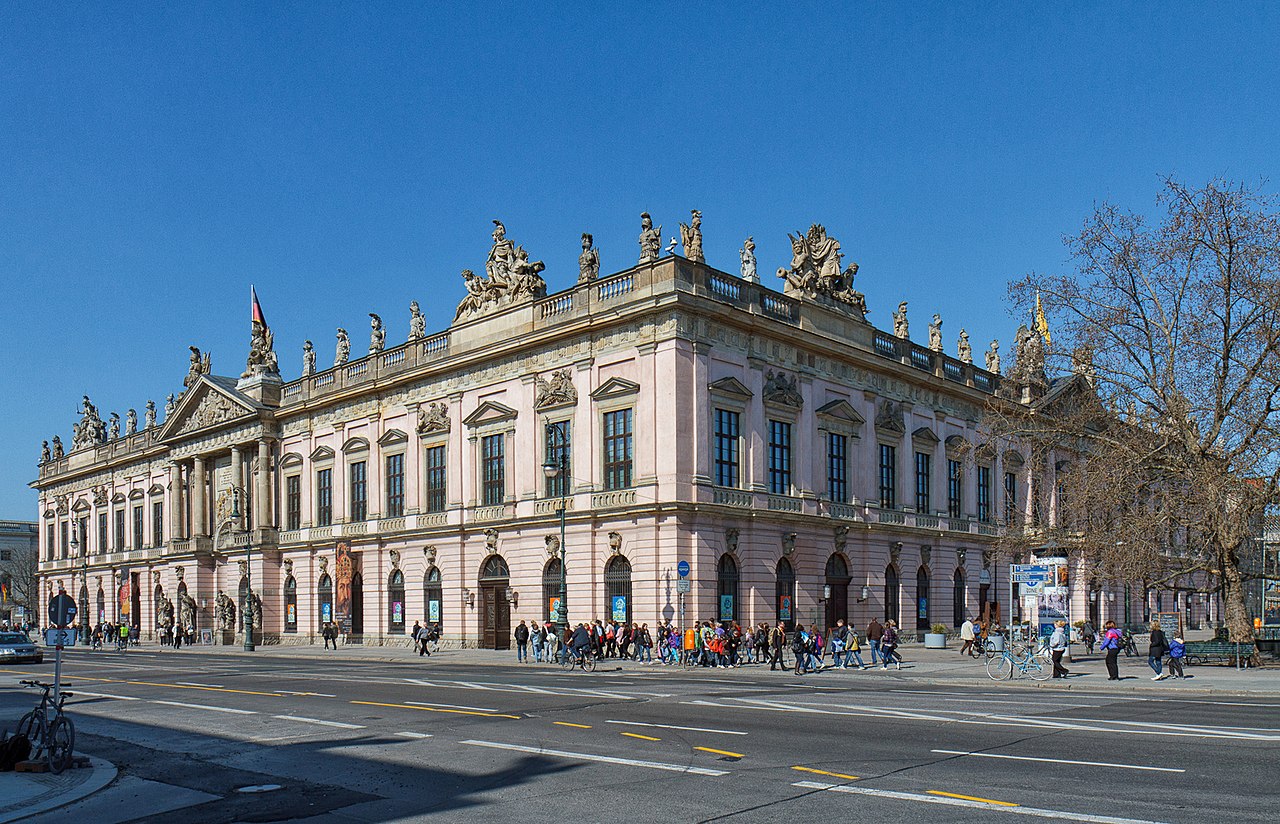
Ei ihan museosaarella muttei kovin kaukanakaan, Saksan historian museo (Deutches historisches museum) sijaitsi heti joen vastarannalla. Omien sanojensa mukaan Saksan historian museo tarjoaa katsauksen maan 1500 vuoden historiaan. Keskiajan museotarjonta oli ollut tähän asti vähän köykäistä, joten toive oli josko Saksan historian museo olisi  tarjonnut sitä lajia enemmän kuin museot joita oli tähän asti nähty. No, jonkin verran sitä olikin mutta monta vuosisataa sai museossa silti aika nopean käsittelyn... 

Not quite in the museum island but in its immediate surroundings, the Museum of German history (Deutches Historisches Museum) was located just across the river. According to the museum they provide a look to the 1500 years of the history of Germany. In the previous museums where we visited the medieval period was dealt with really quickly, so we were kind of hoping that this museum would be more generous in the presentation of medieval stuff. Well, there was some but considering how many centuries the medieval period covers, I still think it was quite briefly presented...

Museorakennus ~~~ Museum building, kuva/photo Wikipedia
Museo oli kahdessa kerroksessa, josta ylempi kerros esitteli ajanjaksoa 500-luvulta ensimmäiseen maailmansotaan. Pohjakerroksessa olisi ollut sitten uudempaa historiaa Weimarin tasavallasta 1990-luvulle. Tässä tapauksessa keskityttiin kakkoskerroksen tarjontaan, uudempi ei ollut niinkään kummankaan reissaajan ykkösprioriteeteissa (ja tiedossa oli vielä visiitti DDR-museoon myöhemmin, mutta siitä sitten enemmän omassa postauksessaan). Ja kyllähän pelkästään yhdessäkin kerroksessa aikaa sai menemään, aivan valtava rakennus kun oli kyseessä.

The museum was in two floors, the upper one covered the period from the 6th century to the first world war. Lower floor, then again, focused on newer history, from the Weimar republic to the 1990s. We focused on the upper floor and older history, since neither of us were so super interested in newer events (and we were going to see the DDR museum later, but more of that in another post). In this case in one floor there was quite a lot to see and it took quite some time, it indeed is a huge building. 

Kaarle Suuren patsas, 1100-lukua ~~~ Statue of Charlemagne, 12th century
Slaavilaisperäistä arkiesineistöä Spandausta 800-1100-luvuilta. ~~~ Slavic items from Spandau, 9th-11th centuries. Kuva/photo M. Pulla.
Harvinaisempi ihmispään mallinen akvamaniili 1270-luvulta. ~~~ A rare type of aquamanile in the shape of a human head, 1270s.  Kuva/photo M. Pulla
Akvamaniili Kölnistä 1300-luvulta. ~~ Aquamanile from Cologne, 14th century- Kuva/photo M. Pulla
Kölnin kaupungin säilytysarkku, 1300-luku ~~~ Storage chest belonging to the town of Cologne, 14th century
Kierrätystä noin v. 1300: rikkoutuneesta kolmijalkaruukusta siivilä. ~~~ 14th century recycling: Broken tripod pot turned to a sieve.
Seinävaate jossa kohtauksia neitsyt Marian elämästä, n. 1480 ~~~ Wall hanging with scenes of the life of virgin Mary, c. 1480

Keskiajan jälkeisiltä vuosisadoilta olikin sitten varsin reippaasti esineistöä esillä. 1500-luku painottui teemaltaan reformaatioon ja siitä kohtuullisen erottamattamattomaan valtakähinään.

After the medieval period the exhibition progressed somewhat century by century. 16th century part was focused on the important themes of the era, reformation and the power struggles that came with it.
Patriisipariskunnan muotokuvat, 1550-luku. ~~~ Portraits of a partician couple, 1550s
Liikuteltava käsiproteesi, Grüningenin linna, 1500-luku ~~~ Prosthetic arm with moving joints, Grüningen castle, 16th century
1630-luvun maalaus Mühlbergin taistelusta v. 1547 ~~~~ 1630s painting of the battele of Mühlberg in 1547

Siinä missä keskiajan ja vielä 1500-luvunkin esineistö oli varsin tukevasti saksalaista, tämän jälkeen osansa saivat myös yhä laajemmalle ulottuvat yhdeydet. Sota oli myös kohtuullisessa roolissa näissä yhteyksissä. Seinäpinta-alasta melkoisen osan ottivat valtavan suuret maalaukset.

Where the items in the medieval and 16th century parts of the exhibition were almost exclusively German of origin, after that it was apparent that Germany too got more widely connected with the rest of the world. Warfare was also a part of those connections... Walls in this part of the exhibition were covered with huge portraits.


Ruttolääkärin maski 1600-luvulta. Ei siis keskiaikaa nähnytkään. ~~~~ Plague doctor's mask, 17th century. Definitely not medieval! Kuva/photo M. Pulla
Sotasaaliiksi saatu turkkilainen teltta 1600-luvun lopulta. Nyt pahasti haalistunut, alkuperäinen teltan väri on ollut kirkas turkoosi vuoritettuna punaisella! ~~~~ Late 17th century Turkish tent, once a war booty. Nowadays the colour is faded, originally it was bright teal lined with red! Kuva/photo M. Pulla
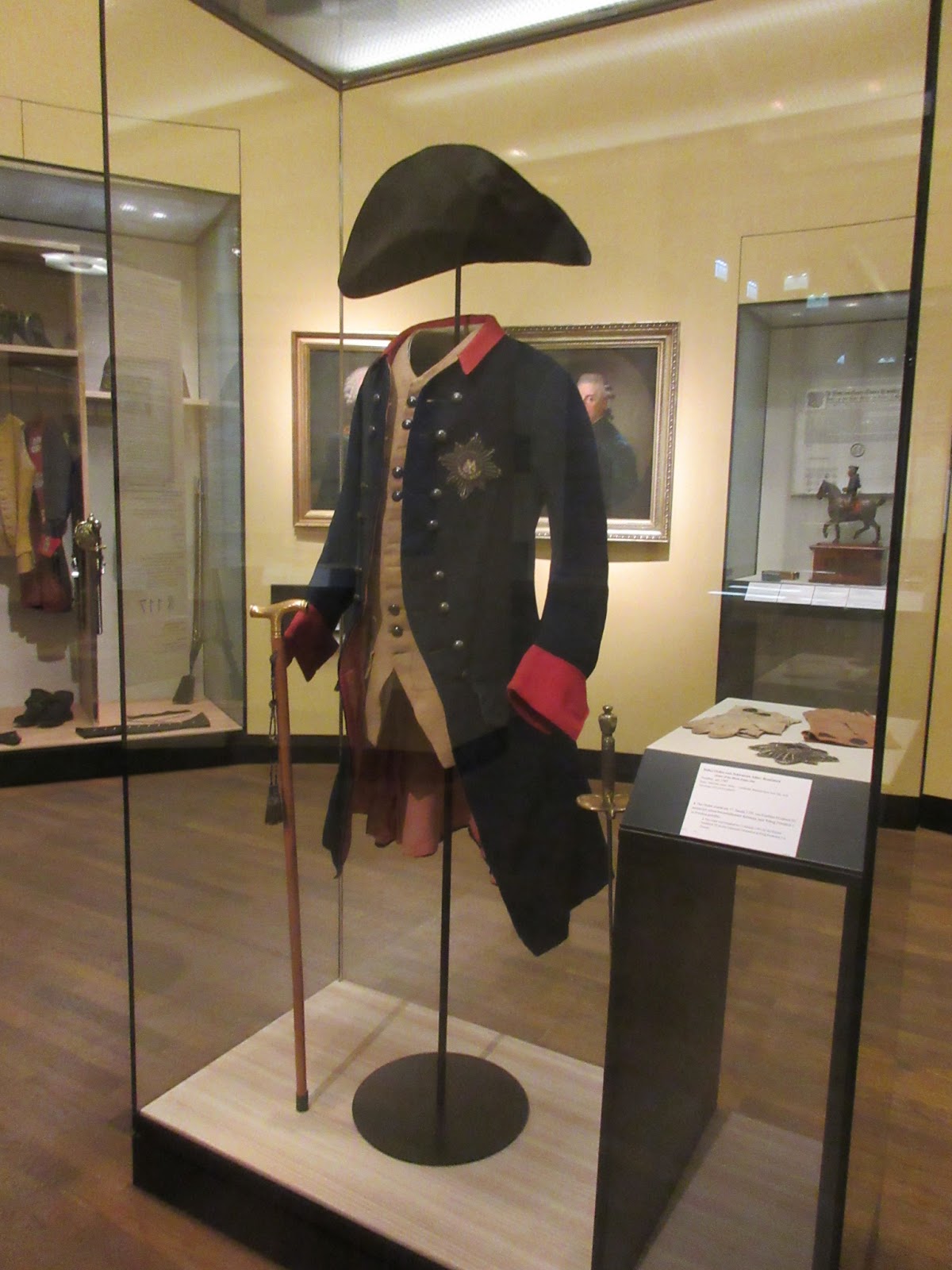
Preussin kuningas Fiedrich II:n univormu, 1786 ~~~ Unifom belonging to Preussian king Friedrich II, 1786
1800-luvun osastolla huomio kiinnittyi ensisijaisesti vaatteisiin ja tekstiileihin. Niitä olikin esillä runsain määrin!

In the 19th century exhibition there was a significant number of clothing and textiles on display. 
Kukkakirjottu puuvillamekko, 1795-1800 ~~~~ Cotton dress with flower embroidery, 1795-1800

Tekstiilimallikirja painokuvioista käsinkirjoitetuin kommentein, 1807 ~~~~ Textile samples book with handwritten comments, 1807
1800-luvun osastolla osansa sai myös teollistuminen, josta sitäkin oli tekstiilipuolen edustus. Siitä eteenpäin ylemmän näyttelykerroksen tarjonta olikin varsin sotilaallista.

Industrialization was a notable part of the 19th century exhibition, and textile industry was a big business and an important part. Apart from that, the latter part of the upper floor exhibition was quite military-themed. 
Langan kertauslaite ~~~ Device for plying yarn

Museon kotisivut
Museum homepage